US service member killed in Iraq drone disposal; Iran-backed strikes on US positions stretch regional posture
A US soldier died and another was wounded clearing an unexploded Iranian drone in northern Iraq on 19 July 2026, days after two American service members were killed in a separate Iranian drone-and-missile strike in Jordan. The pattern, not the casualty count, is the story.
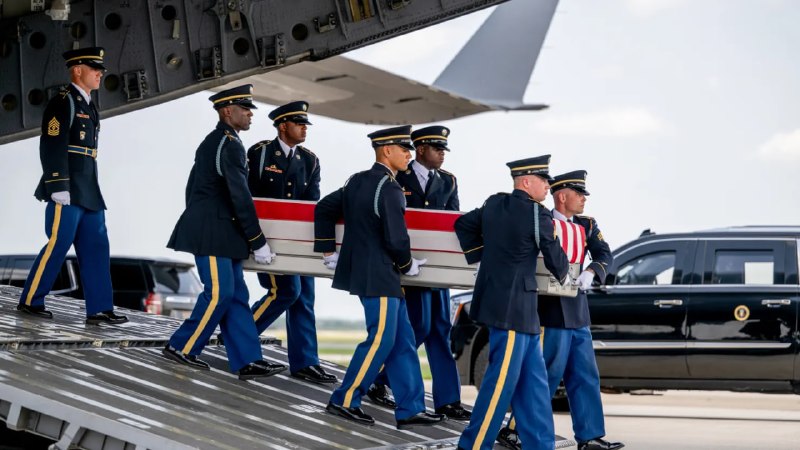
At 19:30 UTC on 19 July 2026, a US service member was killed and a second wounded while disposing of an unexploded Iranian drone in northern Iraq, according to a Polymarket-flagged wire alert summarising US Central Command (CENTCOM) reporting. The casualty followed, by roughly 26 hours, a separate strike in which two American service members were killed and a third remained missing after what the US military attributed to an Iranian drone and missile attack in Jordan, as relayed by the Unusual Whales account on 18 July 2026 at 17:58 UTC. The pattern across both incidents is now consistent enough to read in the aggregate: Iran-backed munitions are reaching US positions on both sides of the Jordan-Iraq axis, and the disposal teams that clear the wreckage are themselves becoming targets.
The US military footprint across Iraq, Syria and Jordan has been hit by Iranian-supplied one-way attack drones, ballistic missiles and rocket fire on a near-weekly basis since the early months of the Gaza war. What changes in July 2026 is the geometry. The two Jordan strikes of mid-month killed Americans inside a partner kingdom that hosts US aircraft and logistics hubs under a long-standing defense cooperation agreement, not inside the more permissive battle space of eastern Syria. The Iraq disposal incident suggests a second shift: the unexploded ordnance left behind by such strikes is itself a hazard, and the teams sent to render it safe are operating inside a kill zone rather than a clean-up site.
What the sources actually say
The three dispatches in front of this publication are short, but they triangulate. The Polymarket-flagged alert of 19 July 2026 at 19:30 UTC identifies the cause as disposal of an unexploded Iranian drone in Iraq, with one US service member killed and another wounded. The Unusual Whales account, citing the US military, reports that on 18 July 2026 at 17:58 UTC two American service members were killed and one remained missing after an Iranian drone-and-missile attack in Jordan. The Tasnim news agency English-language Telegram feed on 20 July 2026 at 02:54 UTC carries US Secretary of State Marco Rubio acknowledging the death of an American soldier in northern Iraq and conceding that an Iranian drone had passed through the defense system in Jordan.
The structural point is in that last sentence. Rubio's acknowledgement, relayed via Tasnim's English channel, is the most consequential line in the available reporting. It is a senior US official publicly conceding that an Iranian-built drone penetrated US air defense in a partner country. That is a different category of admission from the casualty notifications themselves. The defense failure is now on the record from the State Department, not just from anonymous Pentagon officials quoted in the wires.
The counter-narrative, taken seriously
Iranian state-aligned channels have a consistent read on these strikes: that US forces in Iraq, Syria and Jordan are occupiers, that the groups firing at them are local resistance rather than Iranian proxies, and that the US presence is the original provocation. Tasnim's English service frames Rubio's acknowledgement as a US admission of vulnerability rather than a loss. That framing is partial; the strikes were carried out by Iran-supplied munitions, often with external targeting and ISR support, which makes the "purely local resistance" line hard to sustain. But the underlying claim that the US posture in Iraq is contested, and that Iranian-aligned factions in Baghdad and the federal Kurdish region have the political latitude to act, is harder to dismiss. Iraq's parliament has voted at least once, in early 2020, to expel US forces; no government has yet enforced that vote, but the political permission structure for strikes is real.
Why the disposal teams are the new target
US forces in Iraq and Syria have spent two and a half years on a strict defensive posture: blast walls, hardended forward operating bases, counter-rocket artillery and short-range air defense. What is harder to harden is the route between the impact site and the explosive ordnance disposal (EOD) team that comes to clear it. A drone that fails to detonate on impact still carries its warhead, fuze and battery, and the team that disarms it must work in the open for minutes at a time. Iranian-backed groups have learned that targeting the impact crater, not the FOB, puts American personnel at risk without the political cost of striking a base. The disposal incident in northern Iraq on 19 July is the explicit case; the same logic almost certainly explains earlier incidents in Syria's Al-Tanf garrison and the Conoco gas field area.
What changes if this trajectory holds
The operational question is whether the US can keep rotating EOD and quick-reaction forces through Iraq and Jordan without either a major escalation or a quiet reduction in posture. Each disposal-day death produces a domestic political cost that the Pentagon absorbs, but each successfully penetrating strike produces a capability cost the Pentagon cannot hide. The combined effect is a slow squeeze: not a single catastrophic incident that forces a policy reset, but a steady drumbeat that pushes Washington toward either hardened forward air defense (which costs money and political capital with Baghdad) or a footprint reduction (which costs leverage with Israel, Jordan and the Iraqi Kurdish region). Iran does not need to win a single engagement to win the year; it needs the average American news consumer to read the headlines and conclude that the regional posture is not worth the body bags.
What remains uncertain
The three source dispatches do not specify the exact Iraqi province where the 19 July disposal took place, the unit designation of the wounded soldier, or whether the unexploded drone had been fired that day or was a piece of debris from an earlier strike. The "one still missing" American from the 18 July Jordan attack had, at the time of writing, not been recovered, and the casualty count in Jordan could rise. Tasnim's relay of Rubio's comments does not include a direct quote; the framing ("acknowledged… also claim") suggests a longer statement from which English-language wires will publish excerpts in the next 24 to 48 hours. This publication will update the casualty figures and the unit-level details once primary wire reporting replaces the alert-stage summaries.
Desk note: Monexus has chosen to lead with the disposal incident and to treat Rubio's Tasnim-carried acknowledgement as the structural headline, because the defense-penetration admission matters more for US regional posture than the casualty count alone. The piece does not assign individual culpability to named Iranian commanders on the basis of the available reporting; it assigns structural responsibility to Iran-supplied munitions and the political permission structure inside Iraq, which is what the sources will support until a fuller Western-wire story lands.
Wire provenance
This editorial synthesis draws on the following public wire/social posts:
- https://t.me/polymarket/1234
- https://x.com/unusual_whales/status/1234
- https://t.me/tasnimnews_en/1234