Thirty days into the US–Iran MoU, the ceasefire is fraying
US airstrikes on Shiraz and Iranian declarations of full-scale war mark the sharpest break in a month-old MoU that was meant to cool the region.
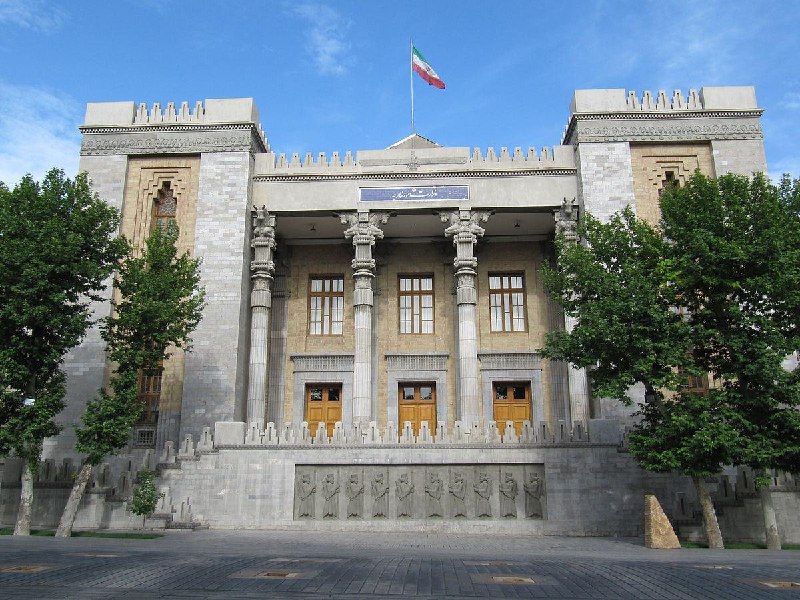
US warplanes struck the southern Iranian city of Shiraz late on 20 July 2026, according to open-source channels monitoring the exchange, in the most serious bombardment since a US–Iran memorandum of understanding paused the fighting a month ago. Within minutes, Iranian state-aligned outlets were describing the situation as a "full-scale war" with the United States, and Al Jazeera's breaking-news desk was reporting that the worst fighting in months had erupted, threatening to unravel the ceasefire.
That a deal signed barely thirty days earlier has frayed this quickly tells the reader something the wire framing has been reluctant to say out loud: the MoU was always less a settlement than a pause, and the parties were using it as one. The question now is whether the latest strikes represent a tactical escalation inside the framework, or a structural collapse of it.
The strike on Shiraz
The first reports of an airstrike on Shiraz surfaced in Telegram monitoring channels at 21:18 UTC on 20 July, with Intelslava posting an open-source attribution pointing to US aircraft, and a second channel, RNIntel, amplifying the report shortly after. Shiraz sits in Fars province, deep in southern Iran, far from the usual theatre of strikes around Isfahan, Natanz or the Persian Gulf coast. A hit there is a deliberate choice of geography; it puts pressure on the hinterland rather than the nuclear or oil heartlands.
The Iranian response came fast. By 22:05 UTC, Insider Paper was carrying Tehran's framing that the country was now in "full-scale war" with the United States, a phrase that goes well beyond the tit-for-tat language Iranian officials used during earlier rounds. The framing matters because, in Iranian domestic politics, declaring a state of full-scale war unlocks mobilisation powers, intelligence prerogatives and a different set of constraints on the negotiating track. By 22:26 UTC, Al Jazeera was summarising the moment as the worst fighting since the MoU and as an active threat to the ceasefire itself.
What the MoU was buying
A memorandum of understanding is not a treaty, and the May 2026 US–Iran arrangement was no exception. It paused kinetic action, opened a narrow channel for sanctions choreography and, critically, gave both sides a fig leaf for energy-market signalling. Reuters reported on the same day that an Iranian official had said the country would restore around 100 million cubic metres of lost gas output over the coming months, a figure that can only be justified if some of the damaged upstream infrastructure is expected to come back online under conditions that allow spare capacity to be sold.
The arithmetic matters. Iran's South Pars field, the world's largest gas reservoir, sits in the Gulf and has been intermittently sanctioned, periodically struck, and perpetually under-invested. Restoring a hundred million cubic metres of output is a multi-billion-dollar revenue line for Tehran and a non-trivial addition to global LNG markets. The implication of the Reuters report, read against the airstrikes on Shiraz, is that the energy track of the MoU was the part that was actually moving, while the security track was always going to crack first.
The southern cost, in plain words
A separate Reuters dispatch on 20 July looked at the human terrain underneath the kinetic map. Its finding, blunt and worth quoting in its implications: US attacks are deepening hardship in Iran's restive south without producing the political dissent Washington had been hoping for. In plain editorial terms, this means the coercive theory of the campaign, that pressure at the pump and the kitchen table would loosen the regime's grip, has not worked in the places where it has been applied most. The southern provinces, including the wider Fars region of which Shiraz is the capital, have absorbed years of compounded pressure. The reportage suggests that the social fabric is bending, not breaking, and bending in directions that do not necessarily favour the United States.
This is the part of the war the strategic commentary tends to underweight. Sanctions, airstrikes and MoUs are framed as moves on a board, but they land on households. When the literature says one thing and the kitchen says another, the kitchen usually wins, and on a longer cycle than the board-game framing allows.
Stakes and what to watch
The next seventy-two hours will decide whether the MoU is merely wounded or dead. Three indicators are worth tracking. First, the volume and target set of follow-on US strikes: another hit on a southern population centre would suggest the campaign has shifted from signalling to punishment, while a return to nuclear-site and IRGC infrastructure would suggest the original theory of the case is still intact. Second, Iranian retaliation, whether through proxies, through the Strait of Hormuz, or through a pullback from the gas-restoration commitment flagged in the Reuters reporting. Third, the diplomatic channel: whether Omani, Qatari and Chinese mediators, who were the MoU's quiet architects, can extract a face-saving re-pause before the language of full-scale war hardens into operational reality.
The structural read, stripped of theory: a great power with global force projection and a regional power with depth, energy leverage and a high tolerance for pain have both decided that the cost of stopping is higher than the cost of continuing, at least for now. The MoU was the moment that calculus briefly pointed the other way. On the evidence of 20 July, it does not any more.
This piece treats the 20 July airstrike reports as carried by open-source channels Intelslava and RNIntel, the Iranian framing as carried by Insider Paper and Al Jazeera breaking news, and the energy and humanitarian context as carried by Reuters on the same day. Where the wire and the Iranian state line diverge, both are presented; the structural read is this publication's own.
Wire provenance
This editorial synthesis draws on the following public wire/social posts:
- https://insiderpaper.com/iran-says-fighting-full-scale-war-with-us/
- https://t.me/intelslava
- https://t.me/rnintel
- http://reut.rs/4yCHK4u
- http://reut.rs/4gOoKJM