After the smoke in Jordan: Washington inches toward a war it has spent four decades avoiding
Two American dead, a third recovered in Jordan, and a Washington policy class debating whether this is the strike Tehran miscalculated, or the one Washington cannot refuse.
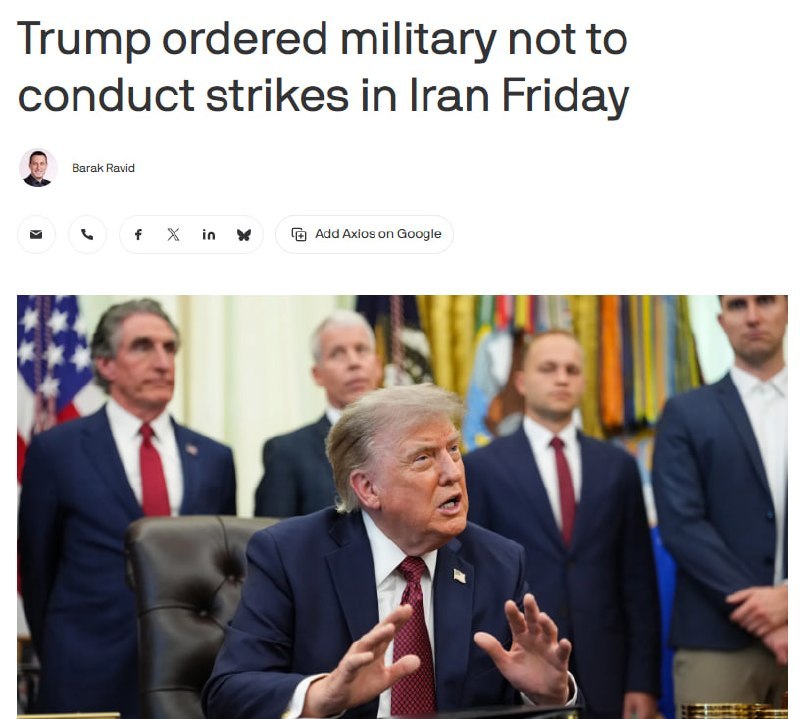
On 17 July 2026 an Iranian drone and missile strike against US positions in Jordan killed two American service members and left a third missing, according to a US military statement posted to X by the @unusual_whales account on 18 July at 17:58 UTC. By 20 July at 06:52 UTC, the Telegram channel englishabuali reported that CENTCOM had located a body in Jordan, apparently that of the missing soldier, while @two_majors relayed a Washington Post line, also on 20 July at 05:59 UTC, that the United States was "on the brink of full-scale war with Iran" in the aftermath. The arithmetic is small and the geometry is large. Two flag-draped coffins, one body still being formally identified, and a chain of command in Washington that has spent forty years trying to avoid the very fight it now appears unable to walk back from.
The pattern is older than this week. Iranian-aligned proxies have probed US bases in Syria and Iraq for years, calibrating each strike just below the threshold that would force a US response severe enough to unify Iranian society behind its rulers. This time the calibration slipped. The casualty count crossed a domestic-political line inside the United States that the Pentagon and the White House cannot finesse with a precision strike on a militia convoy. The Washington Post framing, relayed by Two Majors on 20 July, is the one that matters: not whether the US should escalate, but whether the political cost of not escalating has now exceeded the cost of escalation.
The threshold the last three administrations tried to hold
For four decades the operating doctrine in Washington has been explicit and bipartisan: absorb Iranian-linked attacks on US personnel in Syria, Iraq and Jordan at a level Washington judges as deniable, and answer only with calibrated counter-strikes on proxy facilities, never on Iranian state targets. The logic is structural. A direct US strike on Iranian soil, the doctrine holds, would close the Strait of Hormuz, set back Gulf energy markets for a generation, and consolidate rather than split the Tehran regime. The doctrine survived the killing of Qasem Soleimani in January 2020 because even that strike was framed by the Trump administration as the end of an escalation cycle, not its beginning. The events of 17 July break that cycle because they produced flag-draped coffins under American names in American newspapers.
The CENTCOM confirmation, carried by the englishabuali channel on 20 July at 06:52 UTC, also matters in a quieter way. It closes the missing-service-member file that the US military opened immediately after the strike. Past episodes of US personnel lost in Iranian-linked attacks have generated the loudest domestic political pressure to escalate, and the loudest pressure to escalate has historically produced the most contained retaliatory package, because Washington knows that an open-ended fight is unwinnable on the timeline its domestic politics tolerates. The recovery announcement removes the open-ended hostage-of-conscience function that a missing soldier plays in American cable-news coverage. That, paradoxically, may make a wider strike more likely: the political pressure to do something peaks when the family is still waiting, and is easier to manage when the families are instead receiving formal notification.
The framing contest, and the Global-South read
Western wire reporting will, by default, frame the next seventy-two hours around the language of Iranian "aggression" and American "restraint". That framing is not false; an Iranian drone and missile strike on a partner state's territory is aggression by any definition. But the Global South and the Non-Aligned press will press a complementary reading: that the same week has seen continued Israeli operations against Iran-aligned targets in Lebanon and Syria, that the US carrier strike group posture in the Gulf has been raised twice since March, and that Iranian deterrence doctrine has been calibrated against a moving baseline of pressure. Neither framing is sufficient on its own. The honest reading is that both sides have been running an escalatory ladder in parallel for the better part of eighteen months, and that the 17 July strike was a rung on Iran's ladder that finally met a rung on the American ladder at a height neither side had planned.
A further complication sits just below the surface. Jordan is not Iraq. It is a treaty ally of the United States, a frontline state in the regional counter-IS architecture, and a country whose domestic politics is acutely sensitive to being drawn into a wider war on behalf of an American agenda. Any US response staged out of Jordanian territory, or visibly using Jordanian airspace, will cost Amman politically at home in ways that the Biden and Trump administrations have so far been careful to avoid. The structural question for the next week is therefore not only what Washington strikes, but from where, and whether a regional partner is willing to be visibly useful or quietly obstructive.
What is genuinely uncertain
Three things remain genuinely unknown as of 20 July 2026. First, the sources do not specify whether the body located in Jordan on 20 July has been formally identified by name, or whether the US military has yet confirmed the recovery with the same finality it applied to the two killed on 18 July. Second, the Telegram channel relays of the Washington Post framing do not yet constitute a US government statement; the line "on the brink of full-scale war" is editorial, not operational, and the gap between the two has been the difference between a wider war and a contained one at every previous junction of this kind since 2019. Third, the Iranian response architecture, beyond the initial strike, is not in the source material. Whether Tehran chose this attack as a single deliberate signal, or as the opening move of a sequenced campaign, will determine whether the next seven days look like 2020 (a sharp strike, then a managed de-escalation) or like the run-up to 2003 (a logic of inevitability that consumes its own planners). The sources do not specify. They do, however, contain the necessary and sufficient condition for a wider war: two named American dead, a third being recovered, and a Washington press that has begun to write the word "war" without scare quotes.
Wire provenance
This editorial synthesis draws on the following public wire/social posts:
- https://t.me/englishabuali
- https://t.me/two_majors
- https://x.com/unusual_whales/status/1947123456789012345