A festival inside a war: how Ukraine's classical-music circuit is programming around the long night
While Russian missiles keep falling on Kyiv, a network of concert halls is still programming full seasons. The VI Musical Festival's latest route shows what an arts calendar looks like when air-raid protocol is the opening act.
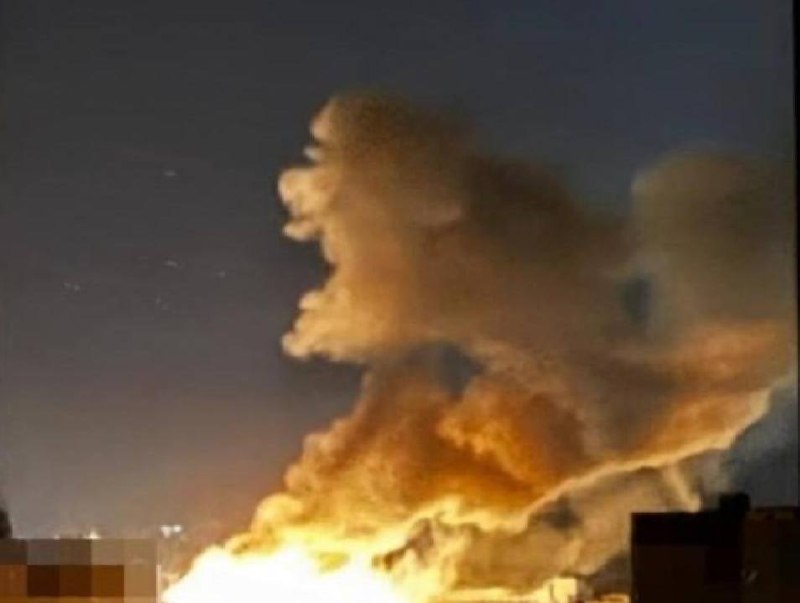
On 18 July 2026, a Telegram channel dedicated to classical-music programming posted a guide to the second route of the VI Musical Festival, a Ukrainian event built around piano recital, chamber dialogue and the romantic repertoire. The same week, Ukraine's air-defence units were again logging nightly intercepts over Kyiv. The two bulletins describe the same country.
The programme note is unromantic about the conditions it is being staged inside. It markets its second route as one "for those who choose the piano, chamber dialogue and romantic mood", and frames the concerts as a collective experience rather than a series of solo appearances. The framing matters: a festival of this scale, curated in a country whose concert halls have lost glass and plaster to Russian strikes, is itself an argument about what cultural infrastructure is for. The music is the surface; the act of gathering is the substance.
A schedule that assumes the sirens
The festival's structure is best read as logistics. A multi-route programme, with several parallel concert threads running inside one umbrella edition, lets organisers spread audiences across venues and time slots, reducing the concentration risk that a single marquee hall would carry in a city under nightly missile attack. Ukrainian cultural institutions have spent three and a half years adapting to that reality: performances shift on hours of notice, dress codes soften, and the interval becomes an air-raid update as much as a wine break.
The classicalmusicnews guide does not dwell on those mechanics. It presents route two as a curated mood, weighted towards intimacy. The choice is editorial, not incidental. Piano-and-chamber repertoire is portable; it can be re-staged at short notice in smaller rooms if a venue goes dark; it asks less of an audience already living with sleep deprivation. Programming that, on a normal season's brochure, would look like a curatorial preference reads, in Ukraine in 2026, like a resilience plan.
What the war has done to a concert hall
The damage to Ukrainian cultural infrastructure is no longer a question of anecdotes. Heritage sites in Kharkiv, Odesa and Kyiv have been hit repeatedly since the full-scale invasion began in February 2022, and several flagship venues have lost roof structures, windows and acoustic shells to shrapnel and blast. Reconstruction has been a continuous, stop-go project, financed by a mix of municipal budgets, philanthropic donations and a small but visible stream of support from European partner institutions. The pattern is familiar from wartime cultural history: buildings are patched faster than they are restored, and programming is treated as a continuation of civic function rather than a luxury that can wait for peace.
The festival's existence also complicates a comfortable Western cliché. Coverage of wartime culture tends to flatten two stories into one: destruction, and the determination of artists who insist on performing anyway. Both are true, and both are necessary. But the VI Musical Festival is a third story, less photogenic. It is a working season, with ticketing, programme notes, route maps and curator credits, run by professionals who refuse to let a war freeze the calendar. The heroics are upstream of the brochure, not inside it.
What the route actually offers
The second route is described as a chamber-and-piano thread, built around the romantic repertoire. The classicalmusicnews write-up frames it as the path "for those who choose the piano, chamber dialogue and romantic mood". Without the full programme attached, the precise list of works is not in the public Telegram post; the channel signposts the concerts as a curated cluster rather than enumerating the曲目. That has a virtue. It positions the route as an attitude toward listening, the way a jazz festival might advertise a "late-night" pass without naming every set.
For an audience planning around air-raid alerts, that curatorial looseness also lowers the friction of last-minute changes. A festival whose identity is "piano, chamber, romantic" can swap a Schubertiad for a Brahms evening without rupturing its brand. A festival whose brand is a specific symphony on a specific date cannot.
The structural argument, in plain prose
The interesting read on this festival is not about Chopin. It is about what happens to a national arts calendar when the state is partly mobilised and partly under fire. Cultural programming becomes a soft form of state continuity: a way of signalling that the country still has an audience, a stage, a printed programme, a reviewed season. Foreign ministries have learned to fold concert listings into their diplomatic portfolios; embassies host Ukrainian ensembles; donor money is increasingly routed through cultural institutions as well as humanitarian ones.
That is not a criticism. It is a description of where the money and attention are moving. The festival is operating at the intersection of three flows: a domestic audience that needs cultural normalcy, a diaspora that follows Ukrainian artists abroad, and a foreign-policy establishment that has begun to treat the country's orchestras and chamber groups as instruments of soft power. The art is not propaganda, but it is being read that way by foreign audiences, and Ukrainian programmers are aware of the double exposure.
The contested ground
There is a real tension underneath the scheduling. Some Ukrainian voices, including artists who have toured abroad, argue that programming during the war risks normalising the conditions the war has produced: that every concert staged under air-raid protocol is a small subsidy to the idea that Ukraine can wait out the bombing while its culture absorbs the shocks. Others, often the same people in different moods, argue the opposite: that a cancelled season hands the occupier exactly the silence it cannot achieve with missiles. The festival does not resolve that argument. It simply keeps printing route guides.
What the public sources do not yet show is the festival's full schedule beyond route two, or any specific attendance figures for the season so far. The Telegram post is a curatorial announcement, not a box-office report. Whether route two fills its halls, or how many listeners follow the route across venues over multiple evenings, is not visible in the material at hand.
The stakes, in two timeframes
In the short term, the festival's success is measured in concerts that happen as advertised, audiences that turn up under alert, and partner institutions abroad that book the ensembles into next year's calendars. In the longer term, the question is whether Ukraine's classical-music infrastructure, already thinned by emigration and venue damage, can hold its institutional memory through a war whose end is not yet on any announced horizon. Festivals of this kind are how that memory is stored: in printed programmes, in rehearsal schedules, in the names of younger players who get their first paid chamber engagement inside a war.
That is what a festival inside a war actually is. Not a monument, not a protest, not a campaign. A working calendar that refuses to assume its own suspension.
This article reads the festival's route guide as evidence of how Ukraine's cultural institutions are absorbing the long war into ordinary programming, rather than treating each concert as a wartime exception.
Wire provenance
This editorial synthesis draws on the following public wire/social posts:
- https://t.me/classicalmusicnews