Strait of Hormuz, Downing Street: A Two-Theatre Crisis Reorders Western Politics
A decade of US strikes on Iran collides with the seventh British prime minister in ten years. The corridor and the cabinet are now part of the same crisis.
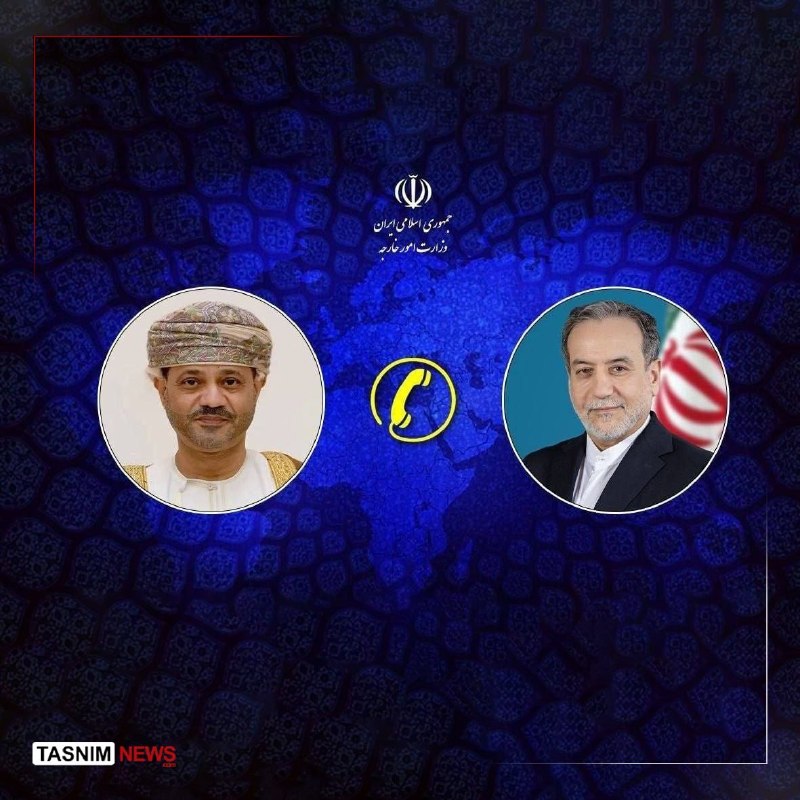
For a tenth consecutive night, US strikes hit Iranian targets on 20 July 2026, the BBC and Deutsche Welle both reported, with President Donald Trump vowing retaliation for the deaths of American soldiers and framing the campaign around the demining of the Strait of Hormuz. Hours earlier, the same chokepoint appeared in a different kind of briefing room: a transatlantic phone call between Trump and the brand-new British Prime Minister Andy Burnham, who, according to the Telegram wire @insiderpaper, had discussed the demining question as part of a wider conversation. By that evening, a separate dispatch on the platform X had Burnham naming former Defence Secretary John Healey as his Chancellor of the Exchequer.
Two theatres, one calendar. The corridor and the cabinet are no longer separable stories, and the second half of 2026 will be read through both at once.
The corridor that holds the global economy hostage
The Strait of Hormuz is a 21-mile-wide ribbon of water between Iran and Oman. Roughly a fifth of the world's oil passes through it, along with the liquified natural gas that heats Europe and powers much of Asia's industrial base. When BBC News wrote, on the evening of 20 July 2026, that the United States had "launched fresh strikes on Iran" aimed at "degrading Iran's capabilities to attack ships in the Strait of Hormuz," it was describing the latest escalation in a campaign that, according to Deutsche Welle's same-day bulletin, had run for ten consecutive nights. The DW account went further, noting that "both sides vie for control of the Strait of Hormuz," a phrasing that concedes what the BBC's more tightly worded summary avoids: that the contest over the corridor is now an active military campaign, not a deterrence posture.
Trump's framing, transmitted via @insiderpaper, ties the military campaign to a specific, unglamorous task: demining. The Strait's narrow shipping lanes have been threatened by Iranian mining capability for decades, and any sustained campaign to render the passage safe is, by definition, a long one. Demining is not a strike; it is a months-long engineering operation that requires escorts, survey vessels, and the political consent of the Gulf states whose territorial waters the corridor traverses.
That is the structural point: the United States can bomb Iranian missile sites, but it cannot de-mine the Strait without partners, and the most experienced partner in the North Atlantic is now led, for the seventh time in a decade, by someone with no foreign-policy record on Iran at all.
A seventh prime minister in ten years
Andy Burnham's elevation to Downing Street is the kind of personnel story that domestic British reporters have been parsing for weeks. Telegram channels aligned with the Beirut-based outlet The Cradle framed it bluntly on 20 July 2026, noting that Burnham is the seventh British prime minister in ten years and that he has appointed a pro-Israel lobbyist as his chief of staff. That second claim, whether or not a reader accepts the framing, is consequential: it tells the diplomatic corps what the new government's posture on the wider Middle East will be before any minister has briefed.
The same afternoon, an account on the prediction market Polymarket reported that Burnham had named John Healey, the former Defence Secretary, as Chancellor of the Exchequer. Healey's appointment is significant on its own terms. He is one of the few senior Labour figures with continuous Cabinet-level exposure to the defence portfolio during a period in which the United Kingdom has supplied munitions, training, and surveillance aircraft to the US-led naval mission in the Gulf. Putting him in 11 Downing Street, rather than keeping him at Defence, signals that the new government intends to fuse fiscal policy and military obligation from day one.
The instability is the story. Seven prime ministers in ten years is not a turnover rate; it is a regime in which the office has lost most of its signalling power, and foreign capitals calibrate to the permanent secretary at the Foreign Office rather than to the figure in the flat above Number 11.
The phone call and what it really settled
The Trump-Burnham readout, as carried by @insiderpaper, was warm in tone ("a very good conversation"), short on substance (a "range of subjects"), and pointed in the one detail it chose to name: the demining of the Strait of Hormuz. That selection is the tell. The President's team did not brief the call as a courtesy; they briefed it as a contribution to an allied effort. What was settled, in operational terms, is that the United Kingdom will be asked for mine-countermeasure vessels, hydrographic survey assets, possibly a Royal Navy escort presence, and a parliamentary vote that legitimises the contribution.
Each of those asks runs through the new Chancellor's desk. Healey, as Defence Secretary until hours earlier, would have been on the receiving end of those requests. Healey, as Chancellor, will be asked to fund them while simultaneously absorbing the domestic political cost of joining a campaign that, the BBC reported, has already produced American military fatalities.
This is the kind of trade-off that veteran Chancellors spend a year preparing for. Healey will spend a week.
Why the framing matters
Western wire reporting on the Iran file tends to centre American capability and Iranian intent, with the Gulf states, the Europeans, and the maritime dimension treated as scenery. The BBC's bulletin is a faithful instance of that convention: it leads with US action, quotes US framing, and closes with Trump's vow of retaliation. DW's version adds a structural claim, that both sides are contesting the Strait, which is closer to the operational reality. Neither account names the mine threat as the proximate military problem, and neither names the Gulf states whose consent determines whether demining is even legal in the corridor's southern reaches.
The Cradle's framing, by contrast, centres political signalling: who the new British prime minister has appointed, and what that appointment signals about the new government's posture. It does not describe the strikes at all. Two newsrooms, two different stories, both published on the same day, neither wrong on its own terms, both partial in characteristic ways.
What the reader has to assemble, between them, is this: a sustained US bombing campaign on Iran; an active contest for control of the world's most important oil chokepoint; a British government that has changed prime minister for the seventh time in a decade; and a newly appointed Chancellor whose previous job was the one most directly exposed to the military campaign now underway.
Stakes through the end of 2026
If the demining campaign proceeds, the immediate winners are the Gulf monarchies, whose export infrastructure depends on free passage; the European gas buyers, whose winter storage depends on Qatari LNG; and the United States, whose Central Command posture is reaffirmed as the indispensable security guarantor of maritime energy flows. The losers, in the short term, are Iranian state revenues, and any political constituency, in Washington or Westminster, that was hoping for a de-escalation cycle.
If the campaign stalls, either because of parliamentary resistance in London, because mine-countermeasure capacity proves insufficient, or because Iran retaliates asymmetrically against Gulf port infrastructure, the same list inverts. Then the structural question returns: who can credibly guarantee the corridor, on what legal authority, and at what cost. None of the answers are comfortable.
What remains genuinely uncertain is whether the new British government will be asked to vote on a contribution before recess, or whether the request will be sequenced through a special envoy arrangement that bypasses the Commons. The sources do not specify that. Neither do they specify which Gulf state has formally consented to a survey operation inside its waters, which is the precondition that turns demining from a talking point into an actual operation. Those are the dates to watch.
This article was reported from the Monexus long-reads desk and draws on wire reporting from BBC News, Deutsche Welle, the Telegram wire services @insiderpaper and The Cradle Media, and the prediction market Polymarket. Where wire framings diverged on the same events, both have been cited and the structural gap named.
Wire provenance
This editorial synthesis draws on the following public wire/social posts:
- https://t.me/insiderpaper/
- https://t.me/thecradlemedia/
- https://en.wikipedia.org/wiki/Strait_of_Hormuz