Spain lift the World Cup as Real Madrid's goal-scoring depth carries the tournament
Luis de la Fuente's Spain beat Argentina 1-0 in extra time to claim a second World Cup, with Ferran Torres the hero in a fractious final that delivered Real Madrid the deepest club footprint of the tournament.
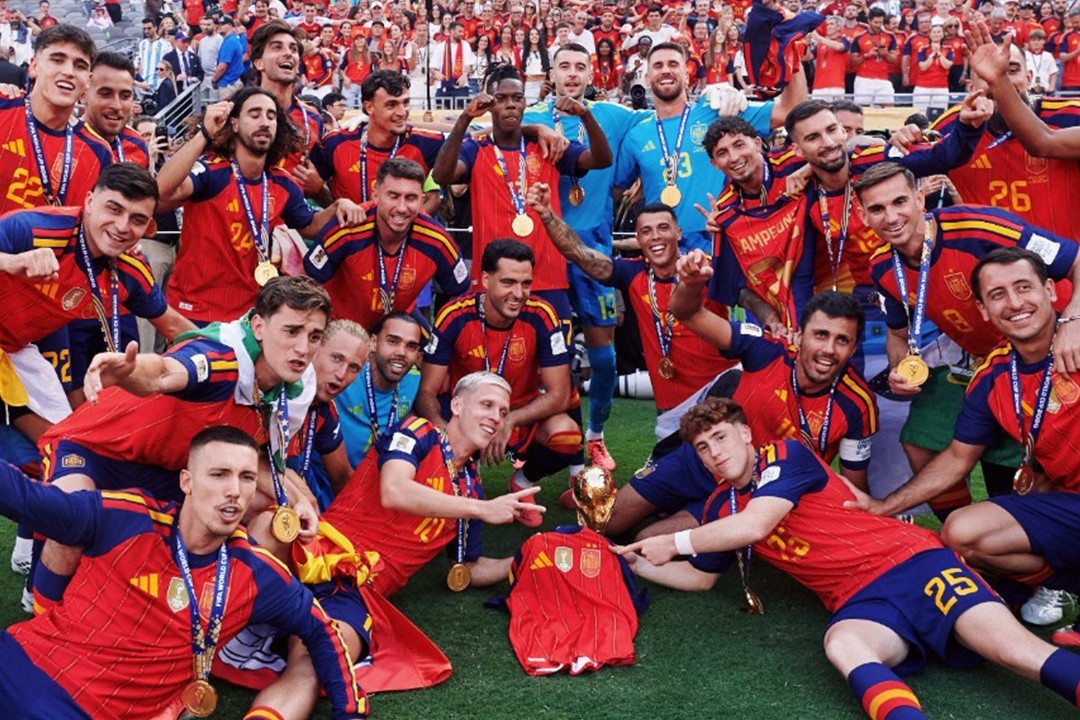
At 22:04 UTC on 19 July 2026, Ferran Torres turned a deflected cross past Argentina's goalkeeper in extra time to give Spain a second World Cup and seal a 1-0 victory over the reigning champions in a bad-tempered final watched across four continents. The goal, confirmed by ESPN's match report at 23:04 UTC, ended a final that had spent most of regulation scoreless after Argentina were reduced to ten men, and triggered scenes in Madrid that France 24 captured at 01:04 UTC on 20 July as fans poured into the streets around the capital.
The trophy returns to Spain for the first time since 2010, and the deeper read is that the country's two super-clubs carried the goalscoring load for the entire tournament. By the time Torres, a Barcelona forward, struck the decisive blow, Real Madrid's squad had outscored every other club in the competition, an aggregation ESPN tallied at 23:43 UTC on 19 July. The split matters: a Barcelona player delivers the headline, a Real Madrid cohort delivers the volume. That is the shape of modern Spanish football in one scoreline.
A final defined by Argentina's red card
Argentina went down to ten men inside the first half, according to the match reporting from ESPN and the Football Correspondent's live blog. From that moment the game tilted, but Spain, who had cut Argentina open routinely through the group stage and beyond, found the final third stubbornly closed. Torres, who had already been Spain's most reliable attacking outlet all tournament, kept probing. In extra time, with the weight of a generation on the substitutes' bench and the ghost of 2010 in the stands, he found the one half-yard of space that the previous 113 minutes had not conceded. ESPN's report called it a "clinical finish"; the Guardian's match account, published through the Football Correspondent feed at 22:17 UTC on 19 July, framed it as the "triumph of an idea, an identity. Of an unshakable and patient faith."
The France 24 footage from Madrid captures the other half of the story: a fan base that had spent the previous fortnight watching La Liga clubs supply the goals for a national team coached by Luis de la Fuente, and who now had the trophy to show for it. The celebrations in the capital are, in this sense, a Real Madrid win in all but name.
Real Madrid's depth, Barcelona's headline
The goal-scoring table is unambiguous. ESPN's aggregation showed Real Madrid-affiliated players scored more goals across the tournament than players from any other club, with Barcelona's contribution topped by Torres's winner. The structural point here is straightforward: when a national team draws its spine from the world's two best-resourced academies, the difference between winning and losing often comes down to which side of that divide produces the decisive moment. On 19 July 2026, the volume came from one club and the headline from the other.
This is not a coincidence. Spain's federation has spent two decades institutionalising the export of La Masia and La Fábrica graduates into the senior squad. That pipeline is now mature enough that whichever of the two clubs catches fire on a given night can carry the team across the line. Argentina, by contrast, arrived in the final with a smaller pool of European-elite starters and paid for it when the red card removed their tactical anchor.
What de la Fuente inherits
For the Spain coach, the trophy ratifies an approach that has often drawn scrutiny at home. De la Fuente's side played a high-possession, patient game that mirrored the tiki-taka lineage of 2010 while drawing on a deeper forward pool than any predecessor could name. The Football Correspondent's framing, characterising the win as the embodiment of an idea rather than a set of individuals, lands. Spain's 2010 team won by suffocating the opposition; this 2026 team won by suffocating the opposition and then finding one Barcelona-trained forward in the right pocket at the right time.
Argentina's defeat is the harder story. The reigning champions held Spain to ninety minutes of stalemate and lost only when fatigue and a numerical disadvantage finally told. The red card, rather than the goal, will be the framing they contest in the Argentine press. The sources do not specify the identity of the dismissed player or the precise minute, and the wire reporting from the closing minutes offers no formal protest from the Argentina camp. That detail is one the Argentine sports press will fill in over the next forty-eight hours.
The road to 2030
What the tournament confirmed, beyond the trophy lift, is that the gap between Spain's two super-clubs and the rest of Europe in player development is now structural rather than circumstantial. A Real Madrid-heavy goalscoring chart and a Barcelona match-winner in the final is the most legible possible advertisement for the academy-to-senior pipeline. Expect both clubs to lean further into that identity in the next cycle, and expect the Spanish federation to keep treating de la Fuente's patient possession game as doctrine rather than as a choice.
For Argentina, the immediate question is succession. The red card shaped this final, but the underlying pattern of a thin bench losing to a deep one will recur against any top-five opposition until the country's European-based core widens. The 2030 cycle starts now, and the gap visible on 19 July 2026 is the one they have four years to close.
Desk note: Monexus framed the final through the club-by-club goalscoring lens flagged by ESPN rather than the wire-standard national-team narrative, on the view that the depth chart tells the reader more about where Spanish football actually stands than the trophy photo does.