Spain's second World Cup lands at MetLife. The dynasty talk is already starting.
Spain lift a second World Cup at MetLife Stadium on 19 July 2026, dispatching Argentina in the final. With Euro success already on the shelf and a co-hosting role in 2030, the question is no longer whether La Roja peaked, it is how long they stay there.
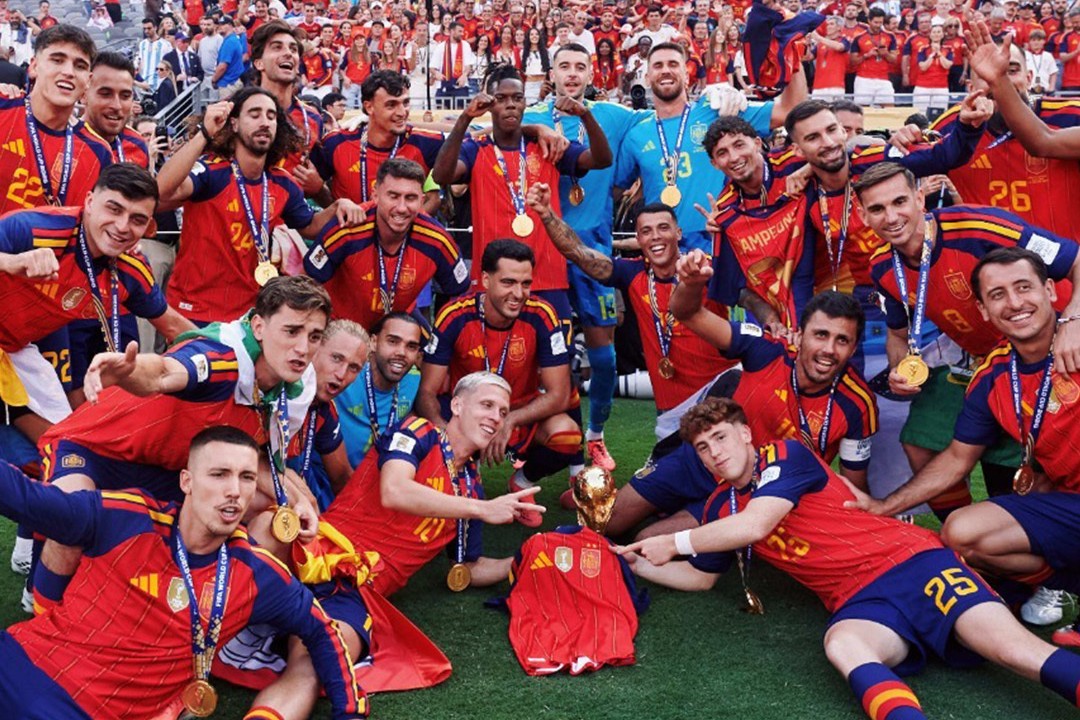
Spain walked off the MetLife pitch on the evening of 19 July 2026 with a second World Cup trophy, ending a tournament that began as an open field and finished with La Roja doing what they have made a habit of doing at the sharp end of international football: winning, and looking like they will keep winning. The final, played in East Rutherford, New Jersey, capped a campaign in which Spain conceded fewer goals than any champion in the modern record era, according to CBS Sports' tournament recap published 20 July 2026. The Argentina side that stood between them and the trophy was not a sentimental story; it was a working finalist built around familiar names, and Spain still found enough to put the game beyond them.
This is not a one-cycle story. Spain already held the European Championship when they arrived in North America, and the same squad that lifted Euro 2024 will share hosting duties for the 2030 World Cup across the Iberian Peninsula. The combination of a reigning world title, a reigning continental title, and a guaranteed place at the next global tournament is rare enough that the obvious question is whether anyone else can interrupt it.
A defense built for knockout football
The deciding factor in New Jersey was at the back. CBS Sports' 20 July 2026 wrap-up describes a "record-breaking defense" that carried Spain through the knockout rounds, conceding almost nothing of consequence once the group stage ended. That is a defensible claim to a championship on its own, and it does not require a stylised reading of the final to credit it. Argentina's clearest chances came in bursts, not in sequences, and the Spanish back line closed them.
The pattern matters more than the highlight reel. Spain did not park the bus; they pressed, they won second balls, and they turned possession into territory. That blend is what made them the most complete side in the bracket, and it is what makes them difficult to displace even as the calendar moves toward 2030.
The rivals that did not show up
The bracket is worth a second look. France, the runner-up in 2022, was the obvious reference point for any challenger in possession-based football, and CBS Sports had identified Spain's semifinal against France as the match that would define the tournament before the final was played. The Spanish win over Les Bleus in the last four, captured in CBS Sports' 18 July 2026 coverage, ended the question of whether this Spain side could absorb pressure from a team built to break lines.
Argentina's path to the final carried its own logic. They had taken the trophy four years ago, and the core of that side was still in place. The risk for them was always dependency: if the supply lines to the forwards narrowed, the side had fewer secondary creators than Spain's. The final reflected that. Spain's depth, particularly through midfield rotations and overlapping fullbacks, allowed them to dictate the game's tempo in a way Argentina could not answer without conceding shape elsewhere.
What the co-hosting slot actually changes
The 2030 tournament is the underreported piece of this story. Spain, alongside Portugal and Morocco, is a confirmed co-host, and that status does more than guarantee entry. It removes the qualifying volatility that has ended more than one dynasty before it could consolidate. Spain will not have to win a qualification group against a rising European power to reach the next World Cup; they will simply be there. The competitive pressure of 2026–2030 will therefore fall on friendlies, Nations League cycles, and European Championship qualification, none of which carries the same knockout weight.
The structural read is straightforward. Holders of a World Cup and a continental title, with home advantage in four years, get to treat the next cycle as preparation rather than survival. That is not a guarantee of a third title; it is a guarantee of a quieter build to one. The counterpoint is also fair: co-hosting has been a mixed blessing. The 2002 hosts reached the round of 16 and never went further; the 2010 hosts had to navigate the weight of expectation at home. Spain's floor is higher than both those cases. Their ceiling, though, depends on whether the back four that defined this tournament stays intact through 2030.
The four-year window that decides whether this is a dynasty
The honest version of the dynasty question is that two trophies do not make one. What they do is buy time. Spain now have four years to integrate the next generation of midfielders, to decide whether Mikel Oyarzabal and the veterans of this final carry forward to 2030, and to manage a squad that will not want for options. The alternative read is that international football's competitive cycles are shorter than club football's, and the gap between this Spain and the next challenger, France's reset, Brazil's next attempt, England's coming group, is narrower than the trophy cabinet suggests.
That is the version of the future worth watching: not whether Spain deserve the dynasty label today, but whether the Spain that plays the 2030 opening match is recognisably the same team. If it is, the question of who stops them stops being rhetorical. If it is not, this week at MetLife becomes a high point rather than a base camp.
Desk note: Monexus framed Spain's second title through the lens of structural advantage (co-hosting, squad depth, defensive record) rather than as a tournament recap, because the recap is widely available on the wires and the structural question is the one the wires have not yet answered.
Wire provenance
This editorial synthesis draws on the following public wire/social posts:
- https://t.me/Olympics/2206
- https://t.me/Olympics/2205