Sound grenades over Khiam: the slow arithmetic of Israel's Lebanon campaign
Israeli drone activity across south Lebanon and Beirut's southern suburb has intensified sharply in mid-July, with sound-grenade drops in Al-Mansouri and Al-Khiam signalling a pressure campaign that previews a wider confrontation.
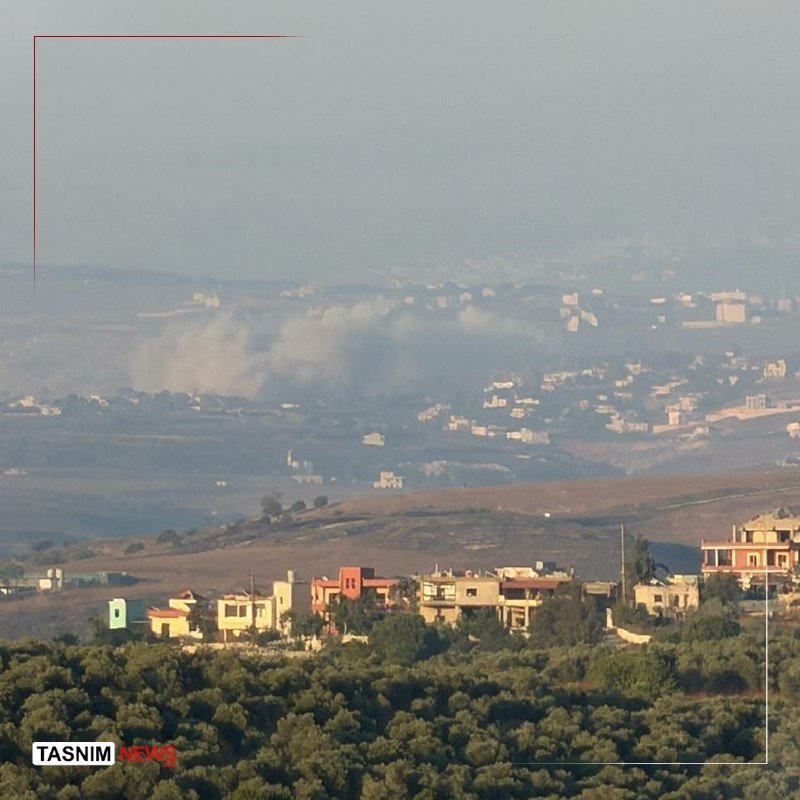
At 10:48 UTC on 20 July 2026, Lebanon's state news agency NNA reported that an Israeli drone dropped a sound grenade on the town of Al-Mansouri, followed by a second detonation on the plain near the city of Al-Khiam in southern Lebanon. The account, relayed by the field channel @wfwitness on Telegram, is small in itself: a non-lethal munition, no reported casualties, two coordinates in a landscape already saturated with low-altitude Israeli overflights. It is the pattern around the incident, not the incident itself, that warrants attention.
Twenty-two minutes earlier, at 10:26 UTC, the Beirut-based outlet The Cradle published visual data it said confirmed "a significant escalation in Israeli reconnaissance drone activity across Lebanon today, observed extensively over south Lebanon and Beirut's southern suburb." Read against the sound-grenade drops in Al-Mansouri and Al-Khiam, the two threads form a single picture: a calibrated ratchet of presence and pressure, executed from the air, directed at the civilian interface between Lebanese villages and the border districts where the armed confrontation is concentrated.
The grammar of a sound grenade
A sound grenade is designed to be heard rather than to wound. Its purpose is to empty a street, send a message, and produce footage. Lebanese outlets in past rounds of friction have documented the device as a tool of Israeli psychological operations along the frontier, distinct from the incendiary and laser-guided munitions that have marked deadlier phases of the border campaign. The NNA dispatch does not specify which munition variant was used; it records only that two devices were dropped in succession on populated localities. What the phrasing confirms is that the targets were civilian space, not a military installation identified by name.
This matters because the international-law frame around cross-border hostilities hinges on distinction and proportionality. A non-lethal device discharged over a town does not, in itself, breach either principle. But the cumulative effect of repeated low-yield provocations across a populated borderland is to normalise the airspace itself as a theatre of operation, which is exactly the outcome the louder Israeli security voices have publicly argued is necessary to degrade armed group reconstitution north of the Litani.
What the visual data shows
The Cradle's reporting on the same morning characterises the drone tempo as "extensive" across south Lebanon and Beirut's southern suburb (Dahiyeh). The outlet, which is sympathetic to the Axis of Resistance framing, is not a neutral observer, and its sourcing caveat applies: this is an assertion from a publication with an editorial line on the conflict, not a wire-confirmed count of airframes. What can be said cleanly is that the claim is consistent with the NNA report two minutes later; two independent, ideologically distinct sources converging on the same operational picture within a single news cycle is more corroboration than most border mornings in this theatre produce.
The relevant counter-narrative comes from the Israeli security commentariat, which has spent the past several weeks arguing in Haaretz, the Jerusalem Post and Ynet that the air pressure is calibrated specifically to avoid the kind of major flare-up that would force a ground incursion. Under that read, the sound-grenade incidents are the visible residue of a larger surveillance campaign, not a prelude to one. The two readings are not mutually exclusive; they point to the same tactics described from opposite political vantage points.
The structural picture
Hezbollah's military position in south Lebanon has been rebuilt in stages since the 2024 ceasefire framework, with varying degrees of visibility. Israeli strategy in the period since has been to attack that rebuilding through visibility itself: persistent overflight, signature strikes on identifiable assets, and the slow harassment of villages used as logistical cover. Sound grenades sit at the civilian end of that spectrum. They are loud enough to register on satellite imagery and on the body politic of the villages they target, and quiet enough not to produce a martyrdom cycle that would harden domestic Lebanese opinion behind a military response.
The structural frame, stripped of academic scaffolding, is this: a state with air supremacy can choose how loudly to assert it, and the loudness is itself the message. Beirut's southern suburb appearing in the same drone-tempo brief as the villages around Khiam is not incidental; it extends the airspace of confrontation from the rural frontier into the urban command-and-control geography of the movement that Israel says it is containing.
What to watch next
The trajectory in the short term depends on whether the overflight tempo produces a return strike. Hezbollah's stated doctrine has been to respond to civilian-targeting incidents in kind; the period between Israeli action and Lebanese response is the metric to watch. If the next 72 hours pass without a rocket or drone launch from south Lebanon in retaliation for the 20 July incidents, the calibration thesis holds and the pressure campaign continues at its current setting. If a response comes, the sound-grenade phase ends and the escalatory ladder begins to be climbed openly.
Two things remain genuinely uncertain. First, the source set is Lebanese; the Israeli military has not, at the time of writing, issued a press statement visible in this reporting window confirming or denying the 20 July NNA account, and the verification trail therefore rests on a state agency and a sympathetic outlet, both reporting on Lebanese terms. Second, the broader political ceiling of the campaign is being negotiated in capitals far from Khiam, and the visible tempo on the ground is only one input into that negotiation.
Desk note: wire coverage on this theatre is heavily mediated through either Lebanese state channels or outlets with explicit editorial alignment; this article treats both with the sourcing caveats they require, and leans on the convergence between them rather than on either alone.
Wire provenance
This editorial synthesis draws on the following public wire/social posts:
- https://t.me/wfwitness
- https://t.me/thecradlemedia
- https://t.me/TheCradleMedia