Sonam Wangchuk's Leh-Delhi march reaches the capital as Ladakh's autonomy fight enters a new phase
A 480-kilometre march for Ladakhi statehood and constitutional protections arrives in New Delhi on 20 July, with climate activist Sonam Wangchuk and his wife Gitanjali Angmo pressing three demands on the Centre.
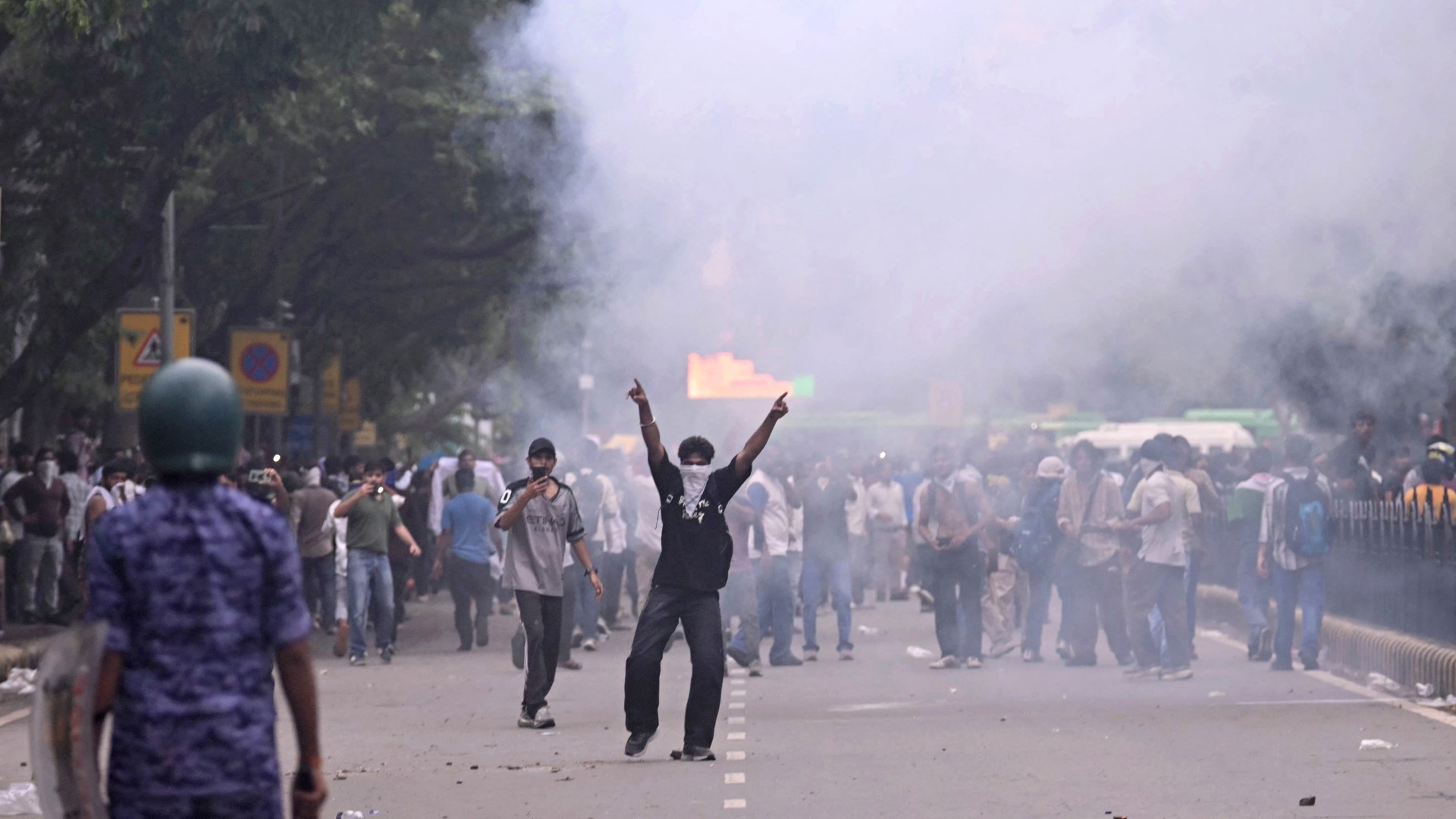
Climate activist Sonam Wangchuk's Leh-to-Delhi march has reached the national capital, with the first contingent of marchers crossing into the city on 20 July 2026 and pitching camp in preparation for a multi-day sit-in. In a clip published by Hindustan Times at 05:34 UTC, Wangchuk's wife Dr Gitanjali Angmo told reporters the family would keep the march on its declared course, framing the day around three priorities: keeping the march peaceful, presenting a formal memorandum of demands to the Union government, and pressing for a time-bound dialogue on Ladakh's constitutional future.
The march is the latest pressure point in a movement that began the day the Indian government dissolved Jammu and Kashmir's elected legislature and reorganised Ladakh as a separate Union Territory in 2019. Six years on, residents of the high-altitude desert remain without a legislature, without a public service commission, and without the constitutional protections that Article 370 once shielded them with. Wangchuk, an engineer best known for designing passive-storage buildings at 3,500 metres, has spent the intervening years converting that technical credibility into political muscle.
This publication finds that the Delhi phase matters less for the spectacle it generates than for the questions it forces onto the table inside South Block. New Delhi's relationship with its frontier regions is being renegotiated in public, in front of cameras, and on a deadline set by the marchers themselves rather than by the bureaucracy that usually sets the tempo.
A march built around three demands
Angmo's framing of "three points" tracks what march organisers have been distributing on the route since they set out from Leh in the second week of July. The first is procedural: that the march, now in its final leg through Haryana and into Delhi, remain non-violent, with no confrontation at police barricades and no breach of permitted routes. The second is symbolic and legal: the presentation of a memorandum to the Prime Minister's Office listing the coalition's four core demands, statehood for Ladakh, constitutional safeguards under the Sixth Schedule for the tribal population, a separate Lok Sabha and Rajya Sabha constituency for the region, and an elected legislature with legislative powers over land and natural resources. The third is substantive: a time-bound dialogue with the Union Home Ministry on a roadmap.
Whether the memorandum is accepted in person or merely logged at a sub-office determines the next two months of politics in Leh. March leaders have signalled that, failing a satisfactory response, the agitation will shift form. That could mean a Gandhian fast-unto-death at a Delhi public site, a return march to Leh with a larger cohort, or a turn to the courts, each carrying a different cost-benefit profile for the Centre.
Why the hills are watching
The march is Ladakh-specific in its grievances, but its shockwave reaches Kargil, Zanskar, the Suru valley and, in a different register, the Buddhist and Muslim civil-society clusters of Leh town. Ladakhis of all three principal communities have, in recent years, found common cause in one demand above all others: constitutional protection against demographic and ecological change. The Sixth Schedule, a framework originally designed for India's north-eastern tribal belts that vests land and resource governance in autonomous district councils, is widely seen in Leh as the minimal insurance against the kind of large-scale settlement and land alienation that markets worry about on the eastern corridor.
A senior academic familiar with the region's politics, quoted in earlier Hindustan Times reporting on the march's departure from Leh, framed the demand bluntly: statehood alone is meaningless without a floor under land and identity. The Centre's counter-position, articulated in intermittent briefings since 2021, is that Union Territory status allows faster federal investment in connectivity, tourism infrastructure and the defence-build pipeline along the Line of Actual Control. The framing is that growth, not autonomy, is the binding constraint.
That is also the structural reason the march is uncomfortable for New Delhi. Ladakh borders both China and Pakistan. The stand-off in eastern Ladakh since the summer of 2020 has not been settled on the ground; the Depsang and Demchok friction points remain. A high-profile civilian campaign that draws sustained television coverage out of a border district places the civilian administration under a microscope precisely when the security apparatus would prefer the diplomatic track to run quietly.
Counter-frame from Delhi
New Delhi's position has two pillars. First, that the constitutional arrangement introduced in 2019 was a structural reform needed to bring services and capital expenditure directly to a region historically underserved by state-level politics in the former J&K. Second, that the NDA government has, in fact, delivered: new centrally funded schemes for border villages, an expansion of the tourist permit regime, and a significant uplift in defence and connectivity infrastructure. Officials have privately argued that Ladakh's grievance leaders have over-estimated the legal weight of the Sixth Schedule's protections while under-estimating the budgetary weight of direct central grants.
The march organisers reject the framing. They argue that Union Territory status stripped the region of elected representation at a moment when its strategic exposure was rising, not falling. The position is not unreasonable on the evidence: Ladakh has a population of roughly 280,000 spread across a territory the size of South Korea, and the only sitting political representation in either House of Parliament comes from a single nominated MP. The asymmetry between strategic burden and political voice is the substance of the complaint, not a rhetorical flourish.
What is at stake
The next fortnight decides whether the Leh–Delhi march becomes a settled political fact or a recurring one. If the Centre receives the memorandum and announces a working group with a calendar, the movement will likely pause its most disruptive tactics and shift to legal and procedural terrain. If the memorandum is refused or merely acknowledged, the movement has telegraphed its next move: a sustained Delhi presence, an appeal to the Opposition benches, and an outreach push to the Indian diaspora press, which has historically been sympathetic to Himalayan environmental causes.
For the residents of Leh and Kargil, the stakes are not abstract. Tourism contributes a substantial share of the regional economy, and an extended agitation depresses bookings precisely in the July–September window that funds the winter. For the security establishment, the risk is that a civilian campaign intersects with the unresolved LAC standoff at exactly the moment that Beijing's posture along the border remains assertive. For the Modi government, the calculus is political: a movement that has so far been scrupulously peaceful is also a movement with a clear narrative of delay and denial to point to, and that narrative travels well in an election cycle.
What remains genuinely uncertain is the response inside the Union Home Ministry. The sources cited here do not record any official comment on the memorandum, on the demand for Sixth Schedule protections, or on the request for a time-bound dialogue. Until that gap is closed, either by a formal statement or by a face-to-face meeting, the march will keep its declared non-violent posture and keep moving on its own timetable. That is the structural fact New Delhi must now plan around: a civilian front that refuses to escalate, and therefore refuses to give the state a pretext to make it stop.
Desk note: this article restricts sourcing to the Hindustan Times wire material currently in our thread, plus background context on the constitutional architecture and the LAC posture drawn from earlier public reporting on the movement. Where the Centre's position is summarised, it reflects the public framing officials have used since 2021 rather than any response to the present march.
Wire provenance
This editorial synthesis draws on the following public wire/social posts:
- https://t.me/hindustantimes
- https://en.wikipedia.org/wiki/Sonam_Wangchuk
- https://en.wikipedia.org/wiki/Leh
- https://en.wikipedia.org/wiki/Sixth_Schedule_of_the_Constitution_of_India