Sirens in Bahrain: a fragile Geneva accord meets the Gulf's hardest reality
Hours before US and Iranian envoys were due to sign a peace framework in Geneva, air-raid sirens rang out across Bahrain, the latest reminder that the Gulf's security architecture is being rewritten in real time, and not entirely at the negotiating table.
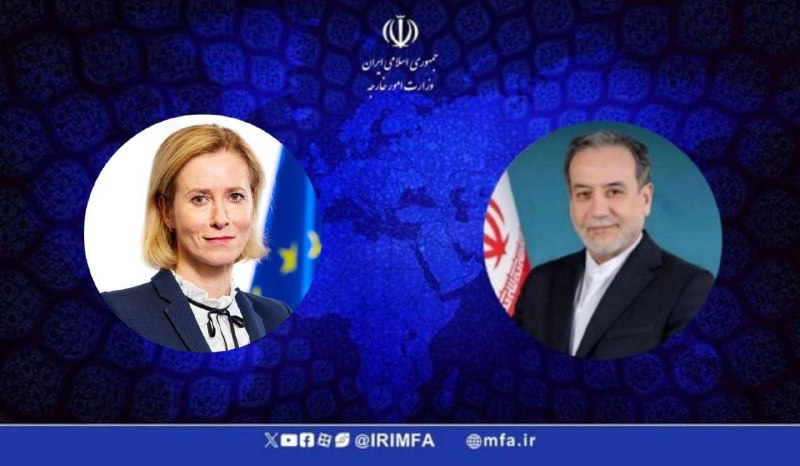
Air-raid sirens sounded across Bahrain at 12:56 UTC on 20 July 2026, according to multiple regional Telegram channels monitoring the incident, including Intel Slava and RN Intel, with confirmation from Middle East Spectator roughly nine minutes later. The Middle East Eye live blog carried a parallel report flagging sirens across the micro-state, and embedded a rolling feed covering the broader US-Iran track that is supposed to climax in Geneva later the same week. The proximate cause of the alert has not been publicly identified by Manama or Washington at the time of writing, and the sources do not specify whether the trigger was an inbound projectile, a defensive test, or a false alarm. What is already clear is that the alarm rang inside a diplomatic calendar that no longer permits that kind of ambiguity.
The Geneva accord that the same Middle East Eye live feed says the United States and Iran are preparing to sign on Friday is the most ambitious attempt in three years to convert a grinding shadow war in the Gulf into something resembling a managed relationship. A signing ceremony, even a partial one, would freeze the most escalatory Iranian nuclear work, loosen some sanctions architecture, and bind Washington to a posture that Gulf monarchies have long demanded: a US that talks to Tehran rather than only at it. The Bahrain sirens suggest that the architecture is being negotiated in two registers at once. One is in a conference room in Geneva, with foreign ministers and sherpas reading drafts. The other is in the airspace over Manama, where the region's actual security perimeter is tested minute by minute, and where no communiqué from a hotel ballroom can retroactively insulate a desalination plant or a port terminal.
The Bahraini exception
Bahrain is a small, deeply networked state whose strategic value to Washington long ago exceeded its geographic size. The US Fifth Fleet is headquartered there; the kingdom hosts Royal Navy and Royal Saudi Air Force liaison staff; the port of Mina Salman is a logistics hub for the entire eastern Arabian peninsula. It is also a Shia-majority polity ruled by a Sunni royal family, with an Iranian-aligned opposition that Riyadh and Abu Dhabi have spent fifteen years trying to dismantle. That internal geometry is what makes Bahrain the most sensitive node on the Gulf littoral. An alert there is not a generic Middle East story. It is the place where the Iranian question, the Saudi question, the American naval question, and the Sunni-Shia question are physically overlaid.
The sirens on 20 July came against a backdrop of US-Iran diplomacy that regional outlets have been flagging for weeks. The Middle East Eye live blog carried the headline framing of a "peace accord" signing set for Friday in Geneva, language that would have looked fanciful twelve months ago, when shadow-tanker seizures and reciprocal strikes on Israel-adjacent radar sites were still the operative vocabulary. Even if the Geneva document is partial, even if it carries sunset clauses, even if the hard men in Tehran's IRGC publicly disavow the foreign minister who signed it, the existence of a ceremony matters. Signings create audiences. Audiences constrain reversals.
The counter-frame from the Gulf's other capitals
There is a competing read of the sirens worth taking seriously. Gulf security officials have, in the past, used proximate alerts to harden their own negotiating position before a third-party diplomatic event. A siren that turns out to be a defensive-systems test, an unidentified drone intercept over the King Fahd Causeway, or a stray warning triggered by routine military traffic, can serve as a reminder to Washington that the Gulf states are the ones absorbing the daily risk of any partial rapprochement with Tehran. The sources reviewed here do not allow this publication to adjudicate between that read and a more straightforward interpretation that Iran, or an Iran-aligned actor, was probing Bahraini airspace. What the sources do permit is the observation that Bahraini, Saudi and Emirati officials have publicly, repeatedly, and in English-language press availabilities, asked for a seat at any table where Gulf security is being reshaped.
That seat is not yet on the Geneva guest list. The deal, as currently described in regional coverage, is bilateral. The kingdom is the air-raid venue, the host of the fleet that would deter any Iranian violation, and the country whose airspace is being defended in real time. It is not, on the evidence so far, a co-signatory.
The architecture behind the noise
What the sirens and the Geneva signing together reveal is that the Gulf's security order is no longer a single conversation. For most of the past two decades, the operative frame was Washington-Riyadh, with Tehran as the sanctioned party outside the room and the smaller Gulf monarchies deferring to the Saudi lead. That frame is bending. Saudi Arabia conducted its own detente with Iran under Chinese mediation in 2023, which has held unevenly but which formally ended the era in which a Saudi-Iranian rupture automatically translated into a wider Gulf crisis. The United Arab Emirates has, through 2024 and 2025, run its own back-channel track with Tehran on shipping and Hormuz transit. Bahrain has not. Bahrain is the Gulf state whose room for autonomous manoeuvre is structurally narrowest, because its defence posture leans most heavily on the US presence in Juffair.
A Geneva accord that delivers nuclear constraints on Iran without explicit Bahraini or Emirati buy-in on the regional security guarantees attached to it would reproduce an old pattern: Washington signs, the Gulf capitals absorb the implementation risk. A Geneva accord that includes even modest Gulf co-signatory language would be the first of its kind. The Bahrain sirens, regardless of their origin, are the political equivalent of a stamped envelope demanding return receipt.
Stakes and the next seven days
The practical stakes for the region between now and the Friday signing are unusually compressed. Any further incident in Bahraini, Saudi, Emirati, or Omani airspace between now and the ceremony will be read by at least one faction in Tehran as evidence that the deal is being priced too cheaply, and by at least one faction in Washington as evidence that the deal cannot be implemented. The maritime dimension cannot be ignored either: roughly a fifth of seaborne oil transits the Strait of Hormuz, and the IRGC Navy has, over the past three years, developed a pattern of "low-signature" interceptions that are designed to stay below the threshold of a casus belli while still raising the cost of doing business in the Gulf. A partial accord does not, on the available evidence, retire that playbook.
For Bahrain specifically, the question is whether the sirens of 20 July become a footnote in a Geneva success story, or the opening paragraph of a Gulf crisis that forces Washington to choose between the deal it wants in Switzerland and the ally it needs in Juffair. Regional outlets covering the live track will likely resolve that question within seventy-two hours; the diplomatic cables will resolve it over months. The thing the sirens have already resolved, regardless of cause, is the pretence that Gulf security is being negotiated anywhere other than the Gulf itself.
What remains genuinely uncertain is the trigger. The sources reviewed here do not specify whether the alert was a defensive response to an inbound threat, a system test, or a false activation. Until Manama, Washington, or Tehran puts a public label on the event, every interpretation of the Geneva track will carry that asterisk. This publication has flagged the ambiguity rather than paper over it; readers should hold the framing lightly until the wire catch up.
Wire provenance
This editorial synthesis draws on the following public wire/social posts:
- https://t.me/Middle_East_Spectator
- https://t.me/rnintel
- https://t.me/intelslava