Houthi blockade call turns the Red Sea into a re-priced corridor
War-risk premiums for Red Sea transits have more than doubled after Ansarullah declared a maritime blockade on Saudi Arabia, exposing how thin the line is between a political announcement and a re-priced global supply chain.
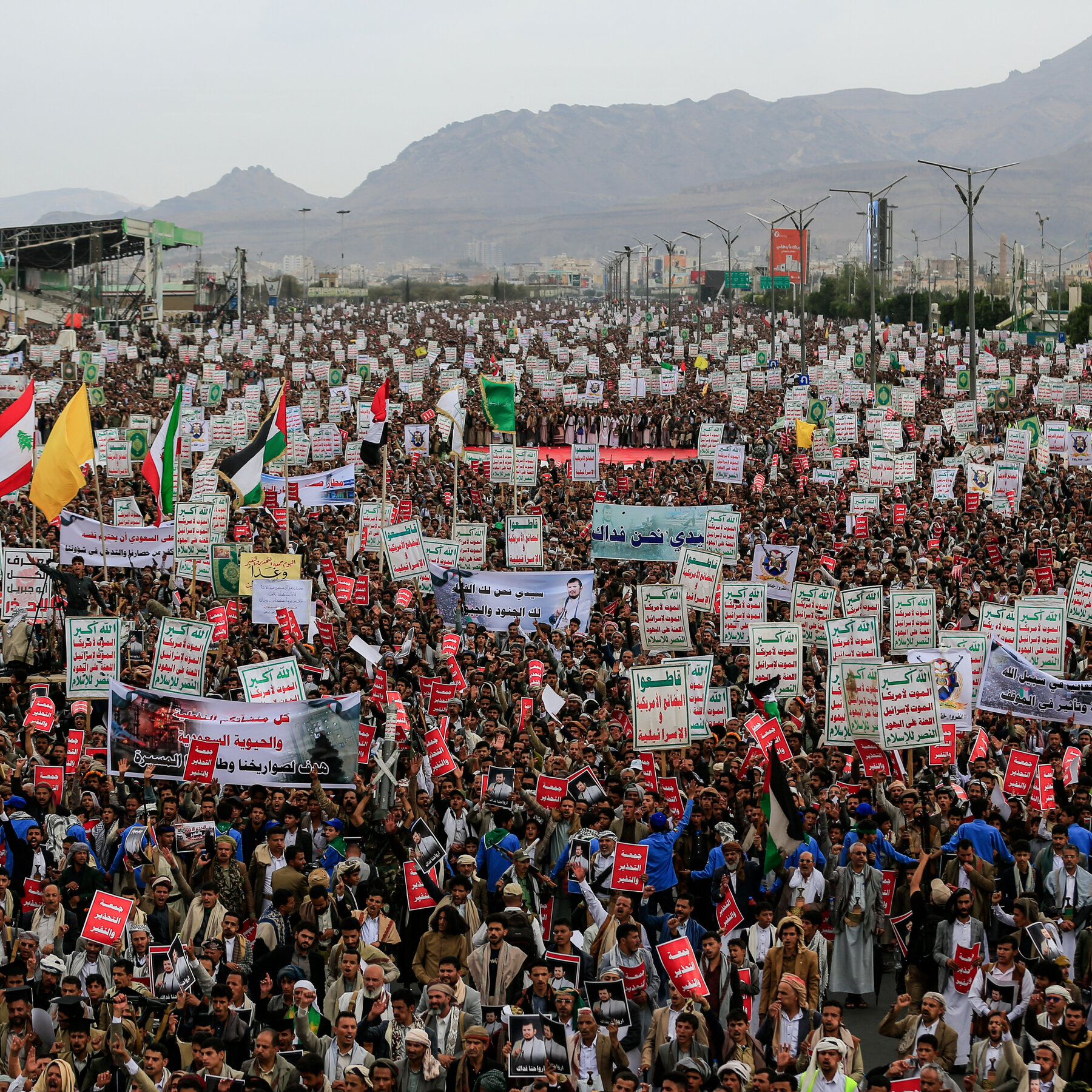
Marine war-risk underwriters priced in a new reality within hours of the 20 July 2026 announcement: by the close of European trading, premiums for tankers and bulk carriers routing through the Bab el-Mandeb had more than doubled on top of already elevated post-2024 levels, with Reuters reporting the move came in direct response to Ansarullah's declaration of an immediate maritime blockade targeting vessels headed to and from Saudi Arabia.
The arithmetic is blunt. Shipping pools, Lloyd's syndicates and P&I clubs do not wait for the first hull to be hit. They reprice the corridor the moment the political risk curve bends. The Houthis did not need to fire anything to move a global number; they only needed to say, on the record, that the corridor was closed.
The mechanism is the same one that has governed the Red Sea since the late-2023 campaign began. A threat to Saudi-flagged, Saudi-owned or Saudi-chartered tonnage, plus any vessel judged by crews to be politically aligned with Riyadh, reprices a transit that carries a significant share of the kingdom's seaborne crude and a slice of Europe's refined-product imports. Brokers in London and Singapore pass the new rate to charterers, who pass it to cargo owners, who pass it to bond markets, fuel retailers and, eventually, drivers. None of those steps require a shot to be fired. They only require the market to believe the next shot might be.
What Ansarullah actually said
The Houthi political bureau framed the measure as a blockade on Saudi Arabia itself: an instant prohibition on movement to and from Saudi ports, with the threat extended to oil shipments routing through the waterway. The wording matters because it lifts the threat above the previous operating logic, which tended to target vessels linked to Israel or to specific Western commercial chains. A blockade on a single Gulf state, enforced by a non-state actor sitting astride the southern approach to the Red Sea, is a different category of claim than a ship-by-ship campaign.
Whether the capacity matches the rhetoric is the open question. Past Houthi operations have been selective: a missile, a drone boat, a boarding by helicopter, then a long quiet. But insurers price declared intent, not demonstrated capacity. The moment a blockade is announced in those terms, every underwriter has to assume the worst plausible case until crews prove otherwise.
The Saudi exposure
Riyadh's outbound energy complex does not run only through the Red Sea. The East-West pipeline (Petroline), expansion projects at Yanbu on the western coast, and increasing volumes routed around Africa via the Cape of Good Hope all provide alternatives. None of them is free. Petroline's spare capacity is finite and politically sensitive inside the kingdom, Yanbu is itself a Red Sea terminal that lies inside the announced exclusion zone, and routing around the Cape adds roughly ten to fifteen sailing days, plus the fuel and emissions penalty that charterers now build into every contract written since 2024.
The exposure that matters for global prices is not the Saudi barrel itself, which the kingdom can offset through pipeline and refinery routing, but the confidence premium attached to the corridor as a whole. A blockade that targets one Gulf state is read by markets as a blockade that targets all Gulf states, because the insurance and the routing decision are made per transit, not per flag.
The pricing channel
The numbers most worth watching are not the headline war-risk percentages but the second-order costs: deviation bonds, rerouting clauses, charter-party disputes over whether a declared exclusion zone counts as a legitimate "unsafe port", and the slow bleed on just-in-time supply chains that have spent three years pretending the detour is the new normal. Each of those was already inflated. The Houthi declaration compresses what had been a chronic surcharge into what now looks like a structural premium.
There is also a geopolitical channel that runs the other way. The same announcement that lifts shipping costs gives Riyadh a domestic and regional argument for the security guarantees it has been asking Western partners to underwrite. A non-state actor dictating transit terms in a chokepoint that Arab Gulf states treat as their own backyard is exactly the threat picture that justifies expanded basing access, integrated air and missile defence cooperation, and a harder line on Iranian transfers in Yemen.
What the announcement does not settle
The reporting so far does not say whether Ansarullah has the maritime capacity to enforce a blanket blockade against Saudi shipping, nor whether the political declaration is a negotiating signal timed to an unannounced track, or the opening of a sustained campaign. Reuters' market reporting confirms the insurance response; the operational picture on the water remains unverified beyond the announcement itself. For underwriters, that ambiguity is itself the price event. For traders, it is the input that will set basis levels on Brent and Dubai through the next session.
Until a Saudi-flagged or Saudi-chartered transit demonstrates the new rule is not enforced, every ship in the corridor is paying for the possibility that it will be.
How Monexus framed this: the wire led on the policy announcement; this piece reads it through the pricing channel that connects a political declaration in Sanaa to a premium printed in London, and names the structural exposure that the headline price move leaves intact.
Wire provenance
This editorial synthesis draws on the following public wire/social posts:
- https://t.me/tasnimplus
- https://x.com/polymarket/status/1
- https://x.com/polymarket/status/2