Two dead in Qaryut: the West Bank violence the international press keeps filing and forgetting
On 20 July 2026, Israeli fire killed two Palestinians in Qaryut during a settler assault. The pattern is now older than most readers have been paying attention.
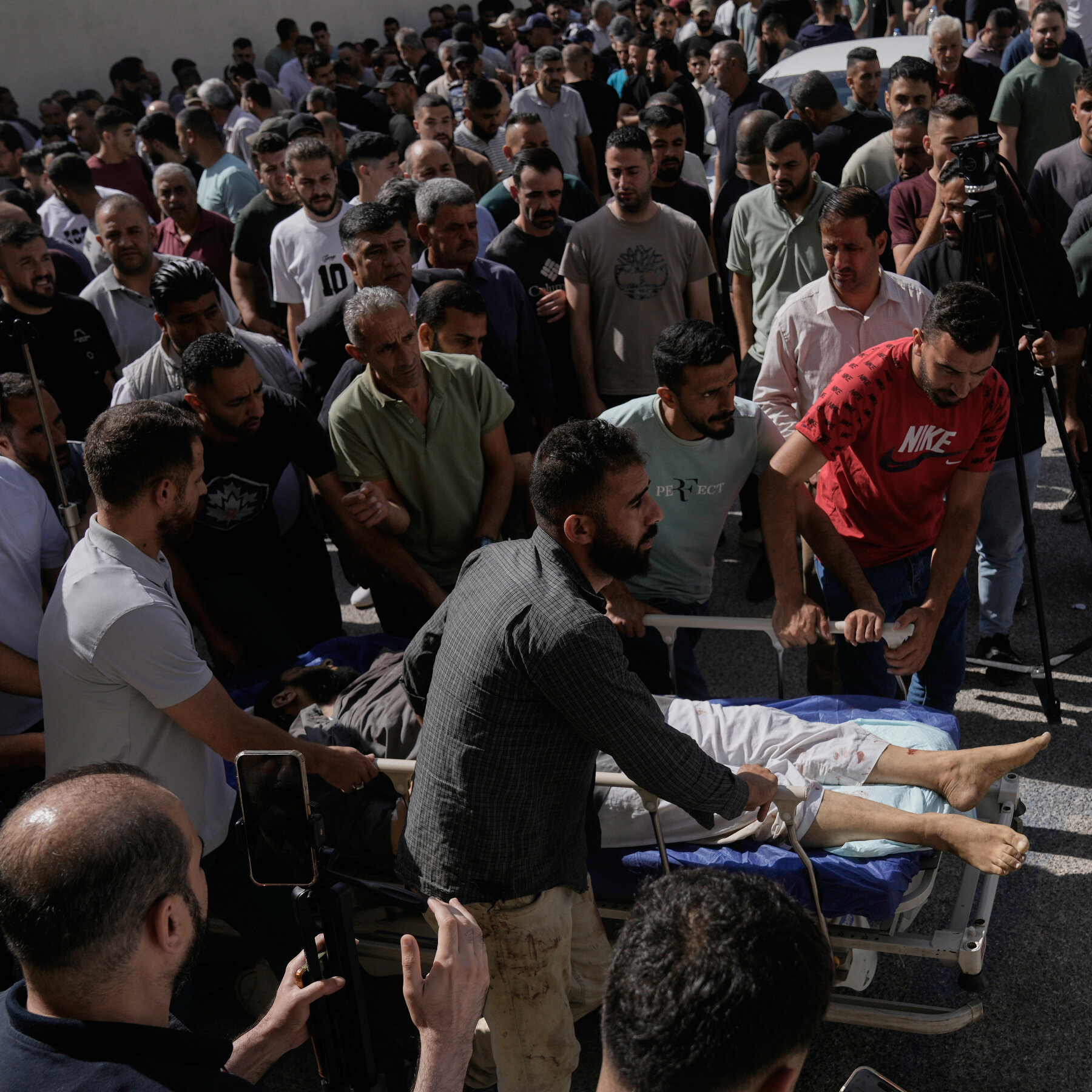
At roughly 08:26 UTC on 20 July 2026, residents of the village of Qaryut, south of Nablus in the occupied West Bank, began filming Israeli settlers moving into Palestinian homes. Within hours, two Palestinians were dead from Israeli gunfire after troops and settlers raided a house and made off with several sheep, according to a Middle East Eye dispatch timestamped 09:00 UTC the same day. The geography is small; the mechanics are familiar.
Qaryut sits on a ridge of south-Nablus hill country that has produced more than its share of these dispatches. The latest fatal incident is not an isolated flare. It belongs to a documented rhythm of settler incursion, military escort, and lethal fire that residents, Palestinian rights groups, and a growing list of Israeli human-rights organisations have spent years recording. What is striking is not that it happened but that it can be told, again, in the same words as the last one.
What the day's reporting shows
Middle East Eye's account, filed 09:00 UTC on 20 July, describes troops and settlers opening fire on Palestinians after raiding a house and stealing several sheep. Video circulated by The Cradle Media's Telegram channel at 08:26 UTC shows locals reporting settlers infiltrating and seizing homes in Qaryut. The two reports are mutually reinforcing rather than redundant: one documents the kinetic outcome, the other the property-level intrusion that preceded it.
The standard caveat applies: these are initial, locally sourced accounts. The Israeli military has, in previous comparable incidents, disputed casualty counts, questioned the sequence of fire, or described the soldiers as responding to stone-throwing. None of that rebuttal is in the source material at hand. What is in the source material is a filmed intrusion, a documented fatality count, and a pattern that does not need a rebuttal to be legible.
The frame nobody wants to argue with
The dominant international framing of settler violence in the West Bank treats it as a policing problem: rogue individuals, hate crimes, a matter for courts and restraining orders. Israeli authorities have arrested settlers in past cases; some have been convicted. The frame is not wrong, exactly. It is incomplete in a way that has political consequences.
A policing frame asks who broke the law on a given afternoon in a given village. A structural frame asks what the law itself permits. Settlement expansion in the West Bank continues under the authority of the state that sends the troops. Soldiers accompany settler raids; the same army that defines the legal order defines the response when Palestinians resist. The two Palestinians killed in Qaryut on 20 July died under a sovereignty that does not recognise theirs. That is the fact the policing frame is designed to push off the page.
The press cycle's selective memory
Each incident generates a short, well-sourced news wave: wire copy, a UN statement if the deaths are high enough, a flurry of NGO quotes, then silence until the next one. The result is a coverage pattern that mistakes repetition for resolution. Western outlets, including those that file diligently, treat each event as discrete. Israeli press coverage of settler violence is more granular and often more critical than the English-language coverage; Haaretz and, to a lesser extent, the Times of Israel have run extended reporting on patterns in south-Nablus villages. Those threads rarely travel.
The international press's appetite for this story is real but narrow. It spikes on major operations in Jenin or Nablus refugee camps and decays on the smaller hill villages, where the demographic engineering happens one stolen sheep and one confiscated home at a time. Qaryut is exactly that kind of village. The mechanics there are slower, less cinematic, and easier to file and forget.
What is actually at stake
Two deaths, a handful of sheep, and a house is a small story by the arithmetic of the war next door. It is a large story by the arithmetic of the West Bank, where the question is whether a viable Palestinian territorial continuity survives the next decade. Every successful settler incursion inches the map toward a fact on the ground. The Israeli government's coalition arithmetic makes a formal annexation announcement unlikely in the near term; the outcome is being achieved by increments the formal process would not survive.
For Palestinian residents of south Nablus, the stakes are not abstract. They are the next raid, the next funeral, the next school year taught to children who have watched their neighbours shot. For an international system that insists on a two-state vocabulary while presiding over a one-state geography, the stakes are credibility.
What we do not yet know
The sources do not name the two Palestinians killed. They do not specify whether they were armed, whether troops or settlers fired the fatal shots, or whether the Israeli military has issued an initial statement. Israeli press had not, as of the timestamps in the source material, posted a confirmed casualty figure. The filmed intrusion is documented; the forensic sequence is not. Readers should hold the death toll lightly and the pattern tightly: the pattern is the part that does not depend on this afternoon's details.
Desk note: Monexus frames this through Palestinian and regional outlets reporting from the ground, cross-referenced against the Western-wire coverage that typically arrives hours later. The pattern is the story; the day's fatalities are the latest data point, not a rupture.
Wire provenance
This editorial synthesis draws on the following public wire/social posts:
- https://t.me/thecradlemedia
- https://t.me/TheCradleMedia