Five months into the US-Iran war, oil markets are calm. The reason is Bahrain.
Brent has held through five months of US-Iran fighting. The reason, according to the market's own logic, is that Iran's retaliation has stayed inside the Gulf and away from the chokepoints that set the price.
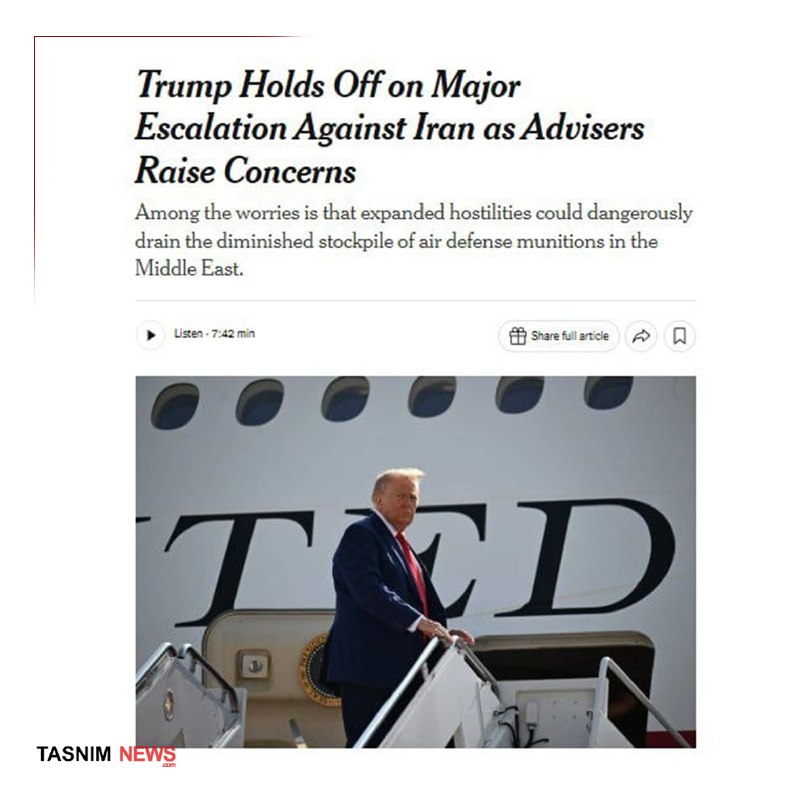
Bahrain came under heavy Iranian missile fire on 20 July 2026, according to the Telegram channel Intelslava, with alerts later cleared by witnesses on the ground. The strike landed on a US-allied Gulf monarchy that hosts the US Navy's Fifth Fleet, on the 148th day of a war that has killed, displaced and redrawn supply lines across the region without, so far, doing much to the price of oil.
That is the puzzle. Five months into an open US-Iran war, with Iranian projectiles hitting Bahraini territory and missile alerts sounding across Manama, benchmark crude has not behaved like a market that believes a regional blockade is imminent. Reuters asked the question plainly on 20 July 2026: why haven't oil prices gone crazy yet? The honest answer sits in three layers, and the top one is geography.
The Strait is still open
Iran's retaliation has been loud but spatially narrow. The targets inside the Gulf, Bahrain, US bases in Qatar and the UAE, Israeli cities via separate fronts, are chosen for political effect, not for the closure of the Bab el-Mandeb or the Strait of Hormuz. That distinction is doing most of the work in the price.
Roughly a fifth of the world's seaborne oil moves through Hormuz. Even a credible threat of closure adds a risk premium measured in tens of dollars per barrel; an actual closure adds an order of magnitude more. Tehran's missile reach is uncontested. Its ability to sustain mine-laying, fast-attack craft operations, and anti-ship missile salvos against a US carrier group for the weeks required to actually stop tanker traffic is a different question, and one the market is answering day by day with the price it refuses to pay.
In other words: the war has priced the possibility of a Hormuz shock. It has not priced the event, because Iran's doctrine, so far, has been to hit things that hurt allies, not to hit the chokepoints that hurt everyone.
The spare-capacity cushion
The second cushion is upstream. Saudi Arabia and the UAE entered the war with meaningful spare capacity and have, by every available indication, kept their own production and export infrastructure off the target list. That is partly because Iran has chosen not to escalate against the kingdom's eastern oilfields, and partly because Riyadh and Abu Dhabi have not been drawn into direct exchange of fire.
This is not a stable equilibrium. It is a choice being remade every week by both Iranian and Gulf Arab planners. If a single Saudi or Emirati facility takes a serious hit, the spare-capacity cushion collapses and the same barrels that today look plentiful look scarce. The market knows this. It is pricing the option.
What Bahrain actually means
The 20 July 2026 strike on Bahrain is a signal, not a shock. It is Iran telling Washington, Manama and the Gulf states that the cost of the war can be raised without crossing the line that turns oil into a $200 barrel. Bahrain hosts Fifth Fleet headquarters at Manama and is a long-standing platform for US Central Command in the Gulf. Hitting it hurts. It does not, on its own, close a strait.
But signals compound. The arithmetic that has kept crude stable is fragile because it depends on Iranian restraint, Saudi and Emirati good behaviour, and a US naval posture in the Gulf that has not been seriously challenged. None of those three legs is structural. All of them are political.
What the wire is not saying
The Reuters framing, why hasn't oil gone crazy yet, is the question a Western energy desk asks when its priors are anchored on 1973 and 1979. The implied answer is reassurance: the system is working, markets are absorbing the shock, the worst is being priced.
The other reading is less comfortable. The market is not calm because the risk has been contained. It is calm because the parties most capable of breaking the oil price, Iran on the supply side, the US on the demand-destruction side via a wider regional war, have, for their own reasons, not yet taken the steps that would force it. Bahrain is the visible proof that one side is choosing escalation on its own terms. The other side's choices, made in Washington and the Gulf capitals, are what the next month's oil price will actually be.
What to watch
Three indicators will tell traders whether the calm is holding. First, any Iranian activity at the Strait of Hormuz, naval movements, mine-laying indications, or explicit threats against specific tankers. Second, the operational status of Saudi Aramco's eastern facilities and Abu Dhabi's Habshan-Fujairah pipeline, which is the only crude export route in the Gulf that bypasses Hormuz entirely. Third, US Navy freedom-of-navigation transits through the strait at the announced, not the rumoured, tempo.
None of those indicators moved in a destabilising direction on 20 July 2026. Bahrain took the hit instead. Until one of them does, the oil market's verdict on this war will stay exactly where it is: uneasy, and priced for a crisis that has not yet arrived.
Desk note: Monexus has framed the Bahrain strike and the oil-price question as a single story about geographic choice and the price of escalation. Western wire coverage on the same day treated the missile fire and the energy-market reaction as adjacent topics rather than one. The structural argument, that Iran's targeting doctrine is the single biggest determinant of crude right now, belongs in the lead, not the sidebar.
Wire provenance
This editorial synthesis draws on the following public wire/social posts:
- https://reut.rs/4gJzucl
- https://t.me/intelslava
- https://t.me/wfwitness
- https://www.eia.gov/petroleum/