Nine Nights Over Iran: The Strike Campaign That Outlasted Its Own Rationale
Nine consecutive nights of US strikes on Iran have produced a campaign whose duration now exceeds the official rationale offered at its outset. The pattern reveals less about Tehran than about Washington.
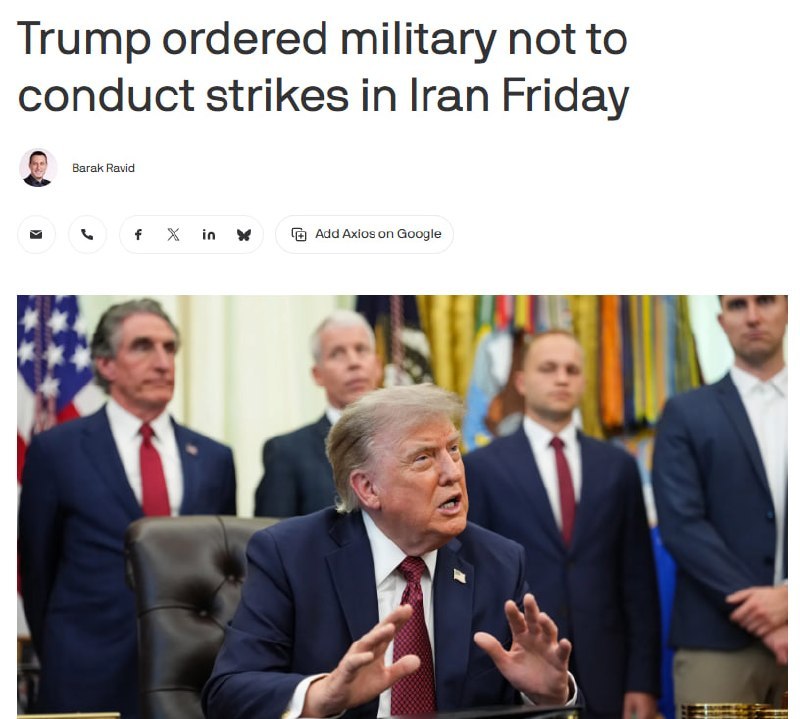
At 23:22 UTC on 19 July 2026, the Iranian-aligned Fars News channel relayed a CENTCOM statement announcing that the ninth consecutive night of American strikes on Iran had begun, with operations scheduled from 19:00 Eastern Standard Time. Twelve minutes earlier, a separate channel had carried the same announcement. By midnight UTC, a third feed reported that President Trump had told a US audience the strikes would continue "tonight" and that the United States had "hit Iran very hard."
The arithmetic is the story. A military campaign originally framed as a discrete retaliation for Iranian strikes on American personnel is now in its second week. The justification language has not caught up with the duration. Either the operation is doing what its proponents say it is doing, in which case the rationale should have ended days ago, or it has migrated into something else: a rolling pressure campaign whose target is not a single decision in Tehran but the regime's willingness to absorb cost indefinitely. The available reporting supports the second reading more comfortably than the first.
The official frame, in two sentences
On 19 July at 09:05 UTC, two channels separately carried the same wording: the United States had completed its eighth consecutive night of strikes after President Trump ordered CENTCOM to "open the gates of hell," with the command targeting Iranian military facilities and air defences. By the following evening, the messaging had shifted. The president, the same reporting indicates, now framed the next wave as honours for "American soldiers killed in Iranian strikes," a tribute rationale rather than a tactical one. The pivot from suppression of a threat to commemoration of the fallen is a meaningful change in register. Retaliation implies an end state. Memorialising does not.
The campaign's stated objective, as reported in the available feeds, is the degradation of Iranian military infrastructure. Iranian state-aligned channels frame the operation as aggression against Iranian cities and population centres; Fars News's English feed described CENTCOM as a "terrorist organization," the standard Iranian lexicon for a foreign military force. The choice to report US statements verbatim while substituting that one word is itself a piece of information. It signals that Tehran's information apparatus wants the world to read CENTCOM's announcements and arrive at a particular conclusion about who, in this exchange, is acting within international law.
What the duration actually tells us
Military campaigns that produce decisive results rarely require a second week of nightly strikes. The pattern visible in the record, nine consecutive nights of announced operations with no public declaration of achieved objectives, is consistent with two operational realities. Either the targets are softer than the initial presentation suggested, allowing reconstitution between waves, or the targeting logic has shifted from a defined list to a broader attrition objective. Both readings carry the same strategic implication: the campaign is now functioning as a sustained signalling instrument rather than a discrete punitive strike.
Iranian state media's framing accepts that framing implicitly. The very fact that Fars News is reporting CENTCOM's operational timing in real time, down to the hour, indicates that the Iranian information environment has decided the campaign's duration itself is the news worth carrying. If the strikes were minor enough to be ignored, the schedules would not be broadcast. If the strikes were decisive enough to end the conflict, the schedules would not need to be repeated.
The hostage lever, quietly rescheduled
On 19 July at 16:45 UTC, an X post from Polymarket's news account noted that Iranian-American Dena Karari had returned to the United States after 566 days of detention on espionage charges. The timing is unlikely to be coincidental. Diplomatic back-channels during active military operations tend to compress, not expand. A release of this duration, a year and a half in Iranian custody, in the middle of a sustained bombing campaign suggests that at least one track of US-Iranian negotiation remained live even as the air campaign escalated. It also suggests that the Iranian government retains instruments it considers worth spending at moments of maximum US pressure.
This is the part of the picture most often elided in coverage that treats the strikes as a single, closed event. Detention of dual nationals has been a load-bearing pillar of Iranian statecraft for two decades. Karari's release does not mean the pillar has been removed. It means a particular beam was judged too costly to hold in this particular week. The next week's calculus will differ.
The information architecture on both sides
Western wire services have, in the available record, run the campaign as a series of presidential statements and Pentagon readouts, with limited on-the-ground reporting from inside Iran. Iranian state-aligned channels have run the same campaign as a series of CENTCOM announcements interleaved with domestic-language framing. The asymmetry is structural: the United States controls the operational narrative through the timing of its releases; Iran controls the moral narrative through the framing it applies to those same releases.
This is the larger pattern the episode sits inside. Sustained air campaigns require sustained domestic consent in the launching country and sustained international tolerance in the receiving region. After nine nights, the domestic consent question in the United States turns on whether the public believes the operation is succeeding. The international tolerance question turns on whether regional governments continue to provide overflight, basing, or refuelling support without visible political cost. Neither question has a public answer in the current reporting, but both are now live.
What the next ten days will settle
Three indicators will resolve the question of what this campaign actually is. First, whether CENTCOM announces an operational pause, a redeclaration of objectives, or a force-flow adjustment that suggests a longer commitment. Second, whether the Iranian retaliation pattern, currently described in the available record as the trigger for the operation, intensifies, holds steady, or ceases. Third, whether any third-party mediator emerges publicly, which would indicate that both sides have decided the bilateral track is exhausted.
The Polymarket post on Karari's return suggests the bilateral track is not yet exhausted. The CENTCOM ninth-night announcement suggests the military track is not yet winding down. The combination is the definition of an extended campaign: each lever kept in play because neither side believes the other has yet exhausted its options. The reporting does not, at this point, name a path to de-escalation. It does name a path to the tenth night.
How Monexus framed this: most wire coverage has treated the strikes as discrete retaliation followed by a discrete pause. The reporting supports a different reading: a campaign whose duration has become the story, with a parallel hostage track indicating the diplomatic channel remains operational. We have weighted the Iranian state-aligned source for operational timing only, and flagged its characterisations accordingly.
Wire provenance
This editorial synthesis draws on the following public wire/social posts:
- https://t.me/bricsnews
- https://t.me/bricsnews
- https://t.me/FarsNewsInt
- https://t.me/AngelList
- https://t.me/producthunt