When the gallery leaks: the New Museum's first flood test
Heavy weekend rainfall breached the New Museum's seven-year-old building on the Bowery, forcing a full shutdown and surfacing a question every new cultural flagship will eventually face: what does a museum owe the climate it was built into?
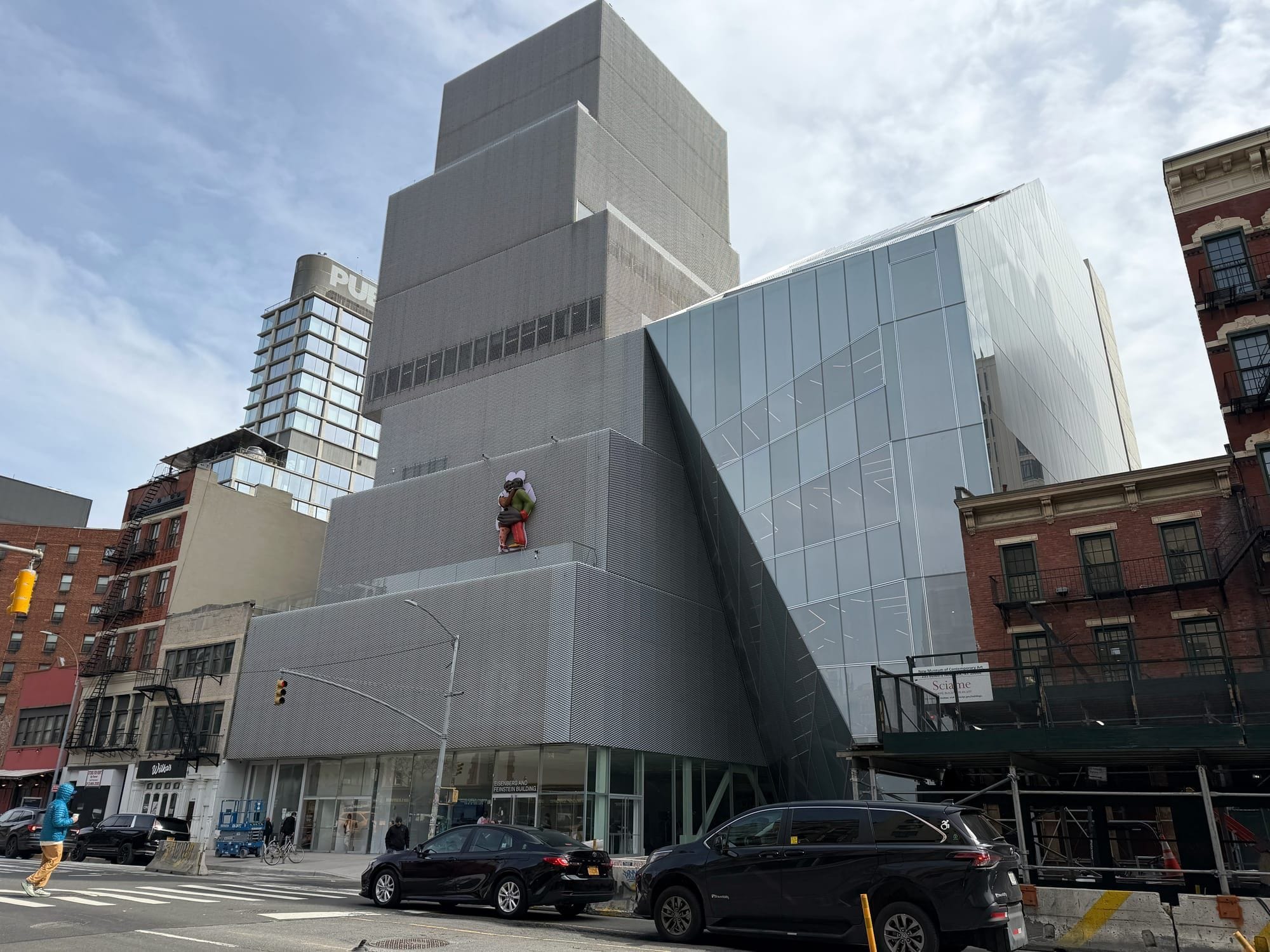
Water pooled across the lobby floors of the New Museum on the Bowery on the evening of 18 July 2026, the first flash-flood event the institution has weathered since its current SANAA-designed building opened in March 2007. According to Hyperallergic, the deluge forced a complete weekend closure: no artworks were harmed, but the building leaked, and the museum stayed shuttered through Sunday as crews dried out the ground-floor public spaces.
That a museum of contemporary art in Lower Manhattan closed because of rain, not a pandemic or a labour dispute, is the kind of detail that reads as colour and lands as signal. The Bowery sits inside Federal Emergency Management Agency's revised 100-year flood plain, and the storm that drenched the building was the kind of sudden, slow-draining rainfall event that has become a routine summer feature of the New York climate. The New Museum is now part of a small but growing club of high-profile cultural buildings whose architecture is being stress-tested by the weather it was built to ignore.
What the leak actually was
Hyperallergic's reporting describes a flash-flood event that overwhelmed drainage and sent water into the public floors of the building. The institution's own statement, carried in the same dispatch, was careful on the question of damage: staff confirmed that no works in the collection or on view were touched. The building itself absorbed the blow. That distinction matters, because the cost of a weekend closure, the labour of a remediation crew, and the reputational dent of a leak photographed by passers-by are not the same thing as a multi-million-dollar conservation loss, but they are also not nothing for a museum that operates on thin margins even in good weather.
The New Museum is privately funded and runs a relatively lean endowment profile for a building of its footprint. A single unscheduled closure day in peak summer tourist season is the kind of line item that a chief financial officer notices, even when the galleries themselves are intact.
The Bowery, the flood plain, and the building that opened into both
The current New Museum building opened on the Bowery in March 2007, the first purpose-built structure the institution had occupied in its then-thirty-year history. SANAA's design pushed the stacked-box silhouette of the building upward rather than outward, a configuration that bought the museum daylight and ceiling height while keeping its ground-floor footprint relatively contained. The site, two blocks south of Houston Street, sits within the broader geography of Lower Manhattan that has been flagged for tidal and stormwater risk in successive city climate-resilience reports.
What the 2026 event makes plain is that stormwater management, not sea-level rise, was the proximate failure mode. Flash floods in Mid-Atlantic urban corridors are driven by short-duration extreme rainfall, when storm drains cannot keep up with the rate at which water hits pavement. Manhattan has spent the better part of two decades stitching together a patchwork of grey and green infrastructure to slow that flow. The New Museum's site sits within that patchwork, not outside it.
Counterpoint: a building doing what buildings do
There is a defensible read in which the leak is unremarkable. Roofs leak. Mechanical systems falter. New York storms in July have been intense for years, and any building of any age is entitled to the occasional bad weekend. By that logic, the right editorial response is a shrug and a moving-on: note the closure, wish the staff well, file it under weather-of-the-week.
That read is incomplete. The reason a flash flood at a flagship contemporary-art museum is worth a closer look is that the New Museum was, when it opened, marketed in part as a building fit for the twenty-first century, and the twenty-first century has now spent two decades demonstrating what that phrase actually costs. The building did what it was designed to do; what it was designed to do was not, in the end, designed for the climate it was built into. That is a statement about the institution's planning horizon, not about its architecture.
Structural frame: the unfunded climate line on every museum's balance sheet
The underlying story here is not about one building on the Bowery. It is about a sector-wide gap in capital planning that cultural institutions have, collectively, been slow to close. Museums built in the early twenty-first century were designed against climate baselines that are now obsolete. Baselines for storm intensity, rainfall rate, and tidal reach have all moved; the buildings have not. The remediation costs that follow are real, recurring, and largely absent from the headline-grabbing endowment announcements that cultural philanthropy tends to prefer.
This is also a story about who pays. The federal disaster-reimbursement apparatus that absorbs much of the cost of municipal flood response does not, in most cases, extend to privately operated cultural institutions. The New Museum will likely eat the cost of this weekend out of operating reserves, drawing down the same pool of unrestricted dollars that funds exhibitions and education programming. That trade-off, between climate resilience and mission delivery, is the line item the sector has not yet learned how to budget for in public.
Stakes: a preview of the next twenty years of museum capital plans
If the 18 July event is a one-off, it will be remembered as the weekend the Bowery leaked. If it is a pattern, it is the first of many such weekends, and the museum sector's capital-planning assumptions need to be rewritten in real time. The reasonable read is somewhere in between: not a one-off, not yet a crisis, but the kind of warning that arrives with weather attached rather than in a consultant's report.
What to watch next is whether peer institutions in Lower Manhattan and along the waterfront begin publishing comparable incident disclosures with the same candor. The New Museum's transparency about a wet weekend is, in a quiet way, a service to the sector. It treats a building failure as a piece of operational data, not as a reputational secret. That posture is going to age well.
What the sources do not settle
The available reporting does not specify the dollar cost of the closure or the remediation work, nor does it identify the precise points of water ingress or the contractor handling the dry-out. The museum's own communications, as carried by Hyperallergic, emphasise the absence of damage to artworks; they do not address the question of whether the building's drainage system performed within or outside its original design specifications during the storm. Those details, when they surface, will tell us whether this was a maintenance failure, a design limit, or a category of weather the original engineers simply did not price in.
This piece treats the New Museum's weekend closure as an operational event with structural implications, rather than as a crisis narrative. The galleries are dry; the question is what gets built into the next round of museum capital plans.