Natalie Imbruglia, the accidental icon who stopped apologising for being a pop star
Two and a half decades after 'Torn' turned a soap actress into a global pop star, Natalie Imbruglia is still learning how to occupy the stage without flinching. A new long-form interview finds her unusually candid about ageing, memory and the strange arithmetic of one-hit immortality.
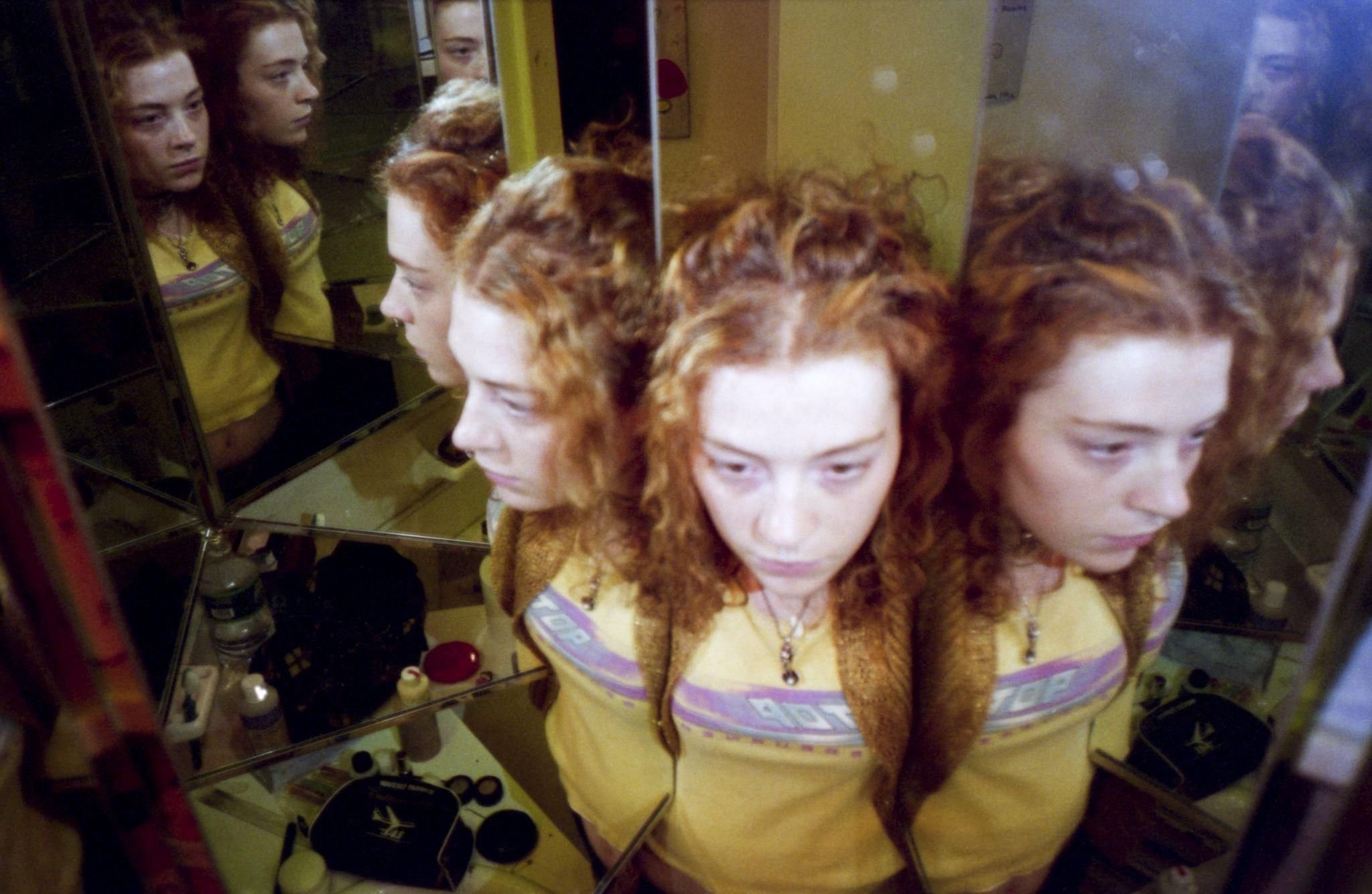
There is a particular kind of fame that belongs to the person who sang the song everyone knows, and almost nothing else they ever released. On 18 July 2026, The Guardian published a long-form conversation with Natalie Imbruglia, the Sydney-born singer whose 1997 cover of Ednaswap's 'Torn' became one of the most-played radio tracks of the late 1990s, and the interview makes one thing plain: she has stopped pretending that legacy is easy to wear.
Imbruglia, born in Sydney to an Italian father and an Australian mother, walked into the music industry through the side door of television, not the front door of intention. A career that began in Australian soap opera made her famous at home, but the global pop career that followed was, by her own account, more improvised than inevitable. Two and a half decades on, the headline she keeps being asked to perform is the same one she sang at twenty-three: a song she does not own, in a market she did not design, at a moment she did not choose. The new interview is interesting precisely because she has run out of patience for pretending the maths of that is comfortable.
The arithmetic of one-hit immortality
The structural peculiarity of Imbruglia's career is well-documented but rarely named in her own voice. 'Torn' was a cover. The original was written by Scott Cutler, Anne Preven and Phil Thornalley and recorded first by Ednaswap, then by a Danish artist named Lis Sørensen, before Rosanna Webster's suggestion and Imbruglia's instinct pulled it into a 1997 single that became a global hit on the strength of a four-minute music video. It is the kind of provenance that pop historians cite as a small case study in how the late-1990s Anglophone music industry lifted songs out of national markets and reassembled them for export.
What the Guardian piece surfaces is the human cost of being the vessel rather than the author. Imbruglia tells the paper she still forgets words to her own songs on stage, and that audiences rarely notice. The confession is small and oddly consoling. It reframes a musician whose career has been treated as a fluke by cultural critics into something closer to a craftsman: someone who has built a working knowledge of her own catalogue by repetition and discipline, not by natural genius. The story she sells in this interview is not that she is exceptional. It is that she is competent, and that competence has lasted longer than she expected.
Sydney soap to London pop
The biographical scaffolding is the part of the Imbruglia story that has always done the most work. Born in Berkeley Vale on the New South Wales central coast, she moved into acting in her late teens, joined the cast of the long-running Australian soap Neighbours in the early 1990s and built the kind of domestic name recognition that Australian television still confers. Her exit from the show and her pivot to music happened inside a compressed window in 1994 to 1997 that compressed even further in the cultural memory, so that the pop career seems to have erupted fully formed.
In the Guardian interview she talks about struggling with English weather in a register that is dry rather than resentful. She has lived in the United Kingdom for most of her adult life, and the piece makes clear that her accent and her reference points have drifted accordingly. This is not trivial. The London-anchored, English-language international pop industry of the late 1990s and 2000s did not have an obvious place for an Australian-Italian singer without a traditional stage-school pedigree. She made her own place by touring constantly, by being visibly willing to do the unglamorous work, and by leaning into the very foreignness that the industry sometimes treats as a barrier.
The interview as a small act of authority
What is striking about the Guardian piece is not the revelation of any particular fact. Imbruglia does not announce a new album, a memoir, or a farewell tour. She does not name a feud. She does not pivot the conversation to politics. What she does, instead, is take up space in a register that pop press interviews rarely grant to women of her generation: she answers the questions she is asked, but she also redirects them, returning to the parts of her life she considers worth describing.
The piece includes the obligatory light-touch references that British weekend features use to humanise their subjects: a secret celebrity crush she declines to identify by name, a comic fear of tinned spaghetti, and a relationship with the British weather that she treats as something to be negotiated rather than endured. These are not confessions. They are signals that the subject is composed enough to be wry about her own image. For a reader who has watched a generation of female pop stars answer the same interview questions for forty years, the tonal calibration is itself the news.
What the framing leaves out
The standard Australian-diaspora angle is missing from this piece, and that is worth noting. Imbruglia is one of a small cohort of Australian women, Kylie Minogue, Holly Valance, Delta Goodrem in adjacent industries, who built international careers from a domestic platform that the global industry routinely underestimates. The interview treats her as a London-based pop figure who happened to be born in Sydney, rather than as an Australian who built a transcontinental career against the structural tilt of the industry. That tilt is real: Australian artists who break through to British or American markets usually do so via a personal relocation and a sustained trade in credibility that British and American artists are not asked to provide in reverse.
There is also a generational silence. Imbruglia is now in her early fifties. The interview is candid about the physical experience of performing and the unreliability of memory on stage, but it is not candid about what she has lost or refused over the course of a career that has spanned the death of physical single sales, the rise of streaming, the consolidation of the recorded-music industry into three majors, and the displacement of the music press by algorithmically curated playlists. Those structural shifts are the context in which any mid-career pop artist of her cohort operates, and the Guardian piece treats them as background rather than subject. That is a reasonable editorial choice. It is also a noticeable one.
The stakes are smaller than the framing suggests
Cultural writing about legacy acts tends to escalate quickly into claims about industry transformation or generational succession. This piece does not do that. What it offers is a portrait of an artist who has outlived the cycle that produced her, who continues to perform and to record, and who has come to terms with the fact that her relationship to the song most people associate with her is biographical rather than proprietary. There is no crisis in that. There is, instead, the quieter story of a working musician who has learned to measure success in years rather than in chart positions.
The forward calendar here is modest. No album release date is named. No tour routing is announced. What is on offer is the interview itself, which treats Imbruglia as a person with a career rather than a relic with a catalogue. For a reader who grew up with 'Torn' on constant rotation, that may be enough. For a reader who came to her later, it is a useful reminder that pop immortality has a fairly ordinary human address, and that the person living there is, by most available evidence, doing all right.
, Desk note: this publication treats the Guardian interview as a primary source and frames Imbruglia's career as a working-pop case study rather than a nostalgia feature. Where the wire is interested in legacy and catalogue value, Monexus is more interested in the structural position of Australian artists inside the London-centred pop industry.
Wire provenance
This editorial synthesis draws on the following public wire/social posts:
- https://en.wikipedia.org/wiki/Natalie_Imbruglia
- https://en.wikipedia.org/wiki/Torn_(Ednaswap_song)
- https://en.wikipedia.org/wiki/Neighbours