Messi chases history as Spain and Argentina collide in a World Cup final freighted with subplots
Argentina face Spain on Sunday with Lionel Messi one game from a record 32nd World Cup appearance and a tournament legacy still being written. The betting markets and the player-rating economy say plenty about how the occasion is being priced.
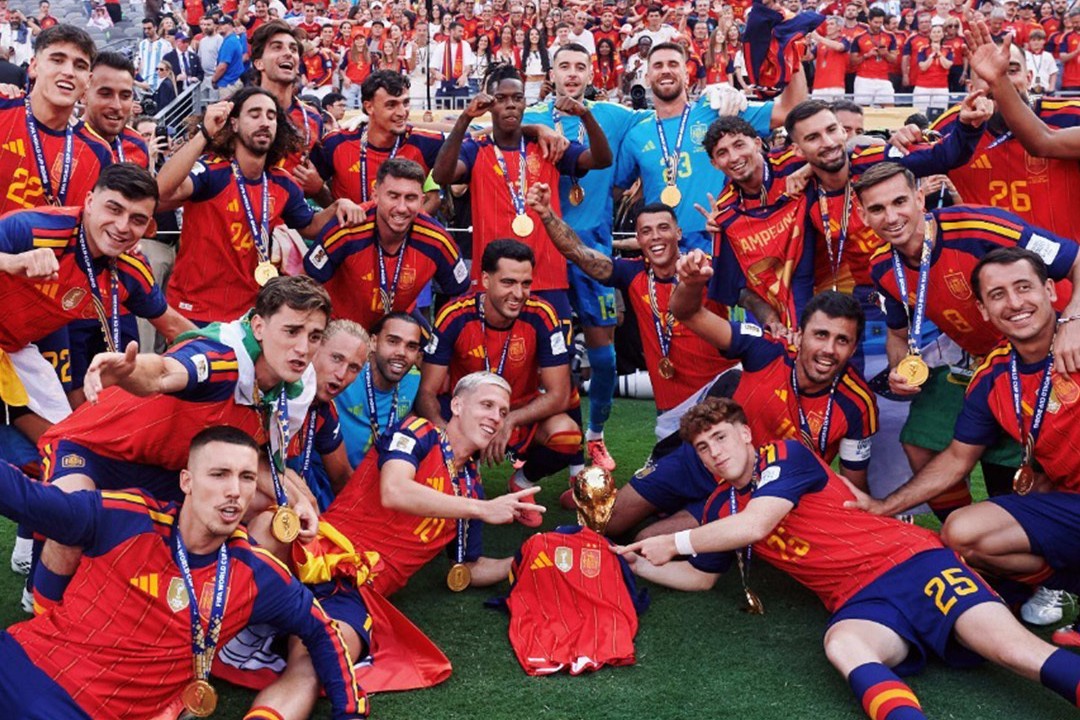
The 2026 World Cup final kicks off on Sunday, 19 July 2026, with Argentina, the defending champions, meeting Spain in a match that doubles as a referendum on Lionel Messi's place in tournament history. A pre-match BBC Sport briefing confirmed Messi will play his 32nd World Cup match, a record the Argentina captain will set irrespective of the result at full-time. Spain arrive as the tournament's most aesthetically coherent side; Argentina arrive as the side with the player the global sports economy cannot stop pricing.
A final is a final. But the framing of this one has been shaped less by tactical analysis than by two markets running in parallel: the regulated bookmaker boards in the United States and the player-rating economy that BBC Sport will operate live once full-time arrives. Both tell the same story underneath the noise. This is the last credible staging post of Messi's international career, and Spain are the opponent whose academy product pipeline has defined the modern European game.
The match that the betting board keeps rewriting
CBS Sports headlines in the 24 hours before kick-off have been built around the contest, not around the cash. A "Spain vs. Argentina betting guide" published at 13:53 UTC on 19 July walked readers through Moneyline, spread and total markets, with a dedicated look at Messi's anytime-scorer price. A separate "Argentina vs. Spain odds, prediction, time" piece at 13:36 UTC carried expert model output from SportsLine's Martin Green, who arrived at the fixture on a documented 20-9 run across his last 29 picks. A parlay note at 11:10 UTC laid out same-game combinations for Sunday's final. The editorial texture is consistent: the wagering product and the news product have effectively merged in the final 48 hours of a men's World Cup.
The promotional scaffold around the coverage is its own data point. A CBS Sports headline published at 15:38 UTC on 19 July offered BetMGM bonus code CBSSPORTS for $1,500 in bonus bets contingent on a first wager losing. The headline doubled as news copy and as a customer-acquisition funnel, treating the final as the year's single largest user-acquisition surface for a US sportsbook. Read the marketing as a market signal: operators priced this game, not the group-stage fixtures around it, as the moment casual fans in the United States convert.
Messi at 32 caps, and the question no one can answer live
BBC Sport's 09:55 UTC preview on 19 July framed the match around the captain's milestone. A 32nd World Cup appearance is, in raw terms, the record. The same preview surfaced the subplot the rest of the wire has circled without resolving: Sunday is widely treated as Messi's last World Cup match, but neither the player nor Argentina's camp has said so on the record. The piece left the question deliberately open.
That editorial caution is worth marking. The retirement frame is the easiest hook in international sport. It also forecloses the next two cycles. BBC's note that "will it be his last World Cup game?" hangs a question mark over the entire broadcast window, including the post-match coverage, which doubles as the launch of the rating economy around both squads.
The 30-minute rating window
BBC Sport's 19:55 UTC, 19 July item asked readers to rate every Spain and Argentina player out of 10, with a 30-minute post-final window before locked ratings publish. Two things are notable. First, the ratings are live and editable, meaning the dataset is community-generated rather than expert-curated. Second, BBC's choice to anchor post-match coverage in a rating form rather than a tactical breakdown signals where attention is concentrated. Casual viewers want to assign a number to a player they have just watched; tactical write-ups land in long-form the next morning.
The ratings are also a stress test for the squads. Spain's midfield and Argentina's back line will both take harder hits on a fan rating system than they would on a possession-adjusted model. The number that matters on Monday morning is not the score; it is the distribution. A tight cluster around the Argentine starters would suggest a defensible performance; a bimodal distribution would expose the carrying load.
What Sunday actually decides
Strip the marketing and the rating economy out and three facts remain. Argentina are the holders. Spain are the team that has scored more open-play goals than any other in the tournament. Messi will set a cap record at full-time irrespective of the result. The bookmaker boards and the BBC preview agree on those three points and diverge on everything else.
There is a fourth uncertainty the wire has not resolved. Spain's wing play, anchored by Lamine Yamal, is the tactical axis the pre-match coverage keeps flagging; Argentina's defensive transition, and specifically how they neutralise the half-spaces Yamal attacks, is the variable neither the betting model nor the player-rating form will capture. The structural frame, put plainly, is the contest between the deepest player of his generation and the deepest academy product of the next one. The result on Sunday settles the trophy. It does not settle which of those two claims ages better.
This desk covered Spain and Argentina as the betting and broadcast markets priced them: a final whose narrative is being authored in real time by a player-rating economy and a sportsbook acquisition funnel, with the football underneath doing the actual deciding. The wire has the marketing loud; the tactical note, where it matters, is quiet.