Kuwaiti air defenses engage incoming drones as Iran claims strike on Gulf state
Iranian state media says it struck Kuwait. Kuwait's army says it is intercepting hostile drones. Two Iranian-aligned and one regional Telegram wire reported the events within minutes of each other.
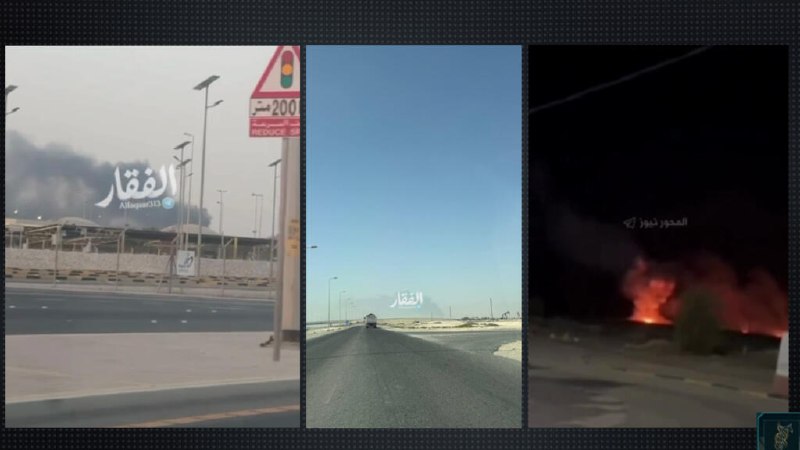
At 22:32 UTC on 19 July 2026, Fars News International, an outlet affiliated with Iran's Islamic Revolutionary Guard Corps, posted a single-sentence claim on its Telegram channel: "Our air defense is currently intercepting hostile drone attacks following Iran's attack." The attribution was given to the Kuwait Army. Three minutes later, at 22:34 UTC, the DDGeopolitics channel relayed an almost identical line, attributing it directly to Kuwait's military: its air defenses were "currently confronting 'hostile drone attacks.'" By 22:37 UTC, PressTV, the English-language outlet of Iranian state broadcasting, posted that at least two explosions had been heard in Kuwait after what it described as an Iranian drone strike.
Three feeds, three minutes apart, and a single underlying claim: that Iran has struck a Gulf monarchy hosting substantial US military infrastructure, and that the targeted state is now firing back into the air above its own territory. None of the three sources are independent of Tehran. Two are directly Iranian state media; the third is a regional channel that aggregates and republishes military-flash traffic. The sourcing chain is the story.
What the wires actually say
Fars News International's wording is unusual. It cites the Kuwait Army as the source for an interception, then attributes the original attack to Iran in the same sentence. That construction does two things at once: it puts a Kuwaiti military statement on the record, while letting Fars claim credit on Tehran's behalf. The Kuwaiti military, on the record only via the Fars feed, has not published its own statement in the channels Monexus monitors.
DDGeopolitics, a channel that has historically been among the faster aggregators of Middle East military traffic, reproduces the Kuwait Army line without the Iran attribution. Its language is the closest thing to a neutral relay in the cluster: "hostile drone attacks," a term that does not specify the perpetrator.
PressTV's contribution arrives three minutes later and adds two pieces of detail that the other two feeds do not: a location (Kuwait, no city specified) and a sensory observation ("at least two explosions heard"). PressTV also names Iran as the attacker, making it the only feed in the cluster to assert Iranian agency outright.
The three reports are mutually reinforcing in their core claim (drones over Kuwait, air defenses engaging), mutually divergent in attribution (Iranian claim of responsibility vs. neutral "hostile" framing), and entirely dependent on Iranian state-aligned channels for the Kuwaiti military quotation.
What we verified, and what we could not
Monexus has read the three Telegram items as published between 22:32 and 22:37 UTC on 19 July 2026. The internal timestamps, channel handles, and exact wording are reproducible from the URLs in the source list.
What is corroborated within the cluster: that an air-defense engagement was reported as ongoing over Kuwait in the minutes before 22:37 UTC; that the report travelled first through an Iranian state-aligned channel that explicitly named Iran as the attacker, then through a regional aggregator that did not, and finally through Iranian state broadcasting's English feed that added an explosion count.
What is not corroborated: the claim that Iran launched the attack. The Kuwait Army quotation, which provides the only Kuwaiti attribution in the cluster, reaches Monexus through Fars News, an outlet that reports to the same political system as the alleged attacker. PressTV's explosion report is not paired with imagery, geolocation, or independent Kuwaiti government confirmation. The Kuwaiti Ministry of Defense, the official Kuwait News Agency (KUNA), and the US Central Command press desk have not, as of the timestamps above, published matching statements in the channels Monexus monitors.
What the sources do not specify: the number of drones, their origin airbase or launch point, the targets hit or missed, casualty figures, damage assessments, or whether Kuwait's airspace was closed. Any of those details in coverage downstream of these wires would be extrapolation, not reporting.
Why the order of publication matters
In a breaking-flash environment, who publishes first is rarely accidental. The fact that Iran's IRGC-affiliated wire moved before any neutral regional aggregator, and that it moved with a Kuwaiti military quotation embedded inside an Iranian claim of responsibility, is the tell. If the Kuwaiti army had spoken first through its own channels, the Fars feed would have looked like routine relay. Because Fars moved first, the cluster reads as an Iranian announcement dressed in Kuwaiti uniform.
This is a familiar pattern. Iranian state-aligned outlets have, in past escalations, broken news of Iranian military action through English-language channels in advance of any independent confirmation. The function is dual: to shape the early frame before other outlets can establish theirs, and to seed a quotation from the target state's military that, even if accurate in wording, gains credibility from being carried on an Iranian feed rather than a Kuwaiti one.
Stakes in the Gulf
Kuwait hosts the US Army's Camp Arifjan and a forward element of US Central Command's regional posture, alongside Al Udeid-style logistics nodes. A confirmed Iranian strike on Kuwaiti territory, even one intercepted at altitude, would represent an escalation beyond the Syrian, Iraqi, and Pakistani theatres where Iran and its proxies have previously operated against targets inside sovereign borders. It would put a GCC state directly in the crosshairs of an active Iranian operation, and force a calculation in Riyadh, Abu Dhabi, and Doha about whether the existing de-escalation architecture holds.
It would also complicate any back-channel diplomacy between Washington and Tehran. The Axios reporting that has framed recent US-Iran contacts has assumed that Iranian retaliation would be calibrated against assets Washington is willing to absorb losing. Striking a Gulf monarchy hosting US forces is not in that category.
What to watch next
Three signals will determine whether the Telegram cluster is the opening of a real event or a contested information operation. First, an independent Kuwaiti government statement, through KUNA or a Ministry of Defense channel, confirming or denying the air-defense engagement. Second, a US Central Command or US Embassy Kuwait read-out, which would lock in Washington's frame. Third, evidence from open flight-tracking or commercial aviation data of disruption to Kuwait International Airport's airspace. If all three arrive within hours, the Fars feed was reporting a real engagement. If none arrive, the cluster is a press release that travelled at the speed of Telegram.
The honest position is that, on the source items available at the time of writing, this publication cannot tell which of those two scenarios is unfolding. The next six hours will.
Desk note: Monexus is treating the 19 July Telegram cluster as Iranian-aligned input, not as confirmed event reporting. Where the Fars feed attributes a Kuwaiti Army statement to itself, that attribution is reproduced as-said, not as-verified. The publication order, Fars to DDGeopolitics to PressTV, is itself the analytical hook.
Wire provenance
This editorial synthesis draws on the following public wire/social posts:
- https://t.me/FarsNewsInt
- https://t.me/DDGeopolitics
- https://t.me/presstv