Kuwait City rocked by drone attack as Gulf airspace becomes the new frontline
Air-defence guns engaged drones over Kuwait City in the early hours of 20 July 2026, the first confirmed interception operation of its kind on Kuwaiti soil and a marker of how the Iran-US stand-off is now spilling into Gulf state airspace.
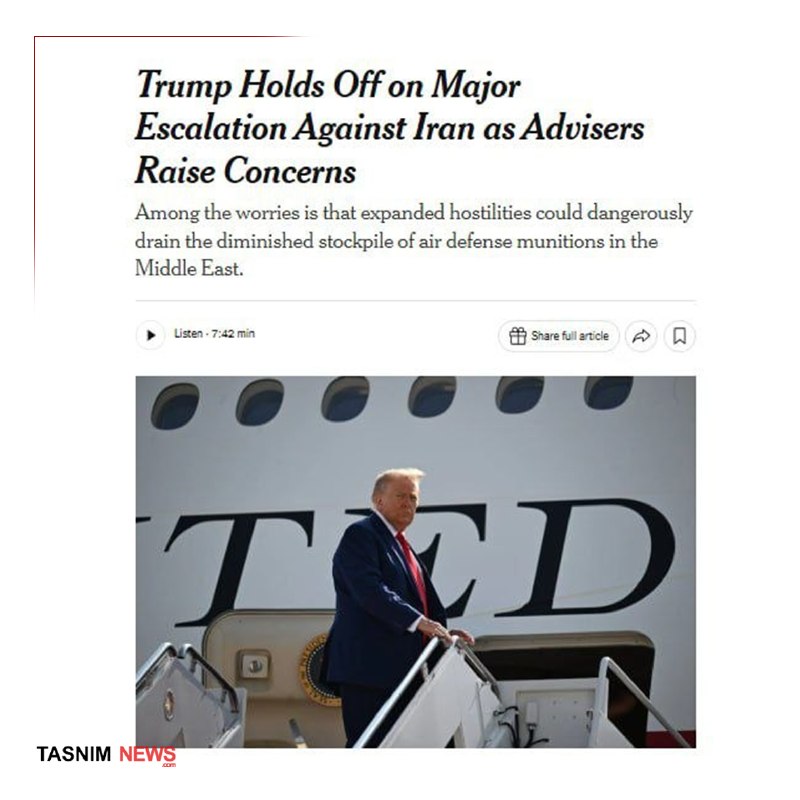
At 04:51 UTC on 20 July 2026, Iranian state outlet Mehr News carried a flash from Kuwait City: an explosion, followed by an announcement from the Kuwaiti army that air-defence systems were engaging drones over the capital. The same bulletin, repeated minutes later by Tasnim at 04:42 UTC, marked the first publicly confirmed interception operation by Kuwait's armed forces on home soil, and the first time in the current crisis that a Gulf monarchy outside the immediate Iran-US line of fire has been drawn into active aerial combat.
What Kuwait does next, and how Tehran frames the incident, will set the precedent for whether the war that has been hovering over the Strait of Hormuz for months now widens into a Gulf-wide air-defence war. The Kuwaiti government has not, as of the Mehr and Tasnim timestamps, named the operator of the drones or the intended target. Both Iranian wires reported the Kuwaiti army's statement verbatim, without attribution to an Iranian role.
Air defence as the new front line
For two years the geography of the Iran-US confrontation has been a maritime one: tankers in the Strait of Hormuz, commercial shipping in the Bab el-Mandeb, periodic seizures by the Islamic Revolutionary Guard Corps Navy. Kuwait's exposure on 20 July was different in kind. A ground-based air-defence engagement, announced on state channels within minutes, signals either a deliberate probing strike meant to test Kuwaiti response times, or a wider salvo that landed further west than intended. Iranian outlets reporting the event from their own wires, without claim of responsibility, is consistent with a pattern seen in earlier incidents: Tehran allows the facts to circulate first and reads the regional response before declaring a posture.
Kuwait sits on the southern flank of the Iran-Iraq-Saudi triangle and hosts forward elements of the US Central Command's maritime posture in the Gulf. Its air-defence architecture, built around Patriot and Mirage fleets, has until now been oriented toward missile defence rather than the slower, lower-flying one-way attack drones that have come to define the conflict's tactical vocabulary. An interception operation of the kind announced at 04:51 UTC is therefore less a routine event than a doctrinal test: it forces Kuwaiti operators to fire on small, cheap airframes rather than the ballistic missiles the system was procured to defeat.
What the Iranian wires are doing
Mehr News and Tasnim are not neutral observers. They are the official and semi-official press of the Islamic Republic, and their decision to relay the Kuwaiti army's statement at speed, unedited, is itself a signal. By reporting the incident through Kuwaiti state framing rather than issuing their own claim or denial, Tehran preserves two options: it can later distance itself from the operation if regional blowback is severe, or it can claim credit if the strike is treated as a calibrated warning. Western wires had not, at the time of writing, carried independent reporting from Kuwait City; the only public record of the engagement remains the two Iranian-channel bulletins.
That asymmetry matters. In a fast-moving aerial incident, the first mover on the information side often sets the day's narrative. Iranian state media, which has spent the past year building audiences across Arabic-speaking Gulf states, now occupies the first-mover slot on the first interception operation over Kuwait. It is a small, tactical advantage, but it is the kind of advantage that compounds.
A precedent for the other Gulf monarchies
Saudi Arabia, the UAE, Qatar, Bahrain and Oman all operate similar air-defence architectures and host comparable US force packages. None has, until 20 July, been forced to publicly engage drones over a capital city. Kuwait's response, and the international reaction to it, will be studied in Riyadh and Abu Dhabi within hours. A muted diplomatic response from Washington, or a statement that treats the incident as a one-off, will be read in the Gulf as permission to absorb similar probes. A sharp US response, particularly one that names Iran directly, will be read as a signal that the threshold has shifted.
The structural problem is that Iran does not need to hit anything in Kuwait to win a probing exchange. The mere fact of the engagement moves Kuwaiti public opinion, rattles regional aviation insurance markets, and forces a coalition response that takes time to coordinate. The drones themselves are expendable. The political reaction is the payload.
What remains uncertain
The bulletins do not specify how many drones were engaged, whether any reached their target, or whether casualties occurred. The Kuwaiti army statement, as carried by Mehr and Tasnim, refers to air-defence systems dealing with the attack in present tense, which suggests the engagement was still under way when the wires were filed. Iranian responsibility is neither confirmed nor denied. No Western wire had reported from Kuwait City at 04:51 UTC. Until Reuters, AP or a Gulf outlet such as Al Jazeera English files independent reporting from the ground, the public record is two Iranian-channel flashes of a Kuwaiti army statement. That is enough to confirm an engagement. It is not enough to attribute it.
The next 24 hours will tell whether Kuwait's foreign ministry summons an Iranian envoy, whether the US Fifth Fleet issues a statement from its Bahrain headquarters, and whether Gulf aviation authorities close Kuwait International Airport. Each of those moves is a precedent. None has happened yet.
Desk note: This piece leads with the Iranian-state framing because it is the only framing publicly available. Monexus will revise attribution once independent reporting from Kuwait City or Western wire services is on the record.
Wire provenance
This editorial synthesis draws on the following public wire/social posts:
- https://en.wikipedia.org/wiki/Kuwait_Air_Force
- https://en.wikipedia.org/wiki/Strait_of_Hormuz