Kindiki's Mt Kenya East pitch lands in a basket that already costs more per kilogram
Deputy President Kithure Kindiki frames the next phase of the Kenya Kwanza compact around Mt Kenya East. The shopping basket he is selling it in has gotten measurably lighter.
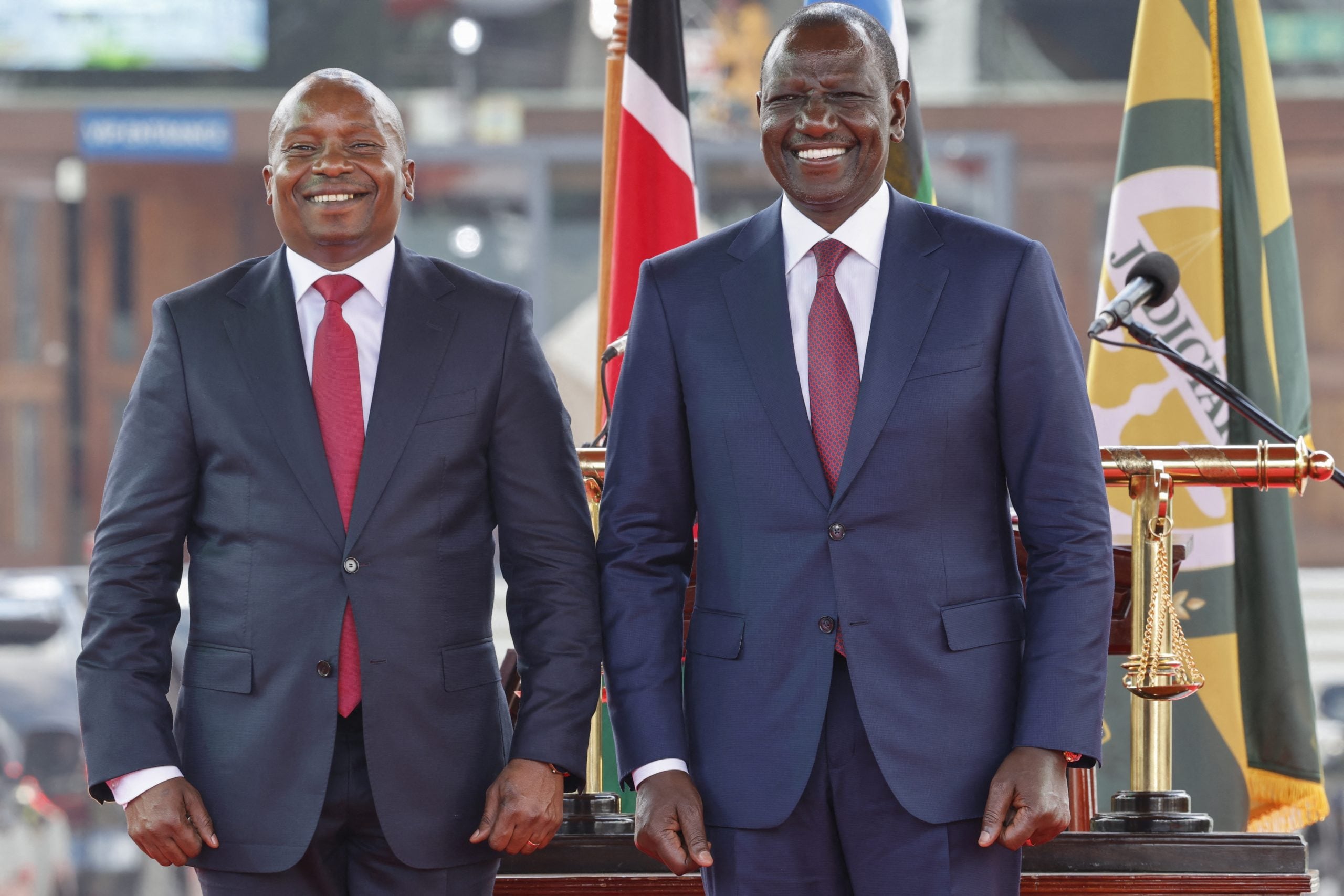
On 20 July 2026, the cover of The Star Kenya ran two stories on a single front page, and the editorial juxtaposition was not accidental. The masthead's lead asked why Kenyan shoppers were paying more and receiving less for the same outlay. The lead on the political page recorded Deputy President Kithure Kindiki telling a Mt Kenya East audience that the next phase of the William Ruto administration belonged to them, framed by the campaign slogan "Ruto ni sisi". The papers' editors know that their readers will reach for the same wallet for both stories.
The political pitch and the price of a two-kilo bag of maize flour are not separate conversations. They are the same conversation, and the government has been having it on two frequencies since the cost-of-living protests of 2024 forced the issue back into the open. Kenya Kwanza's answer has been a blend of subsidy pledges, tax adjustments, and a tightly scheduled presidential tour of the country's swing vote banks. Kindiki's Mt Kenya East swing is the next leg of that tour, and the shopping basket is the terrain.
The basket and the slogan
The Star's front-page report framed the cost-of-living question through a granular lens: household staples bought in smaller quantities, at higher unit prices, with reduced pack sizes acting as an unofficial tax on cash-strapped shoppers. The same dynamic has been documented in successive rounds of the Kenya National Bureau of Statistics Consumer Price Index, which has shown food and non-alcoholic beverages as the single largest contributor to headline inflation in every quarter since mid-2023. A shilling that buys less maize, less sugar, less cooking oil, and less wheat flour is a shilling doing two jobs: feeding a family and funding the political settlement the Deputy President is now selling in Tharaka Nithi, Meru, and Embu.
Kindiki's appeal, captured in the Monday Star, leans on a redistribution of attention rather than a redistribution of revenue. "After Ruto ni sisi" is, in plain terms, a promise that the second term will not treat Mt Kenya East as a campaign stop but as a governing constituency. The structural reading is harder. The counties that the Deputy President toured through the weekend and into Monday are precisely those that absorb the largest share of Kenya's food-import bill, because their rainfall patterns have tilted dry and their smallholder production has not kept pace with consumption. Promising them a louder seat at the cabinet table is a different commodity from promising them cheaper unga.
Why Mt Kenya East, and why now
The Deputy President's itinerary is also a constituency map. Mt Kenya East, Meru, Tharaka Nithi, Embu, and the eastern flank of Kirinyaga, has been a swing bloc since the constitutional era, and Kenya Kwanza's narrow victory in 2022 depended on peeling enough of it away from the opposition coalition that had held it in 2017 and earlier. The 2027 cycle is being assembled on the same terrain, but with one notable shift: the cost-of-living vote is no longer an opposition exclusive. Independents and movement figures have entered the field, and the administration cannot rely on the usual pattern of protest at the hustings and patience at the till.
This is why Kindiki's framing matters beyond the Deputy President's own political future. He is the second-ranking elected official in the executive, and his choice of language, inclusive pronouns, regional recognition, the deliberate echo of the 2002-era "Kibaki ni sisi" pattern that the original Kenya Kwanza slogan consciously reworks, tells the political class how the administration intends to sequence its second-term opening. The micro-region, not the national rally, is the unit of mobilisation.
The other price tag
The counter-narrative is harder to dismiss than the political class would like. Civil-society monitors and labour economists have argued that the administration's flagship subsidy interventions, the maize subsidy that briefly pulled flour prices down in late 2024, the fertiliser programme, the periodic fuel-tax adjustments, have produced visible but reversible effects. The official position, that the trend is being bent downward, leans on quarterly CPI prints that are themselves contested; the methodological debate over how the basket is constructed and which regions' prices are weighted is a permanent feature of Kenyan economic commentary. The opposition reading, that the basket has been hollowed out, is the reading that wins the household interview.
A more measured framing, and the one this publication finds more defensible, sits between the two. The administration has spent political capital on interventions that are real but bounded; the structural drivers of food inflation in Kenya are regional, Ugandan and Tanzanian cross-border flows, the exchange-rate pass-through on imported wheat, the cost of fertiliser indexed to global gas, and they do not yield to a single ministry's directive. Kindiki's pitch is therefore best understood as a recognition that the cost-of-living question will define the next election, and a determination to be standing on the right side of it when the voters count.
What to watch before 2027
Three signals will tell the story. First, whether the cost-of-living framing on the cover of The Star and its competitors softens through the second half of 2026, or whether the unit-price-versus-pack-size story reasserts itself as the harvest cycle turns. Second, whether cabinet appointments and development-budget allocations to Mt Kenya East match the scale of the Deputy President's rhetoric, or whether the redistribution of attention outruns the redistribution of revenue. Third, whether the independent and movement candidates now organising in the same counties find that the slogan is sticky enough to absorb them, or whether the ground game delivers what the slogan cannot.
The uncertainty here is not abstract. The sources available to this publication in this reporting window are limited to a single front page and its political headline; the official cost-of-living data that would settle the contest between the government's framing and the household-interview reading is published quarterly, and the next print will land before the end of the quarter. Until then, the cover of Monday's Star is itself a form of evidence, the editorial board of the country's oldest circulation daily has chosen, on a single front page, to put the basket next to the slogan. That choice is also part of the politics.
Desk note: Monexus framed this story from the Kenyan press rather than the wire, because the front-page juxtaposition itself is the news. The dominant wire line on Kenya in the same window has been a single-issue political read; the cost-of-living dimension sits in the local press, and the editorial decision to run both stories together is the fact worth reporting.
Wire provenance
This editorial synthesis draws on the following public wire/social posts:
- https://t.me/TheStarKenya