A Tehran telegram, a World Cup trophy, and a small diplomatic opening
Iran's embassy in Madrid congratulated Spain on winning the 2026 World Cup. The two-line note, run by Iranian state outlets, is a small but pointed signal of how Tehran reaches for soft-power footholds in Europe.
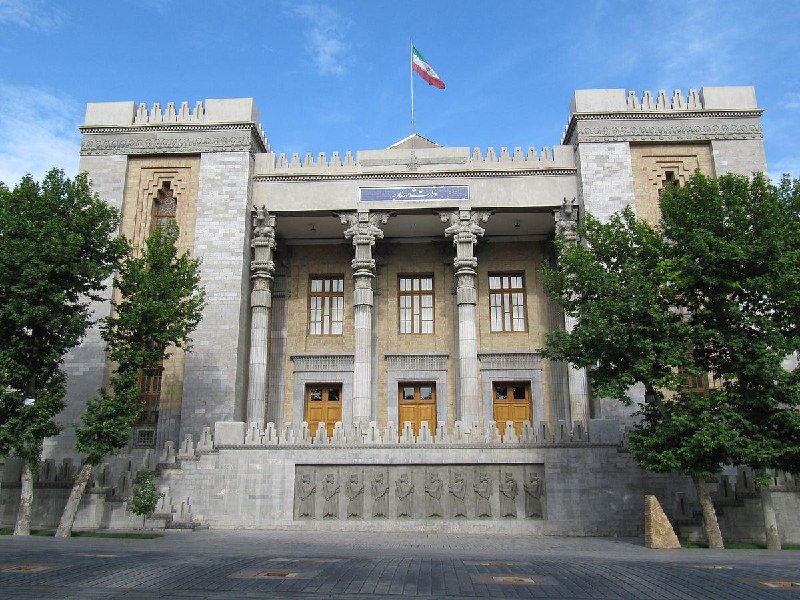
At 06:46 UTC on 20 July 2026, the Iranian Embassy in Madrid addressed Spain in the language of football, not the language of foreign ministries. "In the name of the Iranian nation, we sincerely congratulate Spain's brilliant championship in the World Cup," the embassy said in a statement carried by Tasnim's Persian-language channel and republished minutes later by Tasnim's English feed. Two short lines, signed by a diplomatic mission, distributed by a state news agency that normally handles nuclear talks and regional security briefings. The mismatch is the story.
Iran does not have an embassy in every European capital. The post in Madrid sits inside a narrow diplomatic footprint on the continent, and messages that come out of it tend to be read closely in both Madrid and Brussels. A congratulatory note on a football tournament would normally be filed under consular housekeeping. Routing it through Tasnim, the outlet of choice for Iranian government messaging, lifts it into a different register. Something beyond sports is being signalled.
The message, and the messenger
Tasnim's coverage is brief and identical in substance across both its Persian and English channels, which suggests the text originated with the embassy and was passed upstream for distribution rather than reported independently. Iranian embassies issue congratulatory notes to host states regularly; what is unusual here is the visibility. The same line could have been delivered by the ambassador to the Spanish foreign ministry and left at that. Tasnim amplification turns a courtesy into a public act.
That matters because Iranian state media functions as a curated broadcast channel for the Islamic Republic's foreign-policy posture. When a congratulatory message to a Western European capital travels through that channel, the intended audience is not just the Spanish government. It is also the Iranian domestic audience, which Tasnim reaches in the millions, and the wider diplomatic circuit scanning for signals out of Tehran on days when the official news flow is otherwise thin.
Why Spain, and why now
Spain is not a frontline negotiator with Iran. That role belongs, formally, to the E3 (Britain, France, Germany), with the United States and the broader European Union orbiting the table. But Madrid carries weight inside the Union on issues where Spain has traditionally spoken with more confidence than its size would predict: Mediterranean policy, North African energy, and relations with the Latin American left, an ideological zone where Iran's foreign ministry has historically cultivated contacts.
The World Cup itself is irrelevant to those files. The relevance is the platform. A finals victory gives a host national mood a one-week window in which anything attached to it travels further than it otherwise would. Iranian diplomacy, like every other diplomacy, rents the spotlight when it can. The embassy in Madrid is one of the few tools it has on European Union soil for doing that at speed.
Reading the small gesture
There are two plausible interpretations. The first, and least interesting, is that this is what it says it is: a sportsmanlike note from one embassy to its host country, after a major tournament. Embassies do this routinely, and the surprise would be that no such note had been issued. Under this reading, the only news is that Tasnim carried it.
The second reading treats the note as soft ballast. Iran has spent the last several years consolidating its diplomatic presence in places that are not part of the E3 core, including Madrid, and using cultural and sporting openings to keep the channel warm when political dialogue is frozen. A public congratulation to Spain costs nothing, irritates no one in Madrid, and registers in Brussels as evidence of a normal bilateral relationship. That is useful currency for an Iranian foreign ministry that has fewer such relationships than it did a decade ago.
The evidence available, two short statements and Tasnim's reposting, supports both readings without distinguishing between them. The text does not reference any bilateral issue, nor does it reach beyond the sporting subject. What it does is arrive in a format designed for onward distribution, which is itself a small piece of information.
What the framing leaves out
The temptation, when a piece like this circulates through Western aggregators, is to read the gesture against the background of Iran's broader posture: the nuclear file, the regional alliances, the sanctions architecture. That context is real, but it is not what the embassy wrote. Iranian diplomacy has a documented habit of using sporting and cultural openings to keep bilateral channels warm, and the Madrid mission is a constrained instrument, not a free one. The note is best read as a routine diplomatic courtesy that Tasnim chose to amplify. Whether that amplification reflects a routine republication of embassy output or a deliberate signal about Spain's role in European-Iranian contacts is not something the available sources resolve.
Spain's foreign ministry has not, on the evidence in front of this publication, responded publicly to the note. That silence is itself consistent with normal diplomatic practice: a routine congratulation from a foreign embassy does not require an acknowledgement at ministerial level. Whether the note lands as routine or as something more depends on contacts that are not on the public record.
For a desk that watches Iran through European Union windows, the watch items that follow are small and concrete: whether the Madrid embassy issues further public statements in the weeks ahead, whether Iranian state media returns to Spanish-language messaging, and whether any European readout from the E3 process mentions Madrid consultations in the margins. A two-line note is not a policy turn. It is a footnote that may or may not grow.
How Monexus framed this: Western wire desks did not carry the embassy note; Tasnim's own distribution is the only available record. We treated the note at face value as a diplomatic courtesy, flagged the unusual channel of transmission, and declined to infer a policy signal the text does not contain.
Wire provenance
This editorial synthesis draws on the following public wire/social posts:
- https://t.me/tasnimplus
- https://t.me/tasnimnews_en
- https://en.wikipedia.org/wiki/Tasnim_News_Agency
- https://en.wikipedia.org/wiki/Embassy_of_Iran,_Madrid