Tehran keeps the Houthi line open: what Momeni's Islamabad trip tells us about Iran's regional perimeter
Spokesperson Esmail Baghaei confirmed a Sardar Momeni trip to Pakistan on border cooperation, even as Tehran warned of a 'decisive' response to infrastructure threats and evacuated wounded Yemenis.
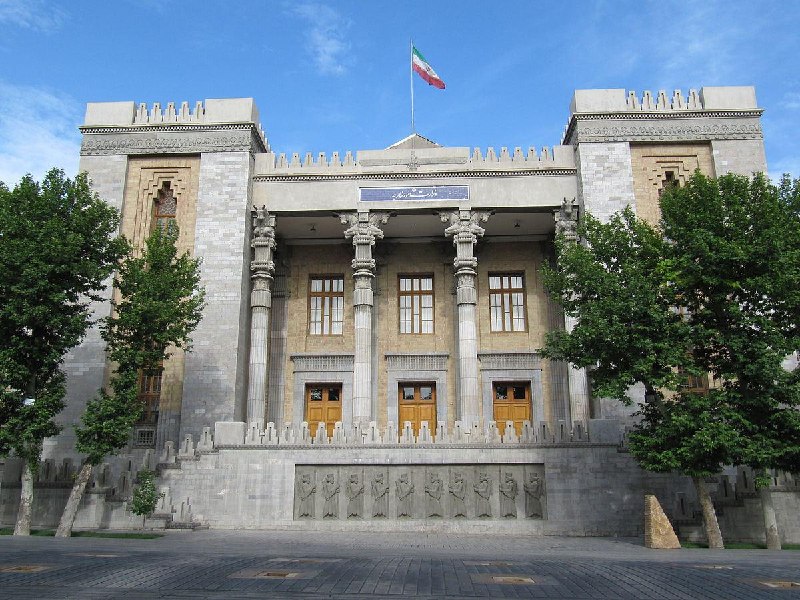
At 07:48 UTC on 20 July 2026, Iran's Foreign Ministry spokesperson Esmail Baghaei walked to the podium in Tehran and declared that his country would respond "decisively" to threats against its infrastructure. Forty minutes later, at 08:04 UTC, he was back at the same podium announcing that Sardar Momeni, a senior Iranian security official, was flying to Islamabad "with the aim of promoting border and security cooperation." Sandwiched between those two statements, at 07:45 UTC, came a third: an Iranian aircraft had returned with an official delegation and wounded Yemenis, and Iran denied that any air embargo against Yemen existed. Three readouts, one morning, each pointing at a different pressure point on Iran's eastern, southern, and western flanks.
The Momeni trip is the concrete thing on the schedule. It is also the least dramatic of the three announcements, and that is precisely why it matters. Pakistan is not a peripheral file for Tehran. The 900-plus-kilometre Iran-Pakistan frontier runs through Balochistan and Sistan-Baluchestan, two of the most heavily militarised borderlands in South Asia, and the security architecture on each side has been quietly rewritten since 2024 by cross-border strikes, the extraterritorial operations that produced them, and the rehabilitation agreements that followed. A bilateral visit framed as "border and security cooperation" is, in plain terms, a maintenance visit on a fault line.
What Momeni is actually carrying to Islamabad
Baghaei's readout, posted to Tasnim's English channel, described Momeni's mission in deliberately soft language: cooperation, bilateral, security. Iranian readouts of this kind rarely disclose the underlying agenda, and this one is no exception. What can be said from the public record is the shape of the file. Tehran and Islamabad have spent the past two years negotiating the practical aftermath of tit-for-tat strikes inside each other's territory, the management of cross-border movement by Baloch militant networks, and the joint infrastructure projects that survived both the strikes and the political fallout from them. A ministerial-grade visit in late July suggests one of three things: a deliverable is being signed, a crisis has been papered over, or the routine is being reasserted after a quiet interval.
The first reading is the one Tehran wants. The second is plausible given how often the Iran-Pakistan border has been the site of escalations that did not become wars but did become news. The third is the most likely default. The sources do not specify which reading applies.
The infrastructure line, and what "decisive" actually means
Baghaei's 07:48 UTC statement was sharper. "No injury can weaken Iran's determination to defend its national infrastructure," he said, and described Iran's response as "decisive." The phrasing tracks a recurring Iranian formulation used after kinetic events affecting energy, transport, or military sites, and it sits in a deliberate semantic lane: deterrent, not escalatory. Iranian officials have used the same verb cluster in the wake of disruptions to oil export terminals, to missile production facilities, and to the cyber and physical incidents that have periodically hit the country's industrial base since the 12-day war of 2025.
What the readouts do not say is what triggered the 20 July formulation. Tasnim's bulletin does not name an incident, an adversary, or a specific facility. That silence is itself informative. When Tehran wants to attribute an attack, it names and dates within hours. When it wants to send a generic deterrent signal, it uses Baghaei at the podium and leaves the trigger unspecified, the way a central bank governor will warn markets without naming a bank. The structure of the statement is the message.
The Yemen leg: evacuations, denial, and the air embargo question
The 07:45 UTC readout is the most operationally specific. An Iranian aircraft brought back "the official delegation and the wounded Yemenis," and Baghaei used the occasion to deny that any air embargo on Yemen exists. The phrasing matters. An Iranian aircraft moving into and out of Yemeni airspace, carrying officials and casualties, is the kind of flight pattern that would be physically impossible if a blockade were in force in the way Western framing sometimes implies. Tehran is therefore using the flight itself as evidence.
This is also the file most exposed to Western-wire counter-claim. Reporting in outlets that frame Iran's regional posture as a pure-proxy enterprise has, since 2024, repeatedly described the airspace around Sanaa and Hodeidah as effectively closed to civilian traffic, and Iran-aligned coverage has pushed back just as repeatedly. The 20 July statement slots into that argument: Tehran is publicly logging the flights it can and does run, and is using Baghaei's podium to convert that log into a diplomatic fact. Western reporting on the same flights has tended to treat them as exceptional, evidence of Houthi capability rather than Iranian logistics. Both framings can be true; they answer different questions.
What the timing tells us
The three statements were issued within nineteen minutes. That is too tight to be coincidence and too short to cover a full crisis cycle, which suggests the briefing block was planned as a package. The infrastructure-warning line sets the ceiling; the Pakistan trip sets the regional-floor cooperation; the Yemen line sets the logistical floor in the Arabian Peninsula. Read together, the package says: Iran is signalling deterrence on one axis, maintenance on a second, and denial on a third, all at once. It is the diplomatic shape of a country that has decided to be visibly present on several fronts in a single news cycle rather than letting any one front dominate.
It is also worth saying what the readouts do not contain. There is no reference to nuclear-file talks, to IAEA inspectors, to sanctions implementation, or to the Strait of Hormuz. The absence is deliberate. By keeping the briefing block focused on border, infrastructure, and Yemen, Tehran avoids putting any of those higher-stakes files into the same news cycle as the package, which keeps each file's volatility contained. Pakistani, Western-wire, and Gulf audiences can react to the files individually rather than as a single integrated escalation.
The plausible counter-reading
The dominant Western framing of a Momeni-style visit treats it as one move in a longer Iranian pressure campaign against Islamabad, calibrated against Pakistan's relations with Saudi Arabia and the Gulf states, and against the slow US-Iran track that has been running since the latter half of 2025. On that reading, the trip is a reminder to Pakistan of what it costs to host, transit, or overlook certain categories of cross-border movement.
The Iranian framing, set out in the same Tasnim bulletin, is the opposite: cooperation, maintenance, the boring work of keeping a 900-kilometre border from becoming a story. The structural reading Monexus finds more persuasive is that both are true, and that the art of the file is precisely that it can carry both readings without contradicting either. Iran does not need to choose between asserting influence and offering cooperation; the same visit can carry both, and Momeni's portfolio, sitting across the security and intelligence services, is built for exactly that kind of dual carriage.
The thing to watch is whether Islamabad issues a parallel readout before Momeni returns. A joint statement would convert the maintenance story into a public deliverable. A Pakistani silence, or a polite non-committal, would convert it back into a pressure signal. Either is possible on the public record available so far; the sources do not specify.
How Monexus framed this: the wire headlines that crossed the desk at 08:00 UTC emphasised the Yemen leg; we treated the Pakistan trip as the structural lead because it is the file with the longest tail, and let the Yemen line do its own work as a separate paragraph.
Wire provenance
This editorial synthesis draws on the following public wire/social posts:
- https://t.me/tasnimnews_en
- https://t.me/tasnimnews_en
- https://t.me/tasnimnews_en