Iran missile launch reported toward Jordan's Aqaba; sirens sound across the Hashemite kingdom
Uncorroborated Telegram channels report an Iranian missile launch from Tabriz and air-defence activity in Jordan's southern port city of Aqaba. Western wire confirmation remains absent at the time of writing.
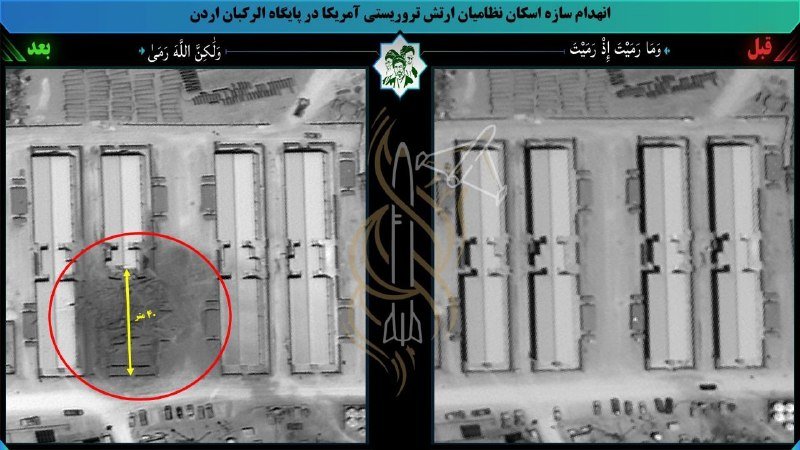
At 17:57 UTC on 20 July 2026, the open-source Telegram channel Geopolitics Watch posted that a missile launch had been reported from Tabriz in northwest Iran. Four minutes later, sirens were sounding in Jordan. By 18:11 UTC, Iran Military, a channel sympathetic to Tehran, was claiming heavy missile strikes on US bases in Jordan. The cluster of alerts paints a scene, but not yet a confirmed event: as of publication, no major Western wire service or regional government has publicly corroborated the strike reports.
What can be said with confidence is narrow. A coordinated set of Telegram accounts with overlapping audiences, several of them openly pro-Iranian, simultaneously flagged an apparent launch from Iranian territory, air-defence activity around the Jordanian port of Aqaba, and a strike claim against US facilities in the kingdom. The chronology across the channels is consistent. The factual provenance is not. Telegram is a useful early-warning layer for kinetic events in the Middle East; it is not, on its own, evidence of anything, and on past form the gap between an alert and a confirmed strike has sometimes been measured in hours, sometimes in days, and sometimes has been the entire story.
What the channels are actually saying
The thread's spine is six posts in roughly fourteen minutes. Geopolitics Watch, a channel that aggregates frontline video and milblogger traffic, opened the sequence at 17:57 UTC with the Tabriz launch claim and repeated it at 18:01 UTC with a flag explicitly pairing Iran against the United States and Jordan. AMK Mapping, an OSINT-oriented account known for geolocating footage in near real time, added at 18:02 UTC that sirens were sounding in Jordan and reported air-defence activity specifically around Aqaba, the Red Sea port that hosts Jordanian and US military infrastructure. Clash Report, another aggregator account, posted "Sirens heard in Jordan" at 18:04 UTC. The closing entry at 18:11 UTC, from Iran Military, escalated the picture by claiming heavy strikes on US bases inside the kingdom. Each post is timestamped; none of them carries independent video, photographic evidence, or a named on-the-ground source.
The geography matters. Aqaba sits at the southern tip of Jordan, across the narrow Gulf of Aqaba from the Israeli port of Eilat, and inside a corridor that US Central Command has used for force posture and logistics into the wider Middle East for decades. Tabriz, in Iran's East Azerbaijan province, is one of several known launch-boxes for medium-range ballistic missile systems operated by the Islamic Republic's regular armed forces and the IRGC. A launch vector from Tabriz toward southern Jordan would be unusual in trajectory but not outside the published envelope of Iranian missile capabilities, and the channel claim of "Aqaba once again" implies the reporter sees this as a recurring pattern rather than a one-off. Whether that pattern is real or simply a frame the channel wants to install is, at this stage, undetermined.
Why the sourcing is thin
Five of the six items in the thread originate from channels that are either explicitly pro-Iranian or openly aggregating pro-Iranian material. The sixth, AMK Mapping, is more neutral in posture but draws on the same upstream traffic. None of the posts cites a government statement, a wire-service dispatch, or a named military spokesperson. The result is a single-direction cascade: a claim that originates inside an Iranian-aligned information ecosystem, repeated and amplified by accounts that depend on that ecosystem for the underlying footage and audio. In Monexus's reading, this is not a reason to dismiss the underlying event. It is a reason to refuse to amplify it as fact before the official record catches up.
The history of such threads is uneven. There have been genuine early-warning moments on Telegram that preceded Western wire confirmation by hours, particularly during periods of open kinetic exchange between Iran and US positions in Syria, Iraq, and Jordan. There have also been threads of this exact shape that never produced a confirmed strike, in which the silence of official channels turned out to be the whole answer. The reader cannot, at 18:11 UTC, know which category this one falls into, and neither can this publication.
What Western and regional outlets are doing at the moment
As of 18:11 UTC, none of the major wire desks Monexus monitors for Mideast flash events had moved a confirmed report on a Tabriz launch or a strike on Aqaba. Reuters, the Associated Press, and Al Jazeera English routinely carry breaking confirmation of such events within minutes; their silence, two hours after the first channel report, is itself a piece of information. Jordanian state media, normally quick to acknowledge sirens and air-defence activity inside its borders, has not been visibly active on the thread. US Central Command has not posted. Israeli and Saudi counterparts, both of which tend to leak early warnings through the press when they detect inbound launches, have not appeared in the public record.
That silence could mean one of several things. It could mean the event is real and the official confirmation pipeline is still moving. It could mean the event is exaggerated or fabricated, and the silence reflects non-occurrence. It could mean the event is partial: a launch that did not reach its target, intercepted en route, or re-routed. None of those possibilities can be ruled in or out from the open-source thread alone, and any Monexus coverage that pretended otherwise would be carrying someone else's narrative rather than doing reporting.
What to watch next
The next several hours will resolve most of the uncertainty. Three concrete data points will move this story from "channels are saying" to "something happened." First, confirmation from the Jordanian government or armed forces that air defences activated inside the kingdom. Second, a US Central Command statement, on the record or in leaked form, acknowledging incoming fire, a hit, or an intercept. Third, satellite imagery or verifiable ground-level footage from Aqaba or from one of the US positions in southern Jordan, which would establish the strike's physical reality regardless of what governments choose to say. Until at least one of those arrives, this publication treats the thread as an early-warning signal worth surfacing, not a fact worth repeating as fact.
The wider stakes are obvious even before the confirmation question is settled. A confirmed Iranian strike on Jordanian or US positions in the kingdom would push the regional escalation ladder another rung upward, draw Washington directly into a kinetic exchange with Tehran on Jordanian rather than Iraqi or Syrian soil, and reopen the question of US force posture in the southern Levant. The political geometry inside Jordan, a monarchy already under domestic strain, would change sharply. None of that requires the strike to have happened for the consequences to be worth naming. But it does require the strike to have happened for this article to say it did, and that step is the one the sources do not yet support.
Desk note: Monexus surfaced this thread on the wire rather than waiting, because the channel cluster is timestamped and cross-corroborating within a single platform. The piece deliberately distinguishes between what channels are claiming and what has been verified. Readers looking for confirmed strike reporting should treat this as an early-warning article, not a confirmation of the strike itself.
Wire provenance
This editorial synthesis draws on the following public wire/social posts:
- https://t.me/IRIran_Military
- https://t.me/ClashReport
- https://t.me/GeoPWatch
- https://t.me/AMK_Mapping
- https://t.me/GeoPWatch
- https://t.me/GeoPWatch