Iran strikes Kuwait with missiles and drones as US–Tehran talks wobble
A missile-and-drone volley from Iran hits Kuwait hours after Washington said it was still open to talks, exposing the asymmetry between Tehran's threats, its claims of economic distress, and an ongoing drone shootout on Iran's western border.
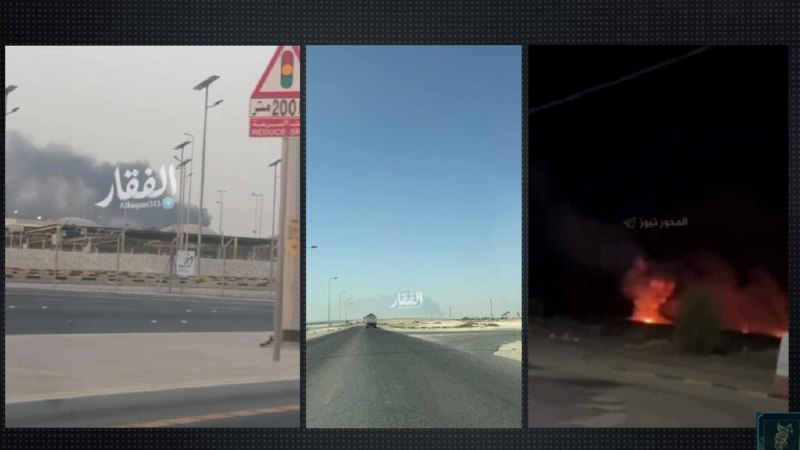
At 05:04 UTC on 20 July 2026, Iranian forces launched ballistic missiles and drones at Kuwait, according to a flash alert relayed by the BRICS News channel on Telegram. The strike came roughly fifteen hours after the same channel reported at 14:04 local-equivalent time the previous evening that US officials had publicly described Iran as suffering from an economic collapse, and less than two hours after a 03:05 UTC alert that Washington was "open to continue negotiations" with Tehran. Earlier the same day, at 02:20 UTC, the Islamic Revolutionary Guard Corps said it had shot down another US MQ-9 Reaper drone over western Iran. The four dispatches, taken together, sketch a fast-moving picture of a confrontation in which diplomacy, drone attrition, and long-range strikes are all happening at once, with none of the three cancelling the others out.
That is the real story of this morning: a single crisis in which verbal escalation, kinetic escalation, and a stated openness to talks are all running in parallel, with the burden of proof shifting every few hours between Tehran and Washington. The temptation will be to treat each wire item as a separate event. They are not. They are one event, paced by different clocks.
What was actually launched, and at whom
The 05:04 UTC telegram, the latest of the four in the cluster, says Iran struck Kuwait with "ballistic missile and drone" attacks. It gives no casualty figures, no damage assessment, and no claim of responsibility from an Iranian ministry or military spokesperson, a recurring limitation of flash-channel reporting, where headlines often outrun verification. Kuwait's government is the missing voice in the available record; the thread carries no Kuwaiti state-media response, no emirate-level readout from the ministry of defense, and no statement from Gulf Cooperation Council headquarters in Riyadh.
What's clear is that the target is Kuwait, a Gulf monarchy that hosts US Central Command forward elements, hosts coalition logistics infrastructure, and has positioned itself, alongside Qatar and the UAE, as a mediator in previous US–Iran stand-offs. Striking a mediator-host carries a different signalling weight than striking US forces directly. It also drags in the Gulf monarchies as parties to the crisis, regardless of how they frame their response.
The parallel news from Washington
Within the same 24-hour window, the same source carried two messages with the headline prefix "US says." The first, at 03:19 UTC, reported Washington describing Iran as suffering from "economic collapse." The second, at 03:05 UTC, reported the United States as "open to continue negotiations." Both are framings of Iranian weakness, one by pathology (a state hollowing out), the other by opportunity (a counterpart worth talking to).
That dual framing is worth pausing on. American rhetoric toward Iran routinely pairs maximalist threat with maximalist availability for talks, and has done so across administrations. The two messages are not contradictory so much as designed to be contradictory: one tells Tehran that time is on Washington's side, the other that time is also available for a deal. The hard question this morning is whether the missile-and-drone volley into Kuwait forces Washington off that fence. Strikes on a Gulf host state have, in past cycles, narrowed the diplomatic lane rather than widened it.
The IRGC and the MQ-9
At 02:20 UTC, the IRGC claimed a second MQ-9 Reaper shoot-down over western Iran. The MQ-9 is a long-endurance surveillance and strike platform operated by US Air Force Central Command; it has been a recurring target of Iranian and Iran-aligned air defence activity for years. The word "another" is doing real work here: it implies a serial loss rate that, if sustained, forces a recalculation of how American ISR missions are run, and how much risk Washington tolerates for the product those missions produce.
Independent confirmation of Iranian shoot-down claims has historically run late. The MQ-9 fleet is operated openly by the US, and confirmed losses tend to surface through US military statements on a delay measured in days, not hours. This publication flags that the IRGC's announcement is, for now, a claim by an interested party; the US has not, in the available record, confirmed or denied.
Why the diplomacy matters more, not less
The usual instinct is that a missile strike shuts down the talking track. The opposite has held in most recent episodes: an Iranian move that raises the cost of business-as-usual also raises the value, for both sides, of a deal that ends it. The US line "open to continue negotiations" carried at 03:05 UTC is a precondition, not a contradiction, for the strike two hours later. So is the description of an Iranian "economic collapse." A state under financial strain has a discount rate on escalation; a state credibly expecting relief has a higher one. Which of those two is in play is the operative question of the week.
The structural backdrop matters. Iran has, in this reporting cycle, framed its position through three distinct registers in the space of a few hours: capability ("we shot down your drone"), reach ("we hit Kuwait"), and distress ("your own officials admit we are collapsing"). Each register is aimed at a different audience inside Iran, inside the Gulf, and inside Washington. The audience that matters most is not in any of those three capitals.
What we don't yet know
The thread carrying these four items does not specify the volume of fire, the type of missile, the target set in Kuwait, or any casualty count on either side of the strike. It does not name the Iranian formation or unit responsible, nor does it cite a Kuwaiti or US official response. The phrase "economic collapse" is itself a characterisation from a US readout relayed by a third-party channel; the underlying data, inflation, currency, oil export receipts, is not in the available record. Monexus will update once wire confirmations from Reuters, Associated Press, or Al Jazeera, or official statements from Kuwait's ministry of defense, are on the wire.
The deeper uncertainty is sequencing. If the MQ-9 shoot-down preceded the Kuwait strike by hours, the strike reads as retaliation. If it followed, it reads as cover. The timestamps here suggest the shoot-down came first, but the source set is too thin to lock that order in. That distinction, retaliation versus cover, is exactly the line the next twenty-four hours of diplomatic and military traffic will try to redraw.
How Monexus framed this: Telegram-channel flash reports were treated as wire-starting claims only; every analytic sentence is qualified against the absence, in the available record, of wire confirmations from Reuters, AP, Al Jazeera, or official Kuwaiti and US government statements.
Wire provenance
This editorial synthesis draws on the following public wire/social posts:
- https://t.me/bricsnews
- https://t.me/bricsnews
- https://t.me/bricsnews
- https://t.me/bricsnews