Tehran sends its interior minister to Islamabad with a message from Pezeshkian
Eskandar Momeni's Monday arrival in Islamabad, carrying a written message from President Masoud Pezeshkian, marks a calibrated attempt by Tehran to re-anchor a relationship strained by border frictions and shared anxieties over Afghan militancy.
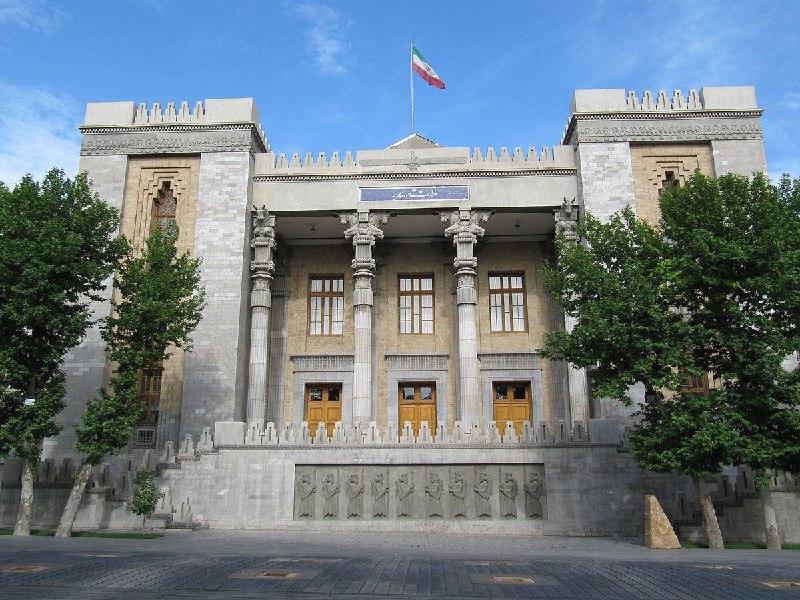
Iran's Interior Minister Eskandar Momeni is scheduled to depart for Islamabad on Monday 21 July 2026, Iran's Foreign Ministry spokesperson confirmed on 20 July, carrying a written message from President Masoud Pezeshkian for the Pakistani government. The dispatch of an interior minister rather than a foreign affairs counterpart signals that Tehran intends to put border management, militant movement, and refugee flows at the centre of the agenda, not the broader diplomatic file that Foreign Minister Abbas Araghchi has run in recent months.
The visit lands at a moment when both governments are quietly recalibrating. Pakistan's counter-terror posture along the Durand Line has tightened under sustained Taliban rule in Kabul, and Iran has grown increasingly vocal about the cross-border traffic of militant networks operating out of Afghan soil. Pezeshkian's letter, delivered by his interior chief, is the kind of calibrated gesture a government makes when it wants the substance of a relationship reset without the optics of a foreign minister's trip.
What an interior minister actually does in Tehran
In Iran's cabinet architecture, the Interior Ministry is the portfolio that runs provincial governors, border policing, and the Basij-linked internal security bureaucracy. It is the ministry that has historically negotiated the bilateral mechanics of refugee returns, the joint anti-narcotics task forces along the Sistan-Baluchestan corridor, and the consular arrangements that follow a border incident. A visit by its head to Islamabad therefore points to operational delivery rather than strategic proclamation.
The choice also tells a reader something about Pezeshkian's domestic balance. The president sits atop a system in which the Foreign Ministry often takes the lead on regional diplomacy, while security-heavy files remain under tighter Supreme National Security Council oversight. By tasking the interior minister to carry a presidential message, the Iranian side signals that what it wants from Pakistan is execution on the ground: deportations, intelligence handovers, and a more porous channel for security coordination that has been strained since the Taliban's return in August 2021.
The Pakistan side of the corridor
In Islamabad, the counterparts will be Interior Minister Mohsin Naqvi and the civilian-military apparatus that actually runs Pakistan's western frontier. The Pakistani interior ministry controls the Frontier Corps, oversees the registration of Afghan refugees, and negotiates with Kabul on transit and trade. A sitting Iranian interior minister arriving with a written message from the presidency is a face-saving channel for both sides: it gives Islamabad a senior interlocutor without requiring Prime Minister Shehbaz Sharif's office to absorb the political weight of a fresh foreign-ministerial visit.
For Pakistan, the pressure points are familiar. Tehran has periodically accused Islamabad of tolerating militant networks on its eastern border, and Iran has, on past occasions, responded with direct kinetic action against what it described as armed groups staging from Pakistani territory. The relationship has also been complicated by sectarian violence in Balochistan and by the long-running refugee file, with millions of Afghan nationals hosted in Pakistan under arrangements that have grown politically uncomfortable in Islamabad.
Why the messenger matters more than the message
Reading the trip through the lens of who is carrying the letter rather than what the letter contains, the move looks less like a foreign-policy reset and more like a quiet re-engineering of the working-level relationship. Foreign ministers speak in the language of communiqué. Interior ministers speak in the language of joint operations rooms, prisoner exchanges, and border fencing timelines. The text of Pezeshkian's message will matter less than the operational annexes that follow it.
There is also a regional read. Both governments are watching Afghanistan through different lenses but with overlapping anxieties: Iran worried about water-sharing, refugee flows, and militant spillover from the east; Pakistan preoccupied with the TTP threat, the Durand Line dispute with Kabul, and the economic cost of hosting Afghan nationals. Where those anxieties intersect, the working-level channel that the interior ministers control is precisely the one that needs to function if either side is to manage a deteriorating Afghan file.
What to watch in the next fortnight
Three signals will indicate whether this visit produced something durable. First, whether Islamabad issues a readout that names the security files discussed, or confines itself to the standard language of "brotherly relations". Second, whether the two sides announce a concrete step on the refugee file, which would carry direct domestic political cost inside Pakistan. Third, whether Tehran's official media describes the trip in terms of "coordination" or upgrades the language to "strategic partnership". The first suggests maintenance. The third would imply that Tehran is seeking something closer to an alignment with Islamabad on Afghanistan than either government has been willing to formalise in public.
The sources do not specify the text of Pezeshkian's letter, the length of Momeni's stay, or the Pakistani officials confirmed to meet him. Those details will determine whether this is a routine working visit dressed up in presidential messaging, or the opening move of a deeper re-engineering of the Iran-Pakistan channel. On the evidence available today, the visit looks calibrated rather than transformational, which in a relationship this complicated is usually the most an interior minister can realistically deliver.
How Monexus framed this: the trip was carried into the desk's pipeline as a single-sentence Iranian Foreign Ministry line and an al-Arabiya via Michael A. Horowitz note. We elevated it from a routine bilateral item by treating the choice of messenger, rather than the visit itself, as the news, and by reading it against the operational architecture on both sides of the border rather than the communiqué language.
Wire provenance
This editorial synthesis draws on the following public wire/social posts:
- https://t.me/Irna_en
- https://t.me/osintlive