Iran's interior minister lands in Islamabad as Tehran searches for partners beyond the Gulf
Iran's Interior Minister Eskandar Momeni travelled to Islamabad on 20 July 2026 to follow up on previously signed agreements, signalling Tehran's continued bet on its eastern flank at a moment of pressure on its western one.
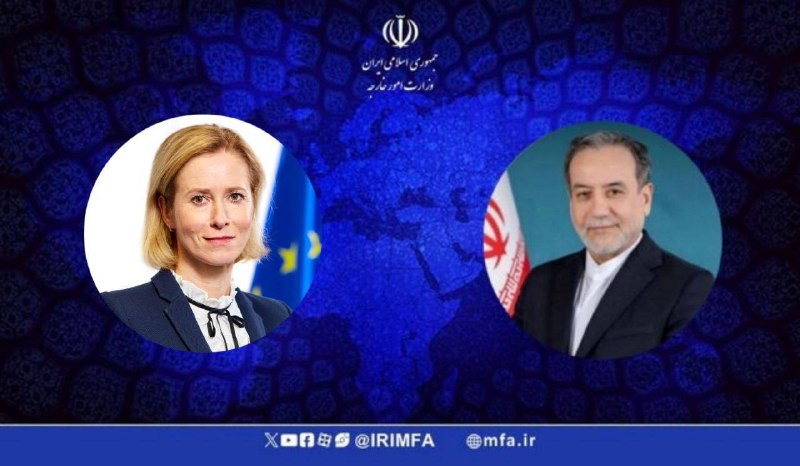
Iran's Interior Minister Eskandar Momeni touched down in Islamabad on 20 July 2026, the latest senior Iranian figure to make the four-hour flight from Tehran in a year that has seen official traffic between the two capitals accelerate noticeably. According to a Telegram post by PressTV at 19:40 UTC on 20 July, Momeni's visit is intended to advance bilateral cooperation and follow up on agreements already signed between the two governments.
That thin Iranian-state framing, however, hides a more interesting trip. Tehran is short on regional partners willing to engage it publicly, and Pakistan is one of the few neighbours with both the institutional depth and the political will to host an Iranian cabinet minister without significant domestic fallout. The visit lands in a calendar week that has already featured Iran-related diplomacy in several other capitals, and it lands against a backdrop in which Tehran's room for manoeuvre on its western border has narrowed.
A visit built on follow-up, not breakthrough
PressTV's framing of the trip is bureaucratic: agreements previously concluded, cooperation to be deepened, the standard language of routine bilateral diplomacy. That language is itself the story. Iranian state coverage rarely troubles itself with this kind of visit unless the host country has either delivered something specific or refused to deliver something specific, and the headlines in Tehran tend to favour either triumph or grievance. A neutral, agreement-by-agreement read-out suggests Momeni's trip is being staged around paperwork already on the books: minutes of earlier joint commissions, memoranda of understanding on border policing, the kind of documents that accumulate between two neighbours who share roughly 900 kilometres of frontier but rarely make global headlines doing so.
There is, however, a pattern in the calendar. PressTV's own feed has carried multiple Iran-Pakistan read-outs in recent months, and Iranian cabinet members have used the corridor between Tehran and Islamabad to push specific asks: tighter coordination on counter-narcotics along the Sistan-Baluchestan-Balochistan corridor, faster processing of trade documentation at the Mirjaveh-Zahedan crossing, and continued political cover at multilateral forums where Iran has fewer automatic friends than it once did.
Why Islamabad, why now
Pakistan is not a substitute for Iran's Gulf relationships, which remain the centre of gravity of its regional trade. But it is increasingly the counter-weight. The two countries share an interest in border security arrangements that neither side wants run through third-party intermediaries, and both governments have spent the past year emphasising energy connectivity projects, the long-discussed Iran-Pakistan gas pipeline, electricity imports from Iran into the Pakistani grid, and trilateral talks with China that may yet bring Beijing's capital and engineering capacity into the bilateral relationship.
An alternative read is worth naming: Pakistan is also balancing. Islamabad maintains working relationships with Saudi Arabia, the United Arab Emirates, and the United States, and an interior-minister-level visit from Tehran is calibrated to be visible enough to register, but not so dramatic as to trigger Gulf capitals. That is why the trip was framed, in Iranian state media, in the muted language of implementation. The visit is plausibly designed to extract marginal deliverables, not headlines.
A third reading holds that Tehran is building a holding pattern. With its western diplomatic file under sustained pressure and its regional partners selective in their public support, a low-cost partnership with a nuclear-armed neighbour of more than 240 million people offers Iran a floor under its external position. The visit's main achievement may simply be that it happened, and that an Iranian minister stood next to a Pakistani counterpart without managing the meeting itself becoming the day's news.
What the sources leave out
The PressTV item that triggered this piece is a Telegram post. It names Momeni and the purpose of the trip, and references agreements already in place, but it does not enumerate those agreements, name the Pakistani counterpart, specify which commission or ministerial track is convening, or detail any new announcement. The framing is forward-pointing without being specific.
That is consistent with how Iranian state media handles interior-ministry travel. The granular readout is usually reserved for the foreign ministry, with state television and PressTV carrying the diplomatic framing and Pakistan's official news agency carrying the substantive detail. Until the Pakistani side, most likely the Associated Press of Pakistan, or major outlets such as Dawn, Geo, or The News International, publishes a read-out, the texture of this visit will remain thinner than the visit itself.
For Monexus readers, the key date to watch is the next joint economic commission meeting, which the Iranian side has signalled it wants to convene before the close of the current Iranian calendar year in March 2027.
How Monexus framed this: where wire coverage of the trip would treat the visit as routine bilateral housekeeping, Monexus reads it as one data point in Iran's eastern-pivot strategy under sustained western pressure.
Wire provenance
This editorial synthesis draws on the following public wire/social posts:
- https://t.me/s/presstv