Iran races to restore lost gas output as US strikes hit domestic industry harder than dissent
Tehran says it can put 100 million cubic metres of gas output back online within months, even as a strike on a Khomein industrial facility and a Reuters account from the south show the pressure of US action is registering in factories and homes, not in the streets.
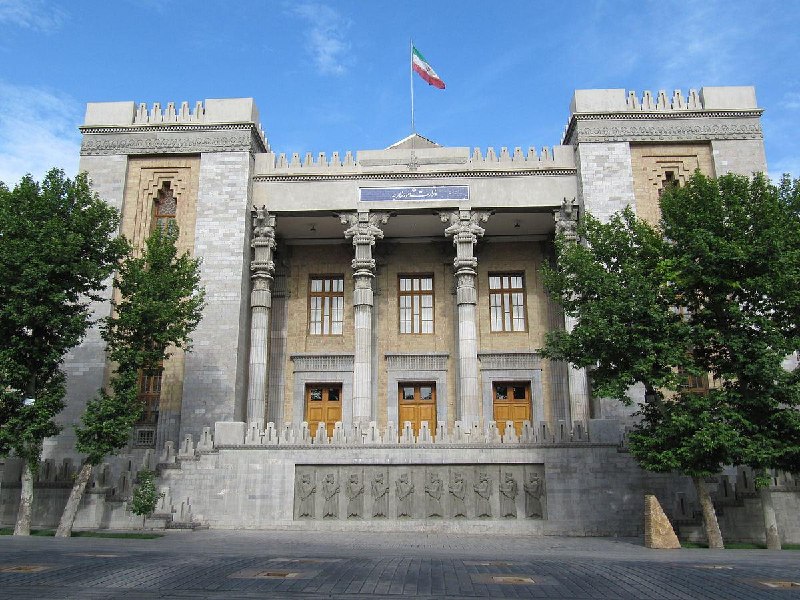
At 19:00 local time on 20 July 2026, an industrial facility on the outskirts of Khomein in central Iran took a strike that, according to Iranian state broadcaster IRIB, produced no casualties but left damage still being assessed. Within four hours of that report crossing the wires, a separate thread out of Tehran carried a more routine announcement: Iran would restore 100 million cubic metres of gas output "in the coming months," an unnamed official told Reuters. Separate by Reuters from the country's south described the pressure that the lost gas production had put on households and small workshops, and concluded that the US campaign, rather than fomenting protest, has deepened hardship. Three signals from the same Monday, together, define the texture of the confrontation.
The picture that emerges is not a story about pipelines and protests as discrete subjects. It is one in which the energy damage feeds the political damage, and the political damage registers not as dissent but as exhaustion. Iran's ability to put back as much as 100 million cubic metres per day of gas output is the technical ceiling on how much hardship the regime can absorb before rationing tightens further. The Khomein strike is a reminder that the ceiling is being tested from both sides at once.
The gas restoration pledge, and what 100 million cubic metres actually buys
Iran's pledge to restore 100 million cubic metres of daily gas output in the coming months, delivered to Reuters on 20 July 2026, is a planning figure rather than a forecast. Iran sits on the world's second-largest natural gas reserves, behind Russia, but US and Israeli action against energy infrastructure in 2024 and 2025 took large volumes offline, and sanctions have made replacement parts and field services harder to source. A restoration of that scale would partially offset the winter-related rationing that has idled factories and forced rolling blackouts in southern provinces during prior cold snaps, but it would not close the gap.
The framing here matters. Iranian officials, working through wire-friendly channels, present the restoration as competent national management of an external shock, the kind of recovery narrative Tehran prefers. The Reuters report from Iran's south pushes back: the social indicator that has moved is not anger at the government but exhaustion among wage earners and small shopkeepers who cannot absorb higher fuel costs. In other words, the regime's room to claim credit for fixing the problem is wider than its room to claim credit for not having caused it.
The southern reading: hardship without protest
The Reuters dispatch from "Iran's restive south," filed the same day, walked through Khorramshahr and other Khuzestan communities where US-action fallout has registered in fuel queues, school closures during cold snaps, and shop owners trimming staff. The political signal the piece underlines is the absence of protest. The south is historically where bread-price riots in 2018 and 2019 first surfaced, and where fuel-price demonstrations in November 2019 turned lethal. By the reporting's account, that base is not mobilising; it is absorbing.
There are two ways to read this. The first, more sympathetic to Tehran, is that the regime's coercive apparatus, plain-clothes units and the Basij, has deterred street action. The second, more sympathetic to Iranian civil society, is that the target population has correctly calculated that protest would not change Iran's negotiating position with Washington and might simply bring more repression. The Reuters account points toward the second read: hardship is real and is registering, but not in the form the headline writers tend to expect.
What the Khomein strike adds, and what it does not
The IRIB report of an industrial-facility strike on the outskirts of Khomein at 19:00 local time on 20 July, causing material damage but, per state media, no casualties, sits inside a pattern of attacks on Iranian industrial and energy infrastructure. The location matters: Khomein is in Markazi province, west-central Iran, well off the usual border-corridor geography that has dominated coverage. That suggests either a wider targeting radius than the public map implies, or a specific tactical selection against a particular facility that state media has chosen not to specify.
What the strike does not establish, on the evidence in today's thread, is attribution. State Iranian outlets describe attacks in the passive voice or as actions by "the Zionist-American enemy." Western wire reporting on Israeli action against Iranian targets in 2024 and 2025 was more explicit. The Reuters gas-restore piece does not tie the two items together; the IRIB item does not name a perpetrator. Monexus treats the strike as a documented event with a documented casualty count (none) and a documented location, and reads any attribution as still contested.
The structural read: sanctions-by-strike
What we are watching is a hybrid pressure campaign that uses kinetic action against energy and industrial infrastructure to do the work sanctions have done, more loudly, since the early 2010s. The tactical logic is straightforward: gas losses push rationing onto households and small industry, rationing pushes unemployment upward, unemployment pushes migration pressure, and migration pressure is the currency Iran cannot easily print its way out of. The restoration pledge is a sign that Tehran believes it can replace enough of the lost output to break that loop before winter 2026.
The alternative read is more pessimistic for both sides. The Reuters south-of-Iran dispatch suggests the loop is already biting, and the Khomein strike suggests the kinetic side of the campaign has not paused to wait for the energy side to recover. In that framing, the 100-million-cubic-metre pledge is not a confidence signal but a stress sign, the planning floor of a sector that knows further losses are coming. The strain on ordinary Iranians in Khuzestan that today is framed as "hardship" becomes, in that read, the slow-burn political liability that Tehran cannot manage and Washington cannot convert.
What remains uncertain
The thread does not specify the total loss of gas output that the 100-million-cubic-metre restoration pledge would offset, so the gap between current and restored capacity cannot be measured from the items at hand. Attribution of the Khomein strike is open. The Reuters dispatch on the south is a single-day snapshot, not a trend. And the absence of protest in Khuzestan is described as the current state, not a forecast.
What is verifiable, on the sources available: Iran says it will restore roughly 100 million cubic metres of daily gas output within months; a Reuters report from Iran's south documents hardship without protest in the same timeframe; and an IRIB report describes a strike on an industrial facility at Khomein at 19:00 local on 20 July 2026 with no casualties and damage under assessment. Three signals, same day, same direction: a country being asked to absorb more than its politics can easily metabolise.
How Monexus framed this: The wire read on the gas-restoration pledge leaned technical; the wire read on the south leaned humanitarian. Monexus treats both as a single signal about Iranian political slack and reads the Khomein strike as the kinetic pressure that slack is being asked to absorb.
Wire provenance
This editorial synthesis draws on the following public wire/social posts:
- http://reut.rs/45i6xgo
- http://reut.rs/4yLzbEu
- https://t.me/ClashReport