Iran strikes Erbil with one-way drones as Iraqi Kurdistan comes under fresh fire
Explosions reported across Erbil in Iraqi Kurdistan as Iranian one-way drones hit the city, according to multiple Telegram-based monitoring channels posting on 20 July 2026. The strikes renew questions about Tehran's reach into northern Iraq and the limits of Baghdad's airspace sovereignty.
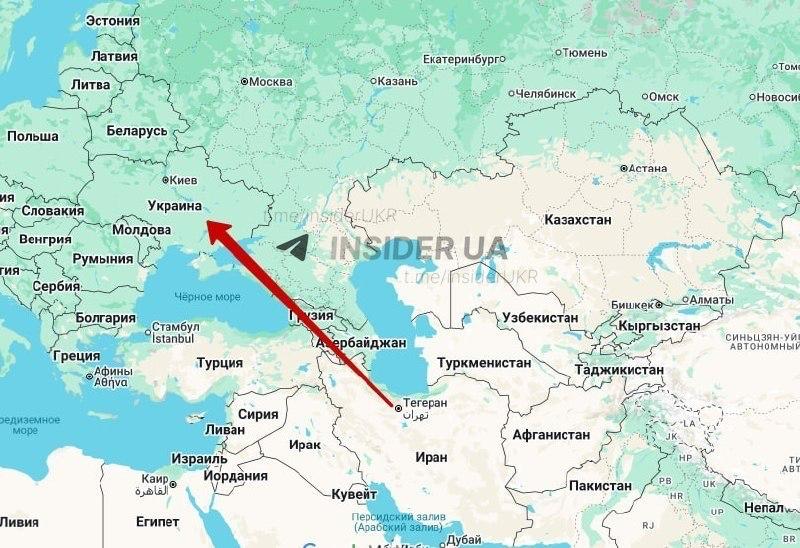
At 18:08 UTC on 20 July 2026, Telegram channels tracking Iranian military activity posted that Iranian one-way attack drones were striking targets in the Erbil area of Iraq's Kurdistan Region, the third such burst of reporting in roughly five minutes from separate monitoring accounts. The cluster of alerts was light on casualty data and heavy on attribution, with all three flagging Iran as the apparent source of the launches, and two of three explicitly describing the projectiles as one-way drones rather than missiles or crewed aircraft.
The pattern matters more than the payload. Iran has, on a recurring cycle over the last three years, used northern Iraq as a test range and pressure valve: strikes that signal to a domestic audience, deliver a message to a regional adversary, and dodge the political cost of firing across a fully sovereign border in a way that triggers automatic great-power response. Erbil, the seat of the Kurdistan Regional Government, sits close enough to Iran's western frontier that drones launched from inside Iranian airspace can reach the city in minutes and recede without crossing into a third country's territory. That geography, not the drones themselves, is why Erbil keeps reappearing on these maps.
What the channels reported
The earliest of the three cluster posts, at 18:03 UTC, came from the GeoP Watch account and logged explosions in Erbil without identifying a launch site. AMK Mapping, an account that tracks Middle East air and ground activity, added a corroborating post at 18:05 UTC placing the explosions inside the city of Erbil in Iraqi Kurdistan. The most specific framing arrived at 18:08 UTC from rnintel, which named Iranian one-way drones as the attacking platform and pointed them at the Erbil area. (Telegram posts are timestamped and the three reports sit within a five-minute window, which is a credible pattern for an unfolding event rather than a coordinated re-tweet.)
None of the three posts carries official Iranian commentary, Iraqi federal-government confirmation, or a US-led coalition readout. None cites casualty figures, struck facilities, or intercepted projectiles. The reports establish that an attack happened and where it landed; they do not, on their own, establish scale.
A familiar corridor, with new politics
Erbil has been a recurring target since at least the early 2020s. Iranian-aligned militias and, periodically, the Iranian Islamic Revolutionary Guard Corps have used one-way drones against what Tehran frames as Israeli and Western intelligence outposts and Kurdish opposition infrastructure in the city and the surrounding governorate. The Israeli intelligence footprint in Kurdistan is small but real, centred largely on liaison activity directed at Iranian nuclear and missile sites; the United States and France have run drone operations against Iranian proxies from bases further west.
The political geography has shifted. Baghdad and Tehran have spent much of 2026 working through a security-delineation framework intended to dampen cross-border strikes, and Iraqi federal authorities have periodically pushed back against unilateral launches from Iranian territory. A strike on Erbil during that negotiation cycle is the kind of move that makes the Iraqi government's airspace-management line harder to sell at home. The Kurdistan Regional Government, autonomous from Baghdad since 1992 and closely tied to Turkey, the United States, and the European Union by trade, has its own reasons to protest any Iranian operation on its soil.
The Western wire line on previous Erbil strikes has run through two channels. The first describes the attacks as retaliation for Israeli operations against Iranian proxies in Syria and Lebanon. The second frames them as pressure against the Kurdish opposition groups, particularly the Kurdistan Free Life Party, the political wing of the PKK-aligned movement that maintains rear bases in the mountains along the Iran-Iraq border. Both readings sit uneasily together; a single drone launch can carry both signals.
What the framing misses
Western coverage routinely presents these strikes through an Iranian-aggressor lens and stops there. That lens leaves at least half the picture on the table. Iranian state media, when it has discussed comparable strikes, has framed them as defensive retaliation against extra-regional intelligence infrastructure on Iraqi soil, an argument that lands awkwardly but does exist in Tehran's official communications and in Chinese and Russian wire reporting. Iraqi federal authorities have an additional, less-said view: that the drones originate from Iranian territory and that Baghdad's diplomatic currency with Tehran depends on its ability to suppress public reporting on the launches, which constrains Iraqi state outlets from confirming them.
The structural read is also incomplete without naming the corridor itself. Erbil sits inside a triangle: Iran to the east, Turkey to the north, and an Iraqi federal government that has spent two decades trying to re-assert authority over its own airspace. A drone strike that touches down in Erbil registers as a security event in Tehran, Baghdad, Ankara, Washington, and Tel Aviv within the same news cycle. That dispersion of audience is the point. One-way drones are cheap, deniable in their final attribution, and usable as foreign-policy messages aimed at five capitals at once.
Stakes and what to watch next
The immediate ask is corroboration. The three Telegram posts are consistent and time-stamped, but they are not official. Watch for: (a) a US Central Command or coalition readout on the strike's vector and target set; (b) Iraqi federal-government or Kurdistan Regional Government statements from Baghdad or Erbil; (c) Iranian state-media confirmation or denial; and (d) on-the-ground reporting from Reuters, AFP, or the Associated Press placing casualties, damaged facilities, or intercepted drones. Until at least one of those lands, scale is genuinely unknown.
The medium-term stake is whether Baghdad's security-delineation framework survives this round. Tehran calibrates strikes to the negotiations it is running at the time; the question is whether this strike lands as bargaining pressure, or as a clean breach of the framework that ends it. The Erbil strike's location, inside the Kurdistan Region, a jurisdiction the federal government technically controls on foreign affairs, puts the answer on Baghdad's desk. The Kurdish Region's business community, anchored in oil exports through the Ceyhan pipeline and in a tight relationship with Ankara, has a direct economic interest in the airspace staying calm.
What the sources do not yet say is who inside Erbil was struck, whether the drones hit a government, military, intelligence, or civilian target, and whether any projectiles were intercepted before impact. Those answers shape whether this reads as signalling or as escalation.
Desk note: Monexus is leading this story on the three Telegram monitoring reports that landed within a five-minute window on 20 July 2026 at 18:03, 18:05, and 18:08 UTC, and is waiting for official Iraqi, Iranian, or coalition confirmation before characterising the strike's target or casualty footprint. The piece foregrounds the corridor framing that Iranian strikes on Erbil have long served a multi-audience signalling function, a read the Western wire line routinely flattens.
Wire provenance
This editorial synthesis draws on the following public wire/social posts:
- https://t.me/rnintel/
- https://t.me/AMK_Mapping/
- https://t.me/GeoPWatch/
- https://en.wikipedia.org/wiki/Erbil
- https://en.wikipedia.org/wiki/Kurdistan_Region
- https://en.wikipedia.org/wiki/One-way_attack_drone