Four Iranian Ballistic Missiles Target Aqaba: What the Telegram Trail Reveals
Open-source channels reported four Iranian ballistic missiles launched toward Aqaba on 20 July 2026, with two reportedly fired from Urmia in northwestern Iran. The reporting is thin, late, and almost entirely Telegram-sourced.
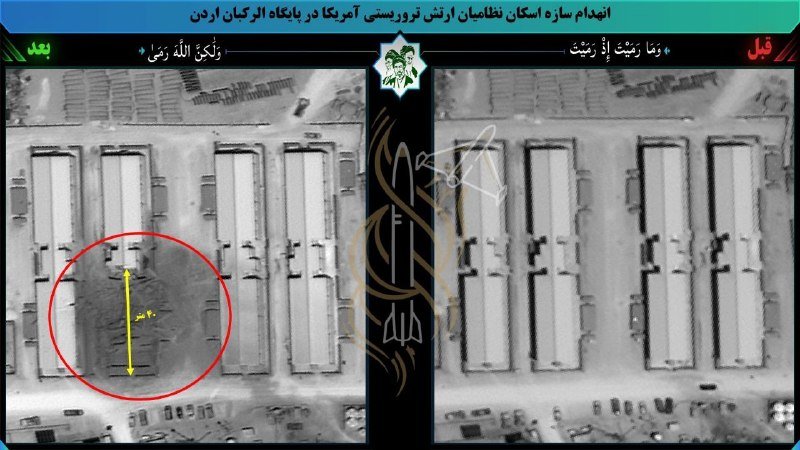
At 18:10 UTC on 20 July 2026, the OSINTdefender Telegram channel posted a single-sentence alert: four ballistic missiles had been launched from Iran toward Aqaba in southern Jordan, with two of the projectiles reportedly fired from Urmia in northwestern Iran. Four minutes earlier, at 18:04 UTC, the AMK_Mapping channel had carried the same claim in slightly different wording, naming the Urmia origin point first and the four-missile count second. The two channels, both well-followed open-source intelligence feeds covering the Middle East, provided no imagery of impact, no official attribution, and no corroborating statement from Iranian, Jordanian, Israeli, or US authorities in the material reviewed by Monexus.
The reporting sits at the unreliable end of the open-source spectrum: a small number of Telegram posts, no mainstream wire confirmation, no military briefing, and no independent geolocation of launch sites or impact points. What it does offer is a specific, falsifiable claim that can be checked against the public record once governments speak.
What the two channels actually said
Reading the two alerts side by side matters, because the framing diverges in ways that affect how the claim should be weighted. OSINTdefender's version leads with the destination and the count ("four ballistic missiles were launched from Iran targeting Aqaba, southern Jordan") and only then names Urmia as the origin point for two of the four. AMK_Mapping, by contrast, opens with the launch point ("2 ballistic missiles were also launched from Urmia, northwestern Iran") and only then states the four-missile total targeting Aqaba. The difference is editorial: one presents a destination-led event with a launch-point detail, the other presents a launch-point-led event with a destination count.
Neither post identified the missile type, the munition class, the warhead configuration, or the flight profile. Neither linked to official Iranian, Jordanian, or coalition statements. Neither posted radar tracks, satellite imagery, or ground video. Both were text-only alerts.
The Urmia question
Urmia sits in West Azerbaijan Province in northwestern Iran, more than 1,500 kilometres from Aqaba by air and roughly 1,200 kilometres from the nearest point of the Persian Gulf. If the claim is accurate, the missiles would have transited Iraqi and (depending on trajectory) Syrian or Saudi airspace to reach southern Jordan. That is not impossible: Iran has demonstrated long-range ballistic capability for decades, and its Shahed-series derivatives and older Shahab-family designs have nominal ranges that comfortably cover the distance. But no flight profile, no plume imagery, and no third-party radar confirmation has been published in the material Monexus has reviewed.
The geographic specificity of the Urmia claim is also worth noting. Naming a launch city, rather than a country of origin, is the kind of detail that either reflects genuine intelligence or reflects speculation laundered into a specific. Open-source channels occasionally receive pre-publication tips from individuals with access to flight-tracking or signals intelligence, but they also occasionally receive unverified single-source claims that later fail to materialise. There is no public basis on which to choose between those readings from the available material alone.
Why this matters beyond the claim
Even setting aside whether the four launches occurred, the episode illustrates how Middle East security news now moves in a fragmented information environment. Twenty years ago, an event of this magnitude, if it occurred, would have produced a CNN or Reuters bulletin within minutes, citing official spokespeople in Amman, Tehran, and Washington. Today, the first public statements on a potential direct Iranian strike on Jordanian territory arrive as a Telegram post from a channel with no editorial oversight and no institutional accountability for accuracy.
That shift has structural consequences. Governments can decline to comment, or comment in deliberately hedged language, while the open-source information ecosystem fills the silence with claims that cannot be independently verified. Readers, traders, and policymakers then have to act on a story whose provenance is opaque. If the launches did occur, official silence is itself a story: it would suggest either a calibrated decision not to escalate rhetorically or an intelligence community still working to confirm what its own sensors recorded. If they did not occur, the silence would suggest an unverified rumour that the public record will eventually close off.
What is still unknown
The material Monexus has reviewed does not establish whether the four missiles were launched, whether they reached Jordanian airspace, whether they were intercepted, or whether they impacted. It does not establish whether the Urmia origin claim is correct. It does not name the missile type, the intended target within Aqaba, or the operational command responsible. No Iranian, Jordanian, Israeli, US CENTCOM, or UN body has been cited in the available reporting. No casualty figures, no damage assessments, and no diplomatic responses appear in the source material.
Until a major wire service, a government statement, or a verifiable satellite or radar track is published, the responsible read is that two Telegram channels have reported a specific, falsifiable claim about an Iranian ballistic launch toward Aqaba, and that the rest of the information environment has not yet caught up.
This piece relies on two Telegram channels as primary sources and contains no wire-service corroboration. Monexus will update if official statements emerge.
Wire provenance
This editorial synthesis draws on the following public wire/social posts:
- https://t.me/s/OSINTdefender
- https://t.me/s/AMK_Mapping