Iran's Aqaba volley and the price of escalation
Four Iranian ballistic missiles crossed into Jordanian airspace on 20 July 2026, killing two US service members and triggering a direct presidential warning from Washington.
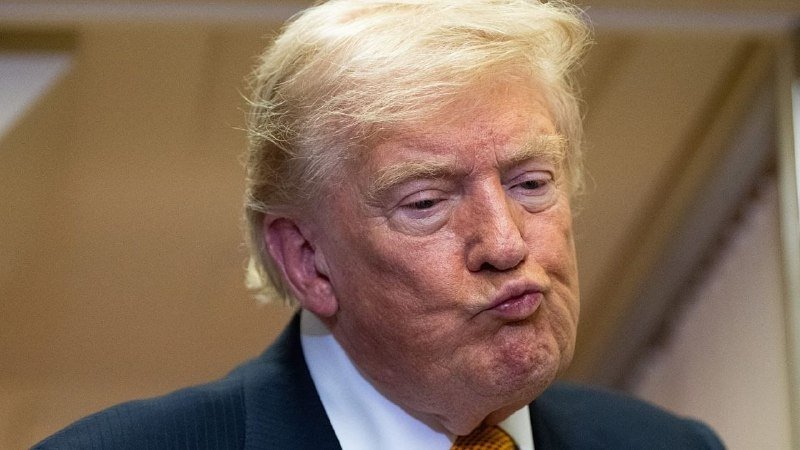
Four Iranian ballistic missiles were in the air over western Iran and northern Jordan by 17:45 UTC on 20 July 2026. Monitoring channels tracking the launches said two of the missiles were fired from Urmia, in northwestern Iran, joining a salvo that put four projectiles on a trajectory toward Aqaba, the southern Jordanian port that hosts the largest US logistics hub in the country's south. Within ninety minutes, US Central Command had confirmed the human cost: two American service members killed and a third wounded, their bodies recovered alongside an unidentified set of remains at the impact site. President Donald Trump, speaking from Washington, replied in a single sentence that left no interpretive margin. "Every time Iran kills an American soldier, they will pay for that killing many times over."
The strike is the sharpest direct US-Iranian military collision on Jordanian soil since the regional escalation that began in late 2025, and the first confirmed American fatalities from an Iranian ballistic-missile attack on a forward base in the kingdom. It also lands in a media environment in which the framing of the strike is being set almost simultaneously by Iranian state-aligned outlets, by Jordanian and US government spokespeople, and by a dense layer of regional Telegram channels publishing satellite imagery, launch coordinates, and casualty counts in near real time. How those competing accounts settle, over the next 48 hours, will shape whether the response stays rhetorical or turns operational.
What the launch picture looks like
Iranian and pro-Iran channels reporting on the volley described a four-missile salvo, with Urmia identified as one of the launch points and Aqaba as the consolidated target set. AMK_Mapping, an open-source channel that tracks Iranian missile activity, reported the Urmia launch component at 18:04 UTC on 20 July and put the total inbound count at four. Tasnim News, an outlet affiliated with the Islamic Revolutionary Guard Corps, circulated satellite imagery it said showed the scale of destruction at the US facilities struck in Jordan, without specifying which base or how many sites were hit. Iranian state-aligned framing has, since the 2024 escalation cycle, routinely used the phrase "American bases in the region" rather than naming a host country, a presentational choice that compresses the role of Jordan, Iraq, and the Gulf monarchies into a single target category.
The strike is being reported inside Iran as retaliation for prior Israeli and US action against Iranian assets and allies in Syria and Lebanon. That framing has not been independently verified, and no Iranian official on the record has yet claimed the operation in the public reporting captured by the channels listed below. The structural pattern is familiar: a strike is launched, damage is documented, and Tehran allows its regional media ecosystem to amplify the visuals before any formal claim of responsibility.
The American toll and the political floor it sets
Centcom's confirmation, relayed by Fars News and other Iranian-aligned channels citing the command's own statement, named two US service members killed and one wounded, and noted that "the remains of an unidentified body" had been recovered at the strike site. The unidentified remains could be a third US service member whose identification is pending, or could be a contractor, a local employee of the US logistics apparatus in Aqaba, or a Jordanian military servicemember. Centcom did not specify in the version of the statement captured by these channels.
President Trump's statement, published by the War and Freedom (wfwitness) channel at 16:50 UTC on 20 July, commits the United States to a retaliatory posture without specifying timing, weapons, or targets. "Many times over" is the kind of formulation that historically has preceded either a calibrated strike on Iranian proxy assets or a direct attack on Iranian territory; the gap between those two readings is where the next seventy-two hours will be decided. Jordan, which hosts US forces under a long-standing defense cooperation agreement and which has been the most diplomatic of the Arab host-state partners in public, now absorbs the cost of being the ground on which this exchange happened.
How the framing fight is unfolding
The immediate information war is being waged almost entirely outside the wire services. Iranian outlets Tasnim and Fars are publishing imagery and casualty claims sourced to Centcom's own statement, while AMK_Mapping and other monitoring channels publish launch coordinates and projectile counts that arrive faster than any official briefing. Western wire reporting on the strike had not, at the time of writing, been captured in the source set reviewed for this article, which means the dominant English-language narrative is being constructed from the same Telegram-side material everyone else is reading.
This is the structural feature worth naming plainly. In a strike event of this scale, the first authoritative accounts in Arabic and Persian are published by state-aligned outlets; the first English-language accounts travel through Telegram aggregators and Twitter/X screenshots of Centcom press lines; and the major wires arrive hours later with the same facts, restated under their own bylines. Coverage routinely defers to the language of official spokespeople on each side, and the operational consequence is that whichever side speaks first sets the vocabulary of the next news cycle. Iran's channels have so far set the vocabulary on damage assessment; the US, via Trump, has set it on response.
What the trajectory implies
The structural pattern inside which this strike sits is the same one that has defined US-Iranian confrontation since 2019: a low-intensity, high-frequency exchange conducted through proxies and forward bases, occasionally punctuated by a direct strike that forces a presidential-level decision. The Aqaba salvo is a direct strike. It killed uniformed Americans on the territory of a third country with which the United States has a mutual defense relationship. Under any reading of Washington's stated red lines, that is an act that demands a response, and Trump's own statement is the red line being drawn in public.
The plausible counter-read is that the strike was calibrated, not maximal. Four missiles, against a hardened logistics hub with active air defense, is a messaging salvo rather than a saturation attack, and the absence (so far) of a claimed Iranian operation suggests Tehran wants deniability more than it wants credit. Under that reading, the volley is a price-of-business signal to Washington: future strikes on Iranian assets will produce a price on US bases in range. The case against that reading is the human one. Two American service members are dead, and the political space inside which any US president can absorb that without a kinetic response is narrow.
The next window to watch is the 48-hour interval between Trump's statement and any retaliatory action. If the response is a strike on an Iranian proxy asset in Syria or Iraq, the trajectory continues as low-intensity escalation. If the response targets Iranian territory directly, the trajectory changes category, and the question of how Jordan, Iraq, and the Gulf states respond to a broader war being fought partly through their soil becomes the story. None of that is determined yet. What is determined, at 18:04 UTC on 20 July 2026, is that the floor under US-Iranian confrontation on Jordanian soil has just dropped two bodies lower.
Desk note: Monexus framed this strike from the four-channel source set available at publication, treating Iranian state-aligned outlets as primary on launch and damage details, US official statements as primary on casualty figures and political posture, and Telegram monitoring channels as primary on launch geometry. The framing assumes a direct-strike reading of the salvo rather than a proxy-misattribution reading, and flags the unidentified remains as a pending data point rather than an established third US fatality.
Wire provenance
This editorial synthesis draws on the following public wire/social posts:
- https://t.me/s/AMK_Mapping
- https://t.me/s/tasnimplus
- https://t.me/s/farsna
- https://t.me/s/wfwitness