The visa cap arrives just as monsoon shuts half of Himachal down
On 20 July 2026, Mumbai sat under an orange alert, Himachal Pradesh under red, and a Washington student-visa cap kicked in. The week has exposed how thin India's infrastructure margin really is.
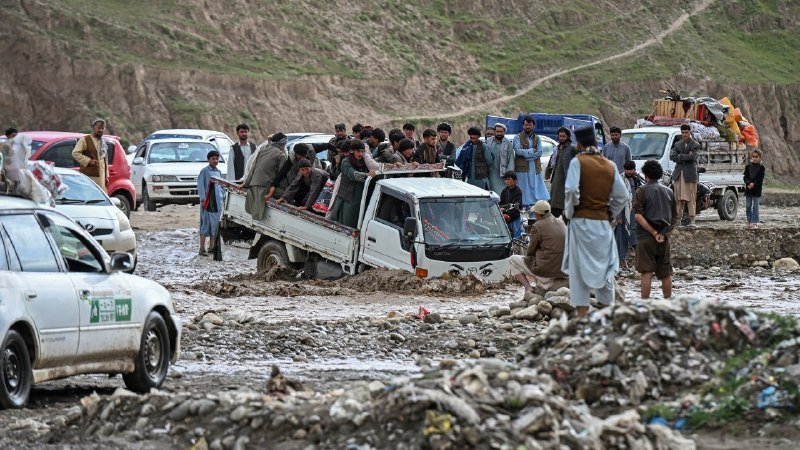
On 20 July 2026 the India Meteorological Department put Mumbai under an orange alert and warned that Thane and Palghar districts would see heavy rain through the week. The same agency placed multiple Himachal Pradesh districts under a red alert after a landslide triggered flood concerns across the hill state. Three thousand kilometres away, in Washington, a new four-year cap on Indian student visas took effect, a policy the Indian diaspora is publicly opposing. On the same Monday, a Mumbai consumer forum ordered a private hospital to pay Rs 3 lakh to a heart patient who was readmitted to intensive care within twelve hours of discharge. None of these items is, on its own, a story about India. Read together, they describe a country whose cities, hills, hospitals and consulates are all running on the same narrowing margin.
The point of pulling them into one frame is not to claim monsoon rain, US immigration rules and a hospital malpractice payout are the same kind of event. They are not. They are, however, the same kind of week, and they expose the same structural fact: India in mid-2026 is operating its institutions at a tightness that leaves little slack for shocks. The orange-alert Mumbai forecast is published by IMD itself. The Himachal red alert is published by IMD. The visa cap is being opposed by an organised diaspora group in the United States. The hospital payout is a routine consumer-court order, of the kind that Indian news publishes by the dozen each week. Put them in a single Monday and the picture sharpens.
A monsoon that does not pause for policy
IMD's Mumbai forecast for the week of 20 July is unambiguous: orange alert, heavy rain likely, Thane and Palghar on alert too, with the warning cascading through districts that sit on the same coastal strip. The Himachal alert is the more dangerous one. Red alerts in the state are typically reserved for events capable of producing cloudbursts, landslides and river flooding, and the agency has paired the warning with explicit flood concerns. Indian summer rainfall is not anomalous in itself; the relevant question is whether the institutional response matches the frequency of the warnings.
The Indian Express's reporting on the alerts does not attempt that accounting, and rightly so, because it is a forecast. What it does establish is that the volume of red and orange alerts across the western coast and the lower Himalayas is high enough, in a single week, to crowd out most other weather news. For a country that has spent two decades hardening its disaster-response bureaucracy, the alerts themselves are not the story. The story is that they now arrive in clusters thick enough to test whether the response chain, from district magistrates to NDRF battalions to rail and road operators, can be in three places at once.
The visa cap the diaspora did not ask for
The diaspora pushback reported on the same day is smaller in human scale than a red-alert district, but the policy weight is heavier. A four-year cap on student visas, capped rather than duration-extended, forces Indian students to treat their US degree as a finite lease on a shrinking asset. The Indian diaspora groups opposing the cap are not a fringe: the Indian student body in the US has been the largest foreign-student cohort for several consecutive years, and the tuition revenue that cohort represents is non-trivial for US universities already facing domestic enrolment decline.
The reporting does not yet quote an Indian government response in formal terms. What it does show is that the opposition is being organised from the US side, which is itself the news. A policy announced in Washington is being contested in California and Texas, not New Delhi. That tells you which side of the transaction expects to lose money first, and it tells you which constituency has the lobbying infrastructure to make the loss visible.
The mango cart and the Rs 3 lakh ICU bill
The lighter Indian Express item this week, the piece on viral summer fruits being sold from carts, is the easiest to misread as filler. It is not. The cart economy is where India's food inflation shows up first, and a viral fruit season is the kind of low-stakes consumer event that becomes politically load-bearing when prices break from their seasonal band. The piece does not give a price series; it gives a phenomenon, which is what regional reporting is for.
The Rs 3 lakh payout is the same shape of story at the other end of the income scale. A heart patient discharged and readmitted to ICU within twelve hours is a clinical failure, and the consumer forum's order is the corrective mechanism Indian patients increasingly rely on because the alternative, prolonged civil litigation, is too slow. The hospital has not been named in the headline. The number has. That asymmetry is itself the editorial point: in India, the institution is harder to punish than the patient is to compensate.
What the four stories share
A weather alert, a visa cap, a fruit cart and a hospital payout do not add up to a unified policy programme. They add up to a load profile. The monsoon stresses the districts. The visa cap stresses the diaspora economy. The fruit carts signal where household budgets bend. The hospital payout signals how thin the margin is between discharge and readmission, which is also a margin between affordable and catastrophic out-of-pocket spend. Each story sits on its own beat. The thread connecting them is that India in late July 2026 is running all four systems close to capacity at once, and the public reporting is doing the work of inventorying that pressure in real time.
What remains uncertain is whether the institutions catching the load, IMD, the US State Department, district administrations, consumer forums, are catching it evenly. The Himachal red alert and the Mumbai orange alert suggest IMD is publishing the warnings at the rate required; whether the response capacity on the ground matches is a question the wire reports do not answer, and one that the next seventy-two hours of rainfall will.
How Monexus framed this: the Indian wire treats each item as a stand-alone local story; Monexus reads them as a single week's load profile on India's institutional margin.