Houthis declare maritime blockade on Saudi Arabia, framing it as 'blockade for blockade'
Yemen's armed forces said on 20 July 2026 they had banned Saudi-bound maritime traffic, escalating a years-long pattern of pressure on Gulf shipping and the Red Sea corridor.
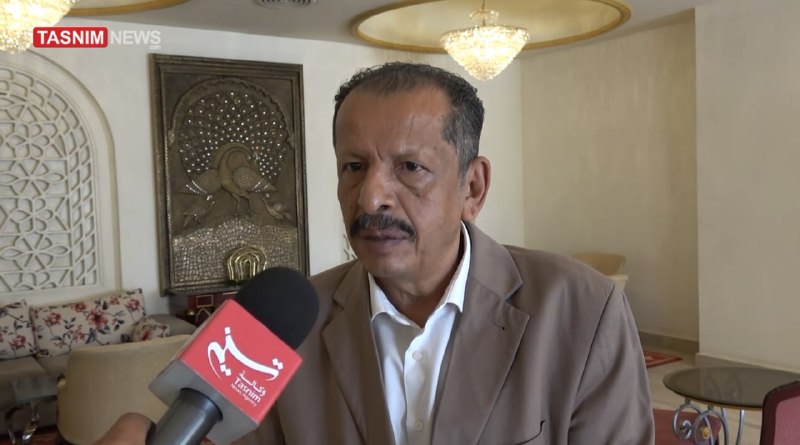
Yemen's Houthis moved on 20 July 2026 to formally bar maritime traffic bound for Saudi Arabia, announcing a 'blockade for blockade' equation in a statement circulated through Sanaa-aligned Telegram channels within minutes of one another. The announcement was posted at 12:03 UTC by Iran's Tasnim News Agency and at 12:04 UTC by Yemen-linked channels R.N. Intel and The Cradle Media, giving it simultaneous pickup across two distinct information ecosystems.
What the Houthi statement actually changes, and what it simply restates, is the open question of the week. Riyadh has not publicly responded in the same wire window, and the four sources now circulating the text each reproduce the same Yemen Armed Forces framing rather than independent corroboration of operational orders at sea.
What was announced
According to the text posted by Tasnim News Agency's English service at 12:03 UTC on 20 July 2026, the Yemeni Armed Forces announce a ban on maritime traffic directed at the Saudi enemy. The Yemen-linked channel R.N. Intel, posting at 12:04 UTC, framed the move as a maritime navigation ban on the 'criminal Saudi enemy' and placed it inside an equation logic. The Cradle Media, also at 12:04 UTC, carried the same 'blockade for blockade' formulation and tied the decision explicitly to nearly twelve years of a Saudi-led siege on Yemen.
None of the four circulated items names a specific ship, port, strait, or start time for enforcement. The language is declaratory, not operational: a stated policy of non-permission for Saudi-bound traffic, paired with a political justification, rather than a list of intercept rules or named zones. For a reader unfamiliar with the corridor geography, that distinction matters. The Red Sea and Bab el-Mandeb strait carry oil and container traffic between Europe, Asia, and the Gulf, and any sustained interdictions there have already been priced into shipping insurance since late 2023.
What sits behind the language
Houthi communications have, for some years, used 'equation' framing to tie a chosen action to a grievance: an attack for an attack, a ban for a ban, a strike for a strike. The 20 July statement, as relayed by The Cradle and Tasnim, cites nearly twelve years of Saudi-led siege as the counterweight. Whether or not the reader accepts that framing, it is now the canonical justification inside Sanaa's information space and will be how supporters and adversaries of the move first encounter it.
There is a structural pattern here that does not require a regional expert to read. A non-state armed actor with anti-ship missiles, drones, and a track record in the Red Sea has just declared a general prohibition on traffic to a specific Gulf state. Even at a declaratory level, that declaration changes the threat perception of every tanker operator routing around the Arabian Peninsula, regardless of whether shots are fired in the next 24 hours.
Where the sourcing gets thin
The four items in circulation on this desk are all carrying the same underlying Yemen Armed Forces statement. Tasnim is an Iranian state outlet; The Cradle and R.N. Intel are channels that routinely cover Sanaa-aligned messaging. None of the four is an independent witness to the policy, and none cites a shipping authority, an insurance underwriter, or a Saudi port authority to confirm operational impact.
What the sources do not yet specify: which sea areas are covered; whether neutral-flag vessels are excluded; what enforcement mechanism will be used; whether the declaration is conditional on Saudi behaviour or unilateral; and whether, in the next news cycle, tanker reroutings will register. Until at least one of those answers exists outside Houthi messaging, the story is best treated as a declared policy, not a verified disruption.
Why the move is being read as escalation
Inside the corridor, the relevant comparison is the 2023-2024 phase, when Houthi attacks on shipping forced major carriers to reroute around the Cape of Good Hope and drew a multinational naval task force. A general ban on traffic to a specific Gulf state is a different instrument than the missile-and-drone campaign that targeted hulls regardless of flag. The 20 July statement, taken at face value, narrows the targeting but broadens the political claim: it tells Riyadh that the cost of engagement in Yemen is paid in shipping access, not only in Yemeni territory.
A 12 March 2026 US strike on Ras Isa port and a subsequent Houthi resumption of attacks on Israeli-linked shipping already demonstrated that the corridor can be reopened to violence quickly. Whether the December 2024 de-escalation understanding between Riyadh and Sanaa still constrains the room for manoeuvre, or has eroded to the point of formality only, is the key unknown for the days ahead.
What to watch next
Three markers will tell readers whether the declaration hardens into a working blockade or stays declaratory. First, any statement from the Saudi military, the Saudi-led coalition, or a Gulf port authority acknowledging or rejecting the announcement. Second, movement in the Lloyd's-listed war-risk insurance zones for the Red Sea and Bab el-Mandeb, which priced the 2023-2024 campaign in days, not weeks. Third, a second-stage Houthi statement that names sea areas, vessel classes, or specific ports, converting a slogan into an operational order.
In the meantime, the 20 July 2026 announcement stands as the latest entry in an equation that has now been running for the better part of a decade, with each side treating the other's maritime activity as both leverage and grievance. The next 72 hours of Saudi-side communication, and the next insurance pricing update, will say whether the line has moved.
Desk note: this article treats the 20 July 2026 Houthi declaration as a declaratory policy change and flags the thin sourcing layer behind it, rather than asserting operational impact beyond what the four circulated items establish.
Wire provenance
This editorial synthesis draws on the following public wire/social posts:
- https://t.me/rnintel
- https://t.me/thecradlemedia
- https://t.me/tasnimnews_en