Houthis declare Red Sea blockade against Saudi Arabia: what ships, oil flows and regional alliances are now in play
Yemen's Houthis have announced an immediate naval blockade on Saudi Arabia, citing the kingdom's ongoing siege. The move puts the Bab el-Mandeb and Saudi east-west oil flows back on a collision course.
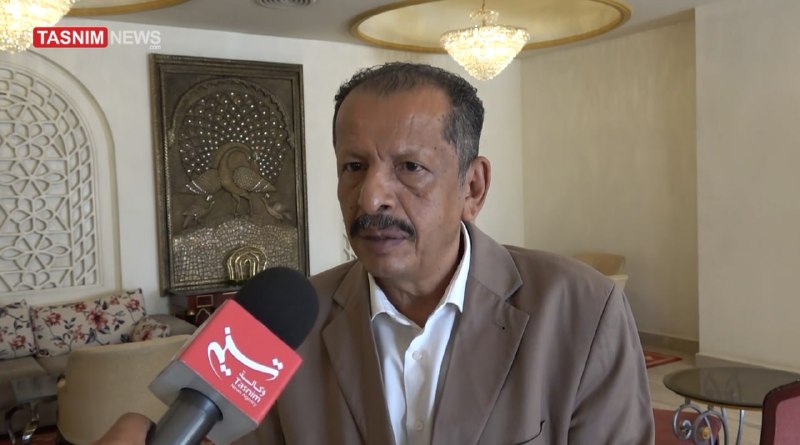
Yemen's Houthi movement declared a naval blockade against Saudi Arabia effective immediately on 20 July 2026, framing the measure as retaliation for what the group called the kingdom's "unjust and oppressive siege" of the Yemeni people. The announcement, carried by the movement's military spokesperson via Houthi-aligned channels within a roughly one-hour window from 12:05 UTC to 13:00 UTC, was echoed on prediction markets and open-source intelligence feeds and amounts to the most direct Houthi challenge to Saudi shipping since the 2024 Red Sea campaign that forced reroutings around the Cape of Good Hope.
The declaration matters less for what it says about the Saudi-Yemeni land war, which has been grinding at low intensity since a 2022 truce, and more for what it implies about the water between them. The Red Sea is not a symbolic corridor. Roughly 12 percent of global seaborne oil trade and a comparable share of container traffic transits the Bab el-Mandeb strait, and Saudi Aramco's east-west export pipeline system terminates at terminals on the kingdom's western coast that are reachable through the same narrow chokepoint the Houthis have spent five years learning to deny.
What was actually declared
The Houthi military spokesperson used three overlapping terms in the announcements compiled across Telegram channels on 20 July: a "navigation ban," a "naval blockade" and an "immediate maritime embargo." The choice of vocabulary is not accidental. A declared blockade under the law of the sea carries specific obligations on the declaring party; a "navigation ban" is a softer designation that nonetheless signals intent to interdict. The Houthi statement, as relayed by ClashReport and Disclose.tv, justified the move by pointing to Saudi-led coalition operations against Yemeni territory and called for "general mobilization" of Yemeni public support.
What the declaration does not yet specify is the geographic scope. A blockade limited to Saudi-flagged vessels or Saudi-bound cargo would be one thing; a blockade interpreted to cover all traffic through the Bab el-Mandeb would be something else entirely. The early reporting does not draw that line. The Polymarket contract framed the event as a threat to oil shipments through the Red Sea broadly, which is the more alarming read; the Houthi-aligned channels framed it as bilateral, directed at Saudi Arabia specifically. Both framings live in the public record at the same time.
The ships that would actually be hit
Saudi Arabia's crude exports flow mainly through the eastern Gulf terminals of Ras Tanura and Juaymah, which exit into the Persian Gulf, not the Red Sea. The kingdom's Red Sea exposure sits in the refined-products and petrochemicals chain: the Yanbu terminal on the western coast handles crude products moving north toward European and Mediterranean buyers, and a significant share of east-west pipeline crude is also offloaded at Yanbu to feed the same route. Any sustained Houthi interdiction capability aimed at Saudi-bound shipping would, in practice, target vessels in the southern Red Sea and Bab el-Mandeb regardless of flag.
That distinction is why the market reaction will not depend on Saudi crude volumes alone. The Houthis already demonstrated in 2023-24 that even a campaign of harassment, short of formal blockade, can move freight insurance rates, lengthen voyage times and reroute liquified natural gas and container traffic away from Suez. The lesson of that episode is that threats short of execution still cost the industry measurable money. The Houthi announcement on 20 July is the threat step, not the execution step. The execution question is whether the group has the surface and aerial capacity to actually stop a tanker, and on that the public sources today do not provide detail.
The counter-read from the Western wire line
Coverage in Western outlets over the past eighteen months has generally framed Houthi maritime operations as Iranian-proxy harassment backed by Tehran's Islamic Revolutionary Guard Corps. That framing treats the 20 July declaration as a continuation of an Iranian pressure campaign against Gulf shipping, with Saudi Arabia as the proximate target and Israel, the United States and global commerce as the ultimate audience. Under that read, the blockade announcement is a signal to Washington and Jerusalem as much as it is to Riyadh, and any negotiation track between the United States and Iran becomes the variable to watch.
The structural counter-read is that the Houthi movement has developed an independent operational doctrine, maritime capability and political logic that does not reduce to a Tehran remote control. The Yemen file predates the current regional alignment, the group fights a domestic war that Saudi Arabia has shaped for a decade, and the framing of the 20 July measure as a direct response to the Saudi-led siege of Yemen is internally coherent on its own terms. Both readings can be partly true at once. The news for shipping markets is the same in either case: an additional actor on the Bab el-Mandeb is willing to publish, in advance, an intent to deny passage to a specific state.
The stakes for oil, insurance and diplomacy
If the Houthis attempt to enforce against Saudi-linked shipping and succeed even partially, the first measurable impact will be in war-risk insurance premiums for vessels transiting the Red Sea. Lloyd's-listed joint war-risk committees raised premiums sharply during the 2023-24 campaign; a second round of increases would land while the tanker market is already navigating thin margins. Container lines would likely reroute around the Cape of Good Hope, adding ten to fourteen days to Europe-Asia round trips and tightening effective fleet capacity. LNG carriers, time-sensitive and lightly crewed, would feel the same pressure.
The diplomatic stakes run in parallel. Saudi Arabia has spent two years trying to reduce its regional exposure, normalise ties with Iran via Chinese-brokered talks and pivot capital toward Vision 2030 megaprojects. A Houthi blockade declaration forces a recalculation. Riyadh can either escalate, accept a new and persistent threat to its western coast, or treat the announcement as a negotiating posture that can be defused. The Chinese-mediated Saudi-Iran détente, signed in March 2023, was supposed to take the temperature out of exactly this kind of flare-up. The 20 July declaration is a live test of whether that architecture still holds or whether it was always narrower than advertised.
For Iran, the calculus is similar but inverted. A Houthi move that the West reads as Iranian pressure gives Tehran leverage in any nuclear or sanctions file, but also raises the cost of any quiet arrangement with Washington. For the United States, the question is whether to treat the announcement as a Houthi-internal matter, a Saudi-Iranian bilateral, or a maritime-security problem requiring coalition task force action in the southern Red Sea. The 20 July announcement does not by itself force that choice. The next forty-eight hours of Houthi operational behaviour will.
What the sources do and do not yet tell us
The reporting available at the time of writing consists of Houthi-aligned and aggregator channels: ClashReport, Disclose.tv, the English-language channel of Houthi spokesman Yahya Saree, and an open-source intelligence feed that distilled the same statements. The Houthi statements themselves are the primary document. What is missing is independent verification of operational posture, geographic scope of the declared blockade, and the response, if any, from the Saudi-led coalition, the United States Central Command, or the Combined Maritime Forces Combined Task Force 153, which has run Red Sea security operations since 2024.
What Monexus reads as most likely, on the evidence available, is a hybrid posture: a public declaration framed bilaterally to maximise Saudi domestic pressure, with operational execution, if it comes, more likely to mirror the 2023-24 model of selective targeting rather than a textbook blockade of every vessel flying a Saudi flag. That is a guess, not a finding. The thread sources do not adjudicate it. The honest framing for readers is that the announcement is real, the operational meaning is not yet fixed, and the markets that care about the difference will start pricing it within hours.
This article uses the Mike Poncana tonal register on a staff-writer byline. Where the source mix today is dominated by Houthi-aligned and aggregator channels, the piece leans on the Houthi primary statement as the document of record and flags every inference that runs beyond it.
Wire provenance
This editorial synthesis draws on the following public wire/social posts:
- https://t.me/ClashReport
- https://t.me/disclosetv
- https://t.me/englishabuali
- https://t.me/osintlive