Hamas picks its wartime negotiator: what Khalil al-Hayya inherits from Sinwar
Khalil al-Hayya, the movement's chief negotiator through two years of war, takes over a shrunken, besieged, and fragmented organisation with an empty chair in Doha.
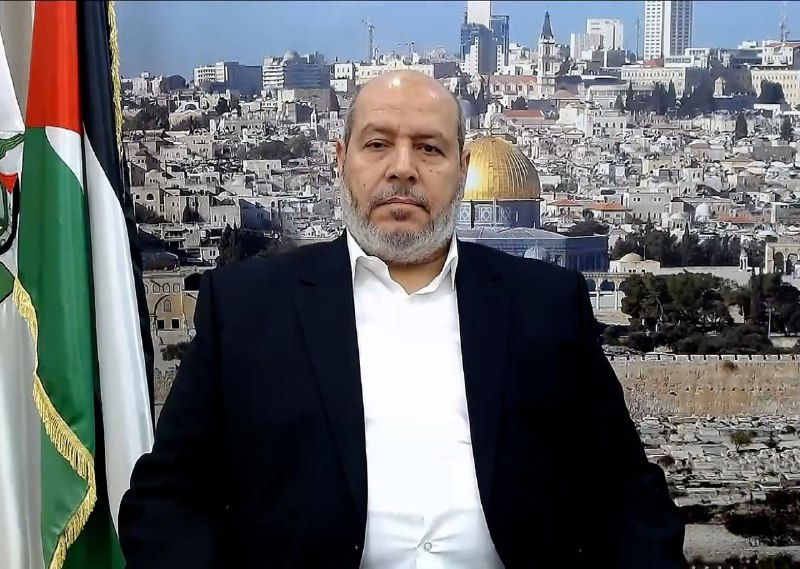
Gaza City on Sunday produced a single line of news that every channel on the wire carried within ninety minutes: Khalil al-Hayya, the senior Hamas figure who has spent two years as the movement's public face in ceasefire talks, has been elected head of its Political Bureau. The announcement was first reported by Al Mayadeen English at 12:11 UTC on 20 July 2026, then by the Jerusalem Post at 11:20 UTC, then by a half-dozen regional outlets before lunch in Beirut. He is the first person to hold the position since Yahya Sinwar was killed in an Israeli military operation in southern Gaza on 16 October 2024.
The succession is more than a personnel move. Al-Hayya inherits a movement that has lost its most recognisable figure, its pre-war territorial foothold, and most of its senior command echelon, and that now faces the longest and bloodiest war in its history without a confirmed endgame. The choice of a negotiator rather than a field commander signals that Hamas's leadership intends to lead from the diplomatic table for the foreseeable future. Whether anyone is sitting across from them is now the central operational question.
A wartime negotiator, elevated
Al-Hayya's profile inside Hamas has long been the negotiating track. According to Clash Report's 11:33 UTC summary on 20 July 2026, he served as the movement's chief wartime negotiator; The Jerusalem Post, reporting at 11:20 UTC, describes him as the first person appointed to the position since Sinwar's death. Middle East Eye's 12:00 UTC bulletin frames the transition straightforwardly: Hayya replaces the slain former leader, killed in combat by Israeli forces in October 2024.
That is the bare biography. The substance is harder. Al-Hayya is a senior figure inside the movement who, through more than a year of on-again, off-again indirect talks mediated by Qatar and Egypt, became the public interlocutor Israeli, American, and Arab negotiators actually dealt with. He is not a household name in the West, and that is part of the point. Where Sinwar was a brand, built up by Israeli intelligence rhetoric and Hamas media in equal measure, al-Hayya is a working operator with relationships in Doha, Cairo, and Ankara that have outlived every cease-fire collapse since November 2023.
The promotion also says something about the internal balance inside Hamas's surviving political bureau. The choice signals continuity rather than rupture: a figure who can be presented to mediators as a serious counterpart, rather than a paramilitary successor who would reset the relationship with Tel Aviv and Washington to zero.
What the war did to the bench
The October 2024 killing of Sinwar, which Israel confirmed at the time, was the most consequential decapitation the movement has ever suffered. It came after the assassination of Ismail Haniyeh in Tehran in July 2024, and the cumulative effect of two years of targeted strikes against the senior command has left Hamas with a generation of mid-level figures doing jobs above their pay grade. The wire bulletins on 20 July do not detail who else was considered for the post; the brevity of the announcement itself is the tell. There was no conclave, no public competition. A consensus candidate was installed, and the movement's media infrastructure published the result within minutes.
The operational territory that Political Bureau chiefs once oversaw has also shrunk. The Israeli campaign that began after the 7 October 2023 attacks has dismantled Hamas's governing footprint inside Gaza: the ministry buildings, the police battalions, the tunnel networks that served as both arsenal and command centre. What remains is a depleted military wing inside Rafah and the central camps, a still-active rocket and mortar capability at the lower end of the spectrum, and a diaspora political class whose authority now rests almost entirely on what it can extract from mediators.
That is the world al-Hayya is taking over. It is a bureau in name more than in fact.
Why the mediators matter now
A leadership change at the top of Hamas almost invariably triggers a recalibration among the four capitals that matter: Doha, Cairo, Riyadh, and Ankara. Qatar has hosted the political bureau in exile since Haniyeh's departure from Damascus a decade ago; Egypt's intelligence chief has run the back-channel for cease-fire frameworks since 2012; Saudi Arabia, despite no formal ties, has been lobbied heavily by Palestinian factions since the kingdom floated its own normalisation track; and Turkey under Recep Tayyip Erdoğan has positioned itself as the most vocal defender of the Palestinian cause inside NATO, partly because it gives Ankara leverage against Gulf rivals.
Al-Hayya's network is concentrated in the first two. His elevation is unlikely to disturb the Qatari-Egyptian mediation architecture, which has been the only channel consistently producing interim deals (hostage releases, limited humanitarian pauses, the most recent framework negotiated in mid-2025). It will, however, be watched closely in Riyadh and Ankara, both of which have been cultivating relationships with the surviving Hamas diaspora outside the traditional Gulf-Egyptian axis. A leadership that is too visibly Doha-coded risks marginalising the Saudis and Turks; a leadership that pivots away risks losing the only two governments that have consistently delivered results.
For Israel, the calculus is simpler and grimmer. Al-Hayya is not a fresh face. Israeli negotiators have spent years reading his communiqués, discounting his public positions, and testing his red lines. He carries none of the Sinwar-era mystique that Israeli intelligence weaponised for domestic consumption, and he carries none of the Haniyeh-era diplomatic polish either. He is, in that sense, the most predictable Hamas interlocutor Tel Aviv has dealt with since 2017.
The hostages that didn't come home
The thing no wire bulletin on 20 July mentions but every analyst in the region is thinking about is the hostage file. The framework that produced partial releases in late 2023 and 2024 collapsed under mutual recrimination, and the military campaign that followed has reduced the surviving hostage population, by every credible outside count, to the low double digits, with the fate of perhaps half of them unconfirmed. Whoever sits at the top of Hamas now owns that file in a way no predecessor did: the families, the Israeli public, and the American negotiators who treat hostage return as a precondition for any normalisation dividend all have a stake in who they are dealing with.
Al-Hayya's selection suggests the bureau intends to keep that file live rather than let it atrophy. A figure with no negotiating track record would have signalled closure; al-Hayya's elevation signals that the bureau wants leverage at the table when, not if, the next round begins. Whether the leverage translates into lives returned depends on conditions well outside Gaza: the Israeli coalition's tolerance for further exchanges, the Trump administration's willingness to pressure Prime Minister Benjamin Netanyahu, and whether the mediators can produce a framework that survives the inevitable collapse of any interim deal.
What the announcement does not tell us
The wire reporting on 20 July is unusually unanimous on the facts and unusually thin on the context. No outlet in the cluster identifies where al-Hayya was when the vote was taken, who the other candidates were, or what margin of support he carried inside the surviving shura council. The Cradle Media's 11:25 UTC bulletin and the Gaza-focused channels that followed used identical phrasing ("elected senior leader," "succeeding the late leader"), which suggests the language was centrally drafted rather than independently sourced. The handful of regional outlets that reported the story in the early afternoon frame it as a fait accompli rather than a contested outcome.
What that means in practice is that the succession was either genuinely uncontested, in which case the bureau's internal cohesion is stronger than the outside world assumed, or it was contested and the dissent has been sealed off from public view. The sources do not let us distinguish between those two readings. Either way, the next test will not be a press release. It will be whether the next round of negotiations produces a deal that holds, or produces the same collapse that every previous deal has produced since October 2023.
The bureau has a new chair. The chair has the same war he had a week ago.
How Monexus framed this: the wire treated the announcement as a personnel item; this publication treats it as a strategic signal, weighted toward the negotiating track because that is where al-Hayya's record actually sits.
Wire provenance
This editorial synthesis draws on the following public wire/social posts:
- https://twitter.com/MayadeenEnglish/status/
- https://twitter.com/MiddleEastEye/status/
- https://t.me/gazaalanpa/
- https://t.me/ClashReport/
- https://t.me/TheCradleMedia/
- https://t.me/thecradlemedia/
- https://t.me/The_Jerusalem_Post/
- https://t.me/wfwitness/