Delhi's education march reveals a Dalit-led politics the parties didn't sanction
A two-day march on Delhi for a young Dalit student killed in Bihar has pulled thousands onto the street, and the country's apolitical middle is finding a vocabulary it didn't expect to need.
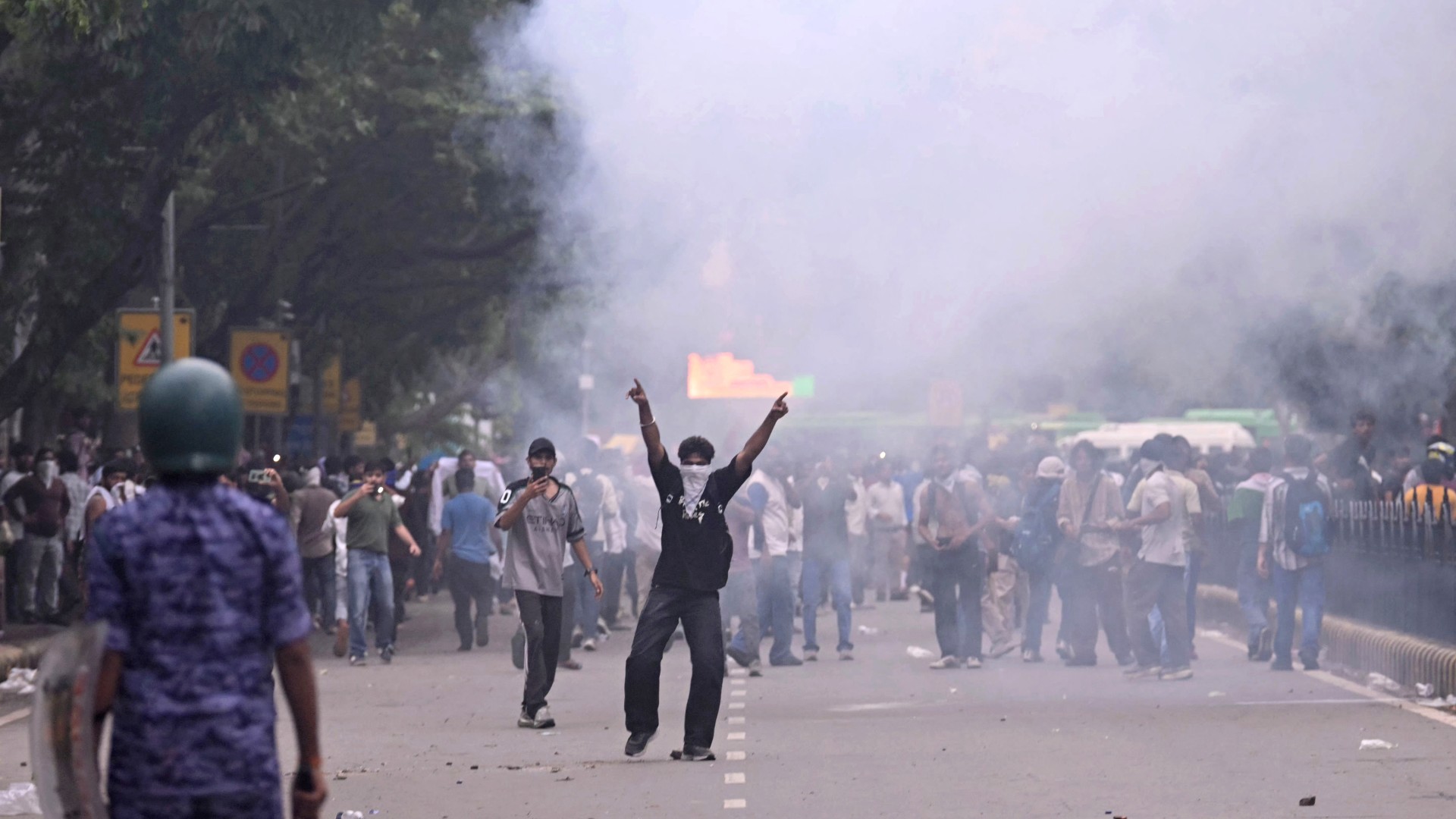
On the morning of 19 July 2026, drums beat through a rain-slick New Delhi as thousands of marchers converged on the capital under the banner of the Campaign for Justice and Peace (CJP), demanding accountability in the killing of a Dalit law student in Patna and a federal law against atrocities scheduled against Dalits and Adivasis. The route, splashed with "Jai Bhim" slogans and images of B. R. Ambedkar, traced a fault line the major parties had not drawn but could no longer ignore.
What the turnout makes plain is that the country's organised Dalit-led civil society can mobilise a constituency the political class has been content to address only on paper. The march also signals something quieter: a generation of urban, middle-class Indians who told pollsters they were "apolitical" are discovering that constitutional language about citizenship, dignity and equal protection cannot be left to lawyers and activists alone.
A march measured in miles and metaphors
The CJP procession began in the southern fringes of Delhi and ended, by the organisers' count, at Jantar Mantar, the protest ground adjacent to Parliament that has carried the residue of every major Indian social movement of the post-independence era. Reporters with The Indian Express described a procession of several thousand at its peak, layered with Ambedkarite cultural markers: percussion lines drawn from Maharashtra's Phule-Ambedkarite tradition, verses from Babasaheb's writings, and a constituency that mixed university students, junior lawyers, manual-workers' unions and migrants from Uttar Pradesh and Bihar.
The trigger was the killing of a Dalit student at a Patna institution, an incident the march's organisers said was the latest in a pattern of campus violence that the state apparatus had failed to prosecute. The Indian Express's coverage framed the procession explicitly as a continuation of a longer Dalit political grammar, one in which a single killing is read as evidence of a structure rather than an aberration.
That grammar travels. The marchers' demands were granular: prosecution in the Patna case, enforcement of the Scheduled Castes and the Scheduled Tribes (Prevention of Atrocities) Act of 1989, and a fresh federal statute that campaigners argue would close the loopholes the Supreme Court narrowed in a 2018 ruling on anticipatory bail. The legal ask is technical; the political ask is not.
The apolitical middle, reclassified
The second Indian Express dispatch from the march is the more disquieting one for Delhi's professional class. It documents the surprise of middle-class participants who told reporters, in effect, that they had not expected to be on a street the police had cordoned off. The framing the paper uses is sharp: a reckoning with politics for a constituency that had defined itself against politics.
That reckoning carries a price. Indian polling, including the post-2014 surveys by the Centre for the Study of Developing Societies, has consistently shown a substantial share of upper-caste, urban respondents identifying as "not interested in politics" or "apolitical". The march's news value is that this self-description is being stress-tested in real time, and the participants being interviewed do not sound like they intend to revert. Several told Indian Express reporters that the experience of marching alongside Dalit-led unions, Muslim women's groups and student associations had reclassified their own political identity. This is not a transient campus moment; it is the slow accretion of a counter-public.
A federal structure that the parties have avoided
The deeper context is institutional. The Scheduled Castes and Scheduled Tribes (Prevention of Atrocities) Act was enacted in 1989 precisely because ordinary criminal law had failed to deter caste-based violence; its design is to shift the burden of prosecution away from the victim's family and onto the state. The 2018 Supreme Court ruling, in Subhash Kashinath Mahajan v. State of Maharashtra, restored the Act's teeth after a brief interlude in which anticipatory bail had been granted to accused persons in a manner activists argued amounted to a de-facto amnesty.
The CJP's demand for a new statute is the harder political lift. It would require Parliament to legislate against the backdrop of a coalition arithmetic in which neither the ruling Bharatiya Janata Party nor the principal opposition, the Indian National Congress, has an electoral incentive to out-bid the other on Dalit-specific legislation. The legal community is divided: some constitutional lawyers argue that the existing statute, fully enforced, is sufficient; others contend that the Act's reliance on state-level prosecutorial discretion leaves structural gaps no amount of judicial direction can close. The march does not resolve this argument; it makes the argument unavoidable.
A plausible counter-read is that the parties will absorb the energy the way they have absorbed other mobilisations, by issuing statements, sending senior leaders to the affected campuses, and convening committee reports that gather dust. There is precedent: after the 2016 Una movement in Gujarat, state-level compensation schemes were announced and partially delivered, but the underlying pattern of vigilante violence against Dalits in rural north and western India continued. The march's organisers, by framing their demand as federal legislation rather than a single prosecution, appear to have anticipated that absorption strategy and tried to pre-empt it.
Stakes, and what the reporting cannot yet settle
The immediate stakes are concrete. If the Patna prosecution is fast-tracked, with the accused charged under the appropriate sections of the Atrocities Act and a special court set up under the Act's provisions, the political temperature eases. If it stalls, the movement's institutional allies, including the All India Dalit Mahapanchayat and a network of Dalit lawyers' associations, have already indicated that the next phase will be a sustained sit-in at Parliament during the monsoon session, a tactic that has historically forced floor-management concessions from the government.
The reporting cannot yet settle several things the wire coverage flagged. The Indian Express dispatches do not name the deceased student, which constrains independent verification; outlets in Patna are likely to carry the name and the case diary in coming days, and those records are what the police version and the family's version will be measured against. The exact turnout figure is contested, as turnouts at all-India political marches are; the organisers' count, which is several thousand, sits at the high end of what reporters on the ground described, and the lower estimates from police sources have not yet been published.
What the coverage does establish is that the geography of Indian political contention has shifted, at least for this cycle, away from the Hindi heartland's caste arithmetic and towards a federalist, constitutional vocabulary that resonates with younger, urban participants. Whether that shift produces a durable organisation, or another high-profile flash that fades between election cycles, is the question the next month's press will answer.
Desk note: Monexus frames this as a structural rather than episodic story. The wire line in India has tended to treat Dalit-led marches as law-and-order events; the framing here reads the mobilisation as a shift in the country's political grammar, with concrete institutional asks attached.
Wire provenance
This editorial synthesis draws on the following public wire/social posts:
- https://en.wikipedia.org/wiki/Scheduled_Castes_and_the_Scheduled_Tribes_(Prevention_of_Atrocities)_Act,_1989
- https://en.wikipedia.org/wiki/Subhash_Kashinath_Mahajan_v._State_of_Maharashtra