China's auto market stalls, its orbit fills, and its AI labs push back
Three signals out of Beijing in three days: a car market heading for its worst year since 2021, a 1,000-satellite orbital computing constellation going live, and a sharp official denial that Chinese AI labs are distilling American frontier models.
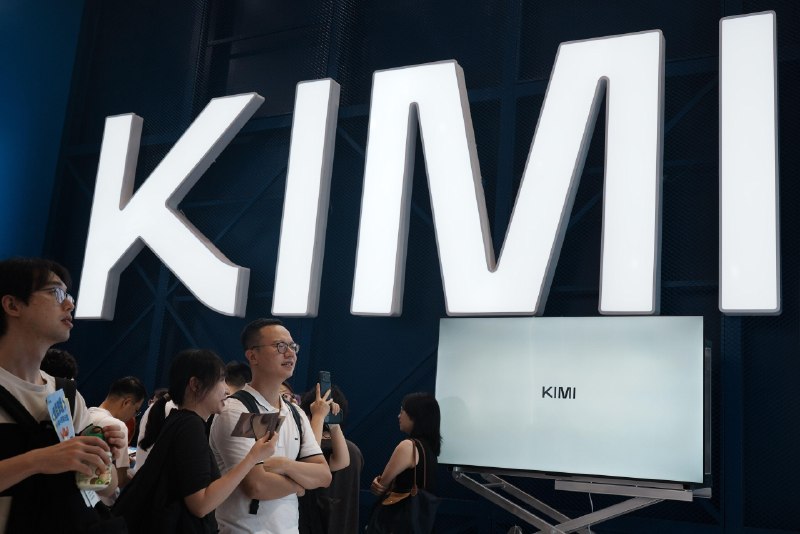
China's passenger-vehicle market is on track for its worst year since 2021, with sales down roughly 20 percent in the first half of 2026 after a record-breaking 23.7 million units in 2025, per a finance-sector wire circulating on 2026-07-20 at 08:43 UTC. The collapse, measured against an unusually inflated 2025 base, lands at an awkward moment for Beijing: the same week, the country lit up the first phase of a 1,000-satellite orbital computing network, announced on 2026-07-19 at 04:18 UTC, and pushed back hard against allegations that its frontier AI labs are distilling American models, dismissed as "misguided and counterproductive" in a Chinese-language statement picked up on 2026-07-18 at 15:29 UTC. Three data points in three days. They are not the same story, but they share an author.
The pattern is structural. China's domestic car market is past the easy growth phase of the EV subsidy era; the same automakers that filled global headlines with price wars and record exports are now confronting saturated demand at home and fatter tariff walls abroad. Meanwhile, the country's industrial-policy machinery is pivoting, visibly, toward compute-intensive domains that face fewer near-term consumer ceilings: low-Earth-orbit infrastructure and frontier AI. Read together, the three signals describe a planned reallocation of state capital rather than a crisis.
A consumer market runs out of road
The 20 percent first-half contraction is large in absolute terms but only surprising if the 2025 baseline is treated as normal. It was not. China's 23.7 million units in 2025 was an all-time record, achieved in part through aggressive discounting by domestic champions and a wave of trade-in incentives rolled out by provincial and municipal governments. When the incentives taper and the inventory clears, the underlying curve reasserts itself. The finance-sector wire circulating on 2026-07-20 puts the market on course for its weakest year since 2021, the last pre-surge year before the EV price war compressed margins across the industry.
The shape of that slowdown matters. Sales are not collapsing because Chinese consumers have stopped wanting cars; they are falling because the addressable pool of first-time EV buyers has been largely saturated, and because export markets, the release valve that absorbed much of 2024 and 2025 production, are now fenced by European Union countervailing duties and tighter North American tariff schedules. For the Western wire framing, this is a sign of weakness. For Chinese industry analysts, it is closer to a planned landing after a subsidy-driven spike, painful at the firm level but not a strategic reversal.
The structural concern, harder to verify from the three source items alone, is what a flat-to-down domestic market does to the cash flows of the country's flagship EV and battery makers, several of which are still operating at margins that depend on volume. If 2026 closes at the lower end of the "worst since 2021" band, expect a second wave of consolidation among second-tier brands.
An orbital build-out lands on schedule
Against that flat consumer picture, Beijing's space-compute push looks deliberate in a way that does not show up in the car numbers. The first-phase deployment of a 1,000-satellite orbital computing constellation, flagged on 2026-07-19, is not a science demonstration. It is infrastructure: a low-Earth-orbit mesh designed to host inference and training workloads off-planet, with the latency and thermal advantages that orbit offers. The Western wire line has spent two years treating Chinese space activity as a national-prestige project; the more accurate read is industrial. Orbital compute is what data centres cannot yet do at scale: continuous solar power, passive cooling, and no zoning board.
The competitive frame is direct. American hyperscalers have the lead in terrestrial AI infrastructure; the orbital layer is genuinely unsettled. A 1,000-satellite first phase, if it holds the cadence implied by the announcement, would give Chinese operators a credible foothold in space-based compute before any US equivalent reaches operational scale. The source items do not name the operator, the launch cadence, or the onboard hardware, and a careful read should flag that.
Beijing fires back on AI distillation
The third signal, the 2026-07-18 pushback on "distillation" claims, is the diplomatic move in the set. Chinese authorities rejected the allegations that domestic AI firms are illicitly distilling US frontier models as "misguided and counterproductive," language strong enough to signal that the issue has moved from industry gossip into formal trade-statecraft channels. The rebuttal lands at a moment when US export controls on advanced GPUs are being ratcheted, and when European regulators are openly weighing similar restrictions.
Two reads are plausible. The first, dominant in Western coverage, is that Chinese labs have been systematically training on outputs from closed American frontier systems to compress the capability gap without paying the compute bill. The second, given equal weight by Chinese state media in their own coverage and worth taking seriously here, is that the framing itself is protectionist: a rhetorical scaffolding for tighter chip controls and a harder line on Chinese AI exports. The evidence in the public record is genuinely mixed. Western-lab model-serving telemetry that would settle the question is not public; Chinese-lab denials are not independent.
What is not mixed is the strategic position. Chinese AI firms are not on the defensive technologically; they are on the defensive in the trade-law arena. That distinction shapes how the rebuttal should be read: not as a denial of capability, but as a refusal to accept the legal frame.
What the three signals add up to
Stacked side by side, the three items describe a planned contraction in one sector and an expansion in two others. The car market is being allowed to cool, partly by design, as Beijing's industrial-policy machinery pivots toward capital-intensive, frontier-tech domains where the country can plausibly set the pace: orbital compute and frontier AI. None of this is hidden; the announcements are running on the same news cycle.
The stakes are concrete. For European and Japanese automakers, a flatter Chinese market means less pricing leverage at home and a more disciplined competitor abroad; the export tariff walls bought time, not a permanent moat. For US hyperscalers, an operational orbital-compute layer inside 2027 would close a window in which terrestrial data-centre scale was the only moat that mattered. For the broader AI trade fight, the distillation dispute is a proxy for the GPU-control regime; whichever side wins the framing wins the next export-control round.
What remains genuinely uncertain, and where the three source items are silent: the operator behind the satellite constellation, the exact sales figure for the first half of 2026 once official CPCA data lands, and the substance behind the "distillation" allegation beyond press characterisation. Readers tracking the file should watch for those three specifics; everything else is interpretation.
This publication framed the auto slowdown as a planned reallocation rather than a crisis, gave Beijing's official rebuttal on AI distillation equal weight to the Western allegation, and treated the orbital-compute announcement as industrial infrastructure rather than prestige theatre.
Wire provenance
This editorial synthesis draws on the following public wire/social posts:
- https://t.me/premium_finance/142
- https://x.com/polymarket/status/1945320117082112001
- https://x.com/polymarket/status/1944811026658144321
- https://en.wikipedia.org/wiki/Electric_vehicle_industry_in_China