Bushehr strikes: what the first hours tell us about a US escalation into Iran
US airstrikes hit the southern Iranian port city of Bushehr on 20 July 2026, two days after reporting that President Trump directed CENTCOM to 'open the gates of hell.' The first hours sketch an escalation that has been telegraphed, not improvised.
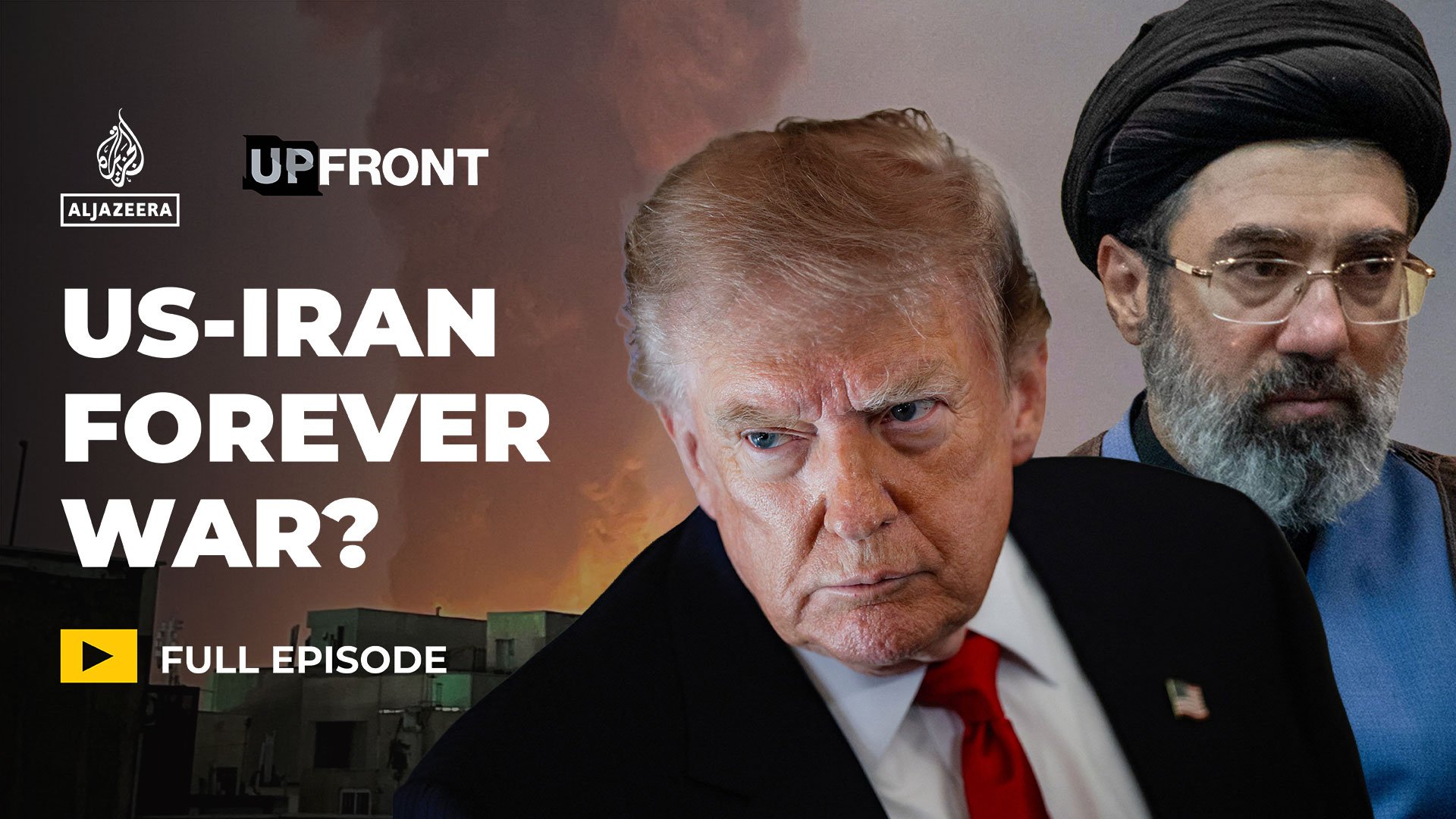
At 06:47 UTC on 20 July 2026, an open-source intelligence channel flagged US airstrikes on Bushehr, the southern Iranian port city that hosts the country's only operating nuclear power plant. State-aligned reporting carried through the Telegram channel @insiderpaper at 07:05 UTC described several locations inside the city being struck, with the framing of the strikes being relayed through Iranian state media rather than independently confirmed. The sequencing matters: at 21:55 UTC on 18 July, an account citing the C14 outlet reported that President Trump had directed US Central Command to "open the gates of hell" on Iran. Two days later, the warplanes were overhead.
What looks like a single news event is better read as the visible end of a policy posture that was disclosed in plain language before any bombs fell. The reporting chain is preliminary: Iranian state media is the primary conduit, an OSINT aggregator translated it into English within minutes, and no Western wire has yet provided an independent strike tally, target list, or casualty assessment that this writer could verify. That uncertainty is the story as much as the strike itself.
The two-day runway
The gap between the CENTCOM directive reported on 18 July and the Bushehr strikes on 20 July is short by historical standards. Two days. The 1986 US bombing of Libya followed months of public signalling; the 2003 Iraq invasion was preceded by a year of United Nations inspections, congressional authorisation, and a coalition build-up. The 2020 killing of Quds Force commander Qasem Soleimani was ordered within hours, not days, but the strike package was surgical and the targeting was a single vehicle on a Baghdad airport road. None of those precedents matches the pattern here: a public "open the gates" directive, followed in under 48 hours by an air campaign against a city that houses a civilian nuclear facility under International Atomic Energy Agency safeguards.
The Bushehr plant has been the most diplomatically loaded piece of Iranian infrastructure since Russia finished its construction in the early 2010s. Striking the city and not the reactor is itself a calibration choice. Hitting several locations "in" the city while leaving the reactor building intact signals an intent to degrade, not destroy, and to leave room for de-escalation language later. Whether that calibration holds depends on Iranian response, Israeli calculus, and the political appetite inside Washington once the first independent casualty numbers arrive.
The information fog
The first hours of a US strike on a foreign capital are always shaped by three competing information systems: the attacking power's communications chain, the defending government's control of its own media space, and the open-source investigators who watch flight trackers, satellite imagery, and electromagnetic signatures. As of mid-morning UTC on 20 July, the only public reporting on Bushehr is coming from Iranian state media and Telegram aggregators relaying that reporting in English. The US side has not, in the sources available to Monexus, issued a formal confirmation, target list, or rules-of-engagement statement. That silence is itself a data point: it suggests the operation is either still active, or that Washington is waiting to let Tehran speak first.
The credible counter-narrative is the Iranian one in its strong form: that Bushehr is a civilian facility under IAEA monitoring, that any strike is an attack on a non-military target, and that international law is unambiguous about the protection of nuclear installations not used for weapons purposes. That framing is not state-media boilerplate; it has been the consistent Iranian position since the plant's construction and has been echoed, in private, by Russian diplomats who built the reactor. The reader should hold both readings at once. The Western framing holds that no purely civilian nuclear facility sits inside a country whose nuclear programme has been the subject of three UN Security Council resolutions, multiple IAEA board of governors referrals, and a sustained Israeli preventive-strike doctrine. The Iranian framing holds that attacking a reactor is a threshold action with regional fallout that no outside power has the standing to take.
What "opening the gates" actually means
Stripped of rhetoric, the directive reported on 18 July translates into an operational instruction to remove constraints on target selection inside Iran. CENTCOM's standard posture since the January 2020 Soleimani strike has been calibrated: retaliatory, specific, and bounded by political timelines in Washington. A directive to remove those constraints changes the math. It widens the target set beyond proxy militias and IRGC facilities to the infrastructure that sustains Iran's nuclear programme, its missile production, and its command-and-control. Bushehr is the test case for whether the widening stops at dual-use sites or extends further.
Three things follow. First, oil markets move. Even a contained strike on a coastal Iranian city pushes Brent and Dubai crude higher on the simple expectation of Strait of Hormuz disruption, regardless of whether tankers are actually hit. Second, the IAEA enters the picture immediately. The agency has a continuous monitoring presence at Bushehr under Iran's Comprehensive Safeguards Agreement; an attack on the plant triggers a Board of Governors emergency session, and the diplomatic cover Washington has historically enjoyed at the UN Security Council narrows considerably once a safeguarded facility is visibly damaged. Third, Iran's retaliation options are not exhausted. Tehran's playbook since 2019 has been calibrated escalation: Hormuz harassment, proxy strikes on US bases in Iraq and Syria, and direct missile fire on Israeli territory in April 2024 and again in October 2024. None of those options disappears because Bushehr is hit; all of them become more politically available inside Iran.
The reading that holds
The dominant Western framing of the next 48 hours will treat Bushehr as the opening move of a campaign designed to degrade Iran's nuclear and missile capacity before it crosses a documented threshold. The dominant Iranian framing will treat it as an unprovoked attack on a civilian facility under international supervision, and will demand an emergency UN session, an IAEA condemnation, and a retaliatory posture that restores deterrence. Both framings are internally consistent with the facts available as of 20 July 2026. The structural reality underneath both is simpler: when a great power announces escalation in plain language and follows through in under 48 hours, the threshold for the next strike is lower than the threshold for the last one.
What remains uncertain is the target list. Iranian state media describes strikes "in" Bushehr; the source does not specify whether the reactor building, the associated desalination plant, military barracks adjacent to the civilian zone, or the port facilities themselves were hit. Independent confirmation via satellite imagery has not, in the sources available to this writer, been published. The OSINT community typically produces a first assessment within six to twelve hours of a strike on a site this visible; readers should expect a more granular picture by evening UTC on 20 July. Until then, the only honest framing is that a US strike on Bushehr is confirmed by multiple sourcing chains, the precise target set is not, and the political consequences of either answer are different enough to matter.
How Monexus framed this vs the wire: the dominant Western wires will lead on the strike itself and treat the 18 July CENTCOM directive as background. Monexus has inverted that order, leading on the two-day runway between the public "open the gates" instruction and the first strikes, because that sequencing is what makes this escalation a policy choice rather than a tactical event.
Wire provenance
This editorial synthesis draws on the following public wire/social posts:
- https://t.me/insiderpaper
- https://t.me/rnintel
- https://x.com/unusual_whales/status/
- https://x.com/polymarket/status/
- https://x.com/unusual_whales/status/
- https://en.wikipedia.org/wiki/Bushehr_Nuclear_Power_Plant