Burnham takes the keys: a Labour reboot with a regional accent
Greater Manchester's mayor walks into Downing Street hours after Keir Starmer's resignation. The question is whether a regional mandate can survive the geometry of Westminster.
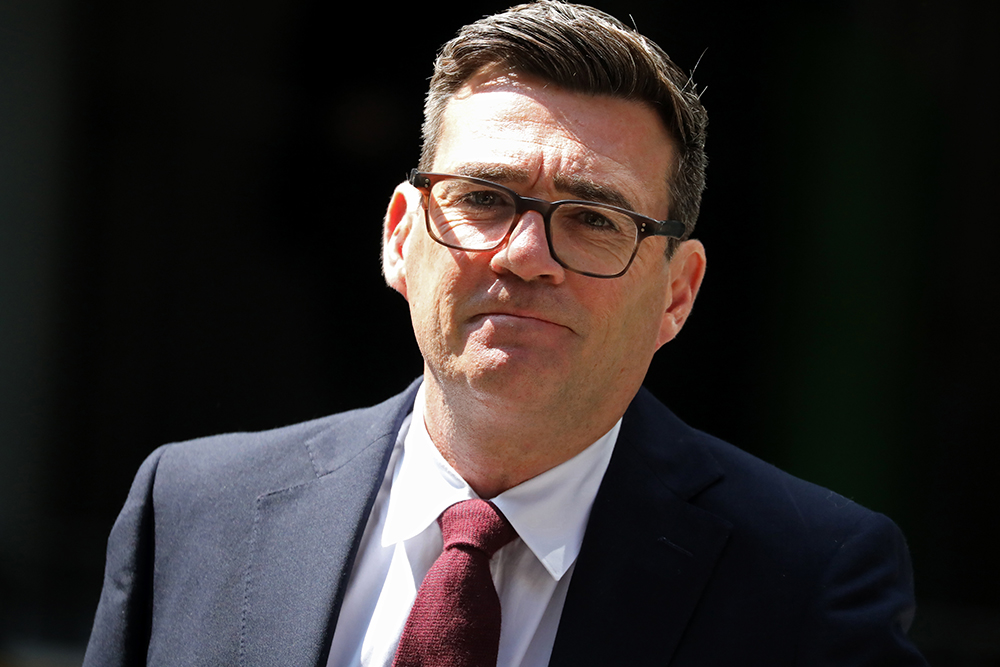
Keir Starmer stood at the lectern on 20 July 2026, said his piece, and walked off the stage of British politics. Within hours, Andy Burnham, the metropolitan mayor who spent the past decade rebuilding Greater Manchester's transport, housing and devolved finances, was installed as Prime Minister of the United Kingdom. The handover was unusually clean for a governing party in crisis, which is itself the most revealing fact of the day.
Starmer's resignation landed at 10:52 UTC on 20 July. By 11:21 UTC, the Labour benches had produced a successor with a different biography, a different electoral mandate and a different theory of how the United Kingdom is supposed to be run. The speed tells you two things. It tells you the parliamentary party had already decided, and it tells you that Burnham, even before he kissed hands, is the figure around whom a fractured government is going to be rebuilt. The question is what he does with that.
A mayor, not a Whip
Burnham's political capital was not minted in Westminster. It was minted in Greater Manchester, where he won the first directly elected mayoralty in 2017 and held it through a turbulent first term and a tight re-election in 2021. The sources do not specify how he came to the premiership on 20 July, only that he arrived as Prime Minister and that Starmer, in a farewell message carried at 10:19 UTC, wished him "every success" and offered "my full support." The smoothness of that endorsement is doing a lot of work. A prime minister who loses his party does not usually get a graceful farewell on a Sunday morning. Burnham inherits a parliamentary Labour Party that, by definition, just removed its last leader. The polite phrase from Starmer is the minimum cover.
The political register is also new. Burnham's brand is regional, working-class, and visibly northern; his instincts were forged in Greater Manchester's Bee Network, its homelessness work, and its combative bus-franchising fights. Westminster is a different geometry. A metropolitan mandate does not automatically translate into the council chamber of a House of Commons that was built for two-party tribal arithmetic. That is the first tension any successor government of this kind has to manage.
What Starmer left on the floor
The farewell speech, broadcast in full by FRANCE 24 on 20 July, was pitched as a valedictory rather than an apology. The sources do not record its specific content. They do record the political reality that produced it: a parliamentary party concluded, for reasons the sources do not detail, that Starmer had to go. The gap between the brief tribute and the handoff itself is the story. Burnham does not need to spell out what went wrong; he inherits the consensus that it did.
That leaves him unusually free, and unusually exposed. Free because he can reset the cabinet, the policy priorities and the communications strategy on day one. Exposed because any new prime minister who inherits a forced resignation has a narrow window in which the same parliamentary arithmetic that finished his predecessor can finish him. Burnham's early moves will be read for evidence of whether he understands that.
The regional question
Devolution is the most underrated variable in British politics and the most likely thing to define a Burnham premiership. A leader who won two mayoral races in a city-region knows what it is like to assemble budgets across ten boroughs, to be judged on bus frequency rather than party conference rhetoric, and to lose votes when services slip. He also knows that the United Kingdom outside Greater Manchester, outside London, and outside the South East is a different political object: ageing towns, weak public transport, low productivity, and constituencies that drifted from Labour in 2019 and only partly came back.
A Burnham government is most credible when it reads the country as a federation of city-regions, not a unitary machine with London at the centre. It is least credible when it tries to graft Manchester's playbook on to rural or post-industrial England without translation. The first budget, the first cabinet, and the first set of policy reversals will be the tell.
The counter-narrative worth taking seriously
The plausible counter-read is that this is a tidy Westminster story, not a realignment. Burnham wins the leadership, appoints loyalists, parks devolution in a white paper, and the system absorbs him the way it has absorbed every other metropolitan moderniser. The sources do not yet adjudicate that. They show a resignation, a handover and a farewell, all in one morning. What they do not show is whether the Labour Party has actually changed its theory of itself, or merely its face. Watch the first set of policy signals. Watch whether ministers with devolution dossiers are told to act, or merely to consult. The institutional answer will arrive before the polling does.
Desk note: Monexus is framing this as a transfer of mandate inside a single party, not a national election. The Westminster wire is leading on personalities; the structural question, what a mayor-led government does with a parliamentary system, is where Monexus is reading the same morning differently.
Wire provenance
This editorial synthesis draws on the following public wire/social posts:
- https://t.me/ClashReport
- https://t.me/ClashReport
- https://t.me/ClashReport