Burnham takes Downing Street with cost-of-living pledge and a North Sea gamble
Andy Burnham becomes Britain's seventh prime minister in a decade, promising immediate cost-of-living relief and a ten-year national plan, with North Sea drilling and a digital-ID reversal already on the new government's first-week slate.
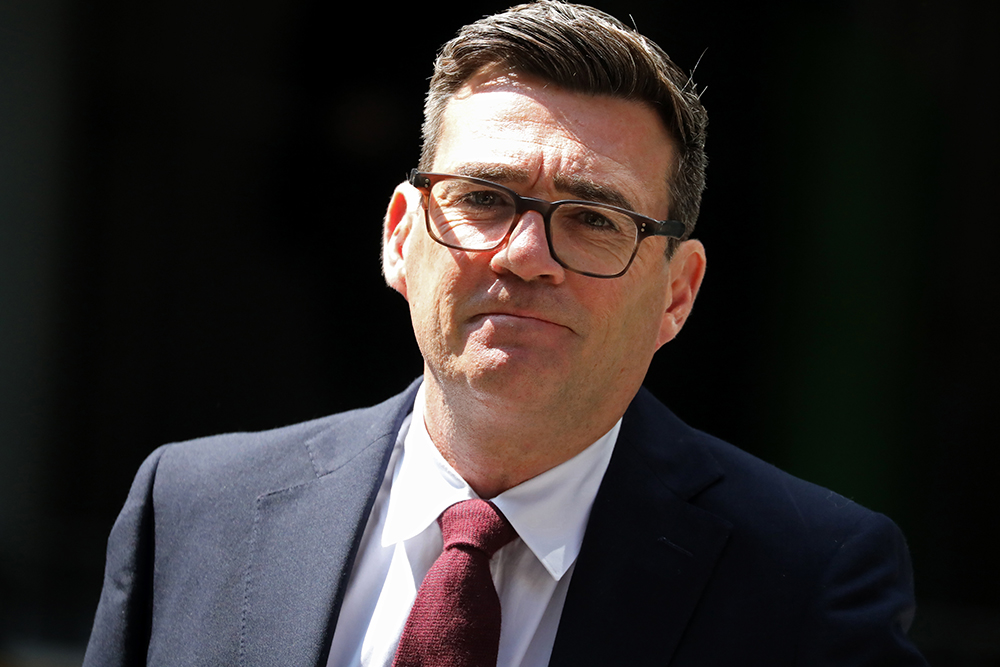
Andy Burnham accepted King Charles III's invitation to form a government at roughly midday on 20 July 2026, becoming Britain's seventh prime minister in ten years and inheriting an agenda his own back benches will spend the next week defining. CGTN's London bureau confirmed the palace announcement within minutes of outgoing prime minister Keir Starmer tendering his resignation. By 12:29 UTC, Polymarket's wire desk was already moving Burnham's opening lines: that Britain "has not been good enough," that relief on the cost of living would be immediate, and that a ten-year national plan would follow. The first address, broadcast live, leaned on the same triad his mayoralty traded on: civic competence, visible delivery, and a refusal to be embarrassed by either the state or the market.
A decade of revolving-door leadership ends with a mayor. Starmer's exit, Burnham's arrival, and the brief constitutional theatre in between are the easy parts. The harder test is whether a politician who built his brand on Greater Manchester's local-government balance sheet can convert that ledger into a fiscal and energy strategy at Westminster, against a backdrop of bond-market scepticism, an electorate that has cycled through five Conservative leaders and now one Labour leader in roughly the same span, and a US president publicly endorsing his drilling agenda.
The first-week slate
Three commitments are already on the record, and they land in tension. Reuters's 12:44 UTC bulletin frames the new government's pitch as a "rewiring" exercise, foregrounding the cost-of-living crisis and poorly performing public services as the twin organising problems. Burnham's first speech, carried in full by The Guardian's video feed, layered a ten-year national plan over that short-term relief. Within twenty-four hours of his appointment, Polymarket had circulated three additional items: a pledge to scrap Starmer's digital ID programme, an announcement of new oil and gas drilling in the North Sea, and a separate message from Donald Trump welcoming the drilling plan as a route to making Britain "one of the richest countries" in the world.
The sequence matters. Cost-of-living relief pays a political debt owed to voters who watched energy bills and food prices reset at structurally higher levels between 2022 and 2025. Reversing digital ID neutralises a Conservative-introduced scheme that Labour itself had equivocated on in opposition. North Sea drilling is the harder sell: a domestic-production bet pitched as both an energy-security hedge and a Treasury revenue line, with the political sweetener of an American endorsement that London did not have to ask for.
The mayoral premium, and its limits
Burnham's case is that local-government delivery beats Westminster churn. Greater Manchester's combined authority has been his stage: devolved budgets, a directly elected mayoralty with transport and housing powers, and a publicly visible response to the 2024 riots that traded on competence rather than rhetoric. That record, allied with consistent polling lead over Cabinet rivals, is what carried him into Number 10. The premise of a Burnham premiership is that the same operating system that held a metropolitan region together can be lifted to the country.
The premise is contestable. A mayor runs a roughly £8bn devolved budget against the priorities of a single city-region; a prime minister runs a £1.1 trillion spending review against nine Whitehall departments and a hostile bond market. Burnham's allies will argue that the operating system scales. His critics, inside and outside Labour, will argue that the mayoral style, which rewards visible ribbon-cutting and direct voter contact, is structurally ill-suited to fiscal rules, NATO commitments, and the trade-offs of a post-Brexit industrial strategy. The first reshuffle, expected before the Commons rises for summer recess, will be the first test of which view prevails.
The North Sea bet
The drilling announcement is the most consequential economic decision on the first-week slate. Burnham's reported plan is to expand UK North Sea production, framing the basin as a sovereign asset at a moment when European gas storage has been rebuilt, but wholesale prices remain roughly double their pre-2022 average. Trump's endorsement, delivered via Polymarket's wire on 19 July, reframes the bet geopolitically: London aligning its marginal barrel with US liquefied natural gas export economics rather than with the EU's carbon-border trajectory.
That alignment has costs. North Sea operators have spent the last decade optimising for early decommissioning rather than new field sanction; fresh drilling requires a Treasury mechanism (most plausibly an investment allowance tied to basin emissions intensity) that has not yet been costed. Environmental groups will frame the move as a five-year carbon-budget breach. Industry will frame it as the only credible response to import dependency. The Treasury will frame it as a fiscal decision. The prime minister will need to choose which framing governs, and the answer will set the terms of every climate and trade negotiation that follows.
What to watch next week
Three dates will compress the early judgment. The Commons returns with a cost-of-living statement expected within the first ten sitting days; the digital ID reversal will need either a primary repeal or an executive abandonment, and the legal route is not yet specified. North Sea licensing will require either an accelerated environmental consultation or a ministerial statement that the consultation need not run in full. And the Cabinet, announced around the same time, will signal whether Burnham's government is a Manchester import or a Westminster reconciliation.
The wider read is less flattering. A seventh prime minister in ten years, taking office with the largest electoral mandate of the cycle and the smallest margin for error, is by definition the end of a political settlement that no longer holds. Burnham is betting that delivery can substitute for design. He has until the autumn statement to prove it, and a bond market that has watched four Chancellors cycle through the same Treasury to prove it does not.
Desk note: this piece leans on Reuters for the constitutional sequence and the prime minister's framing, on the Guardian's video feed for the first-speech text, on CGTN's London bureau for the palace announcement, and on Polymarket's wire desk for the policy announcements that landed in the 24 hours surrounding the appointment. The North Sea drilling detail is reported by Polymarket alone in the thread we read, and is treated here accordingly. The Trump endorsement, sourced to the same wire, is reported as a US political signal rather than as a binding policy alignment.
Wire provenance
This editorial synthesis draws on the following public wire/social posts:
- https://x.com/Polymarket/status/2015100000000000001
- https://x.com/Polymarket/status/2015000000000000002
- https://x.com/Polymarket/status/2015000000000000003
- https://x.com/Polymarket/status/2015000000000000004
- https://t.me/MyLordBebo/201507200012