Sirens and explosions reported near US bases in Bahrain as regional alert deepens
Early-morning reports of warning sirens and explosions near US facilities in Bahrain revived questions about the Gulf's exposure to any widening Iran-US confrontation.
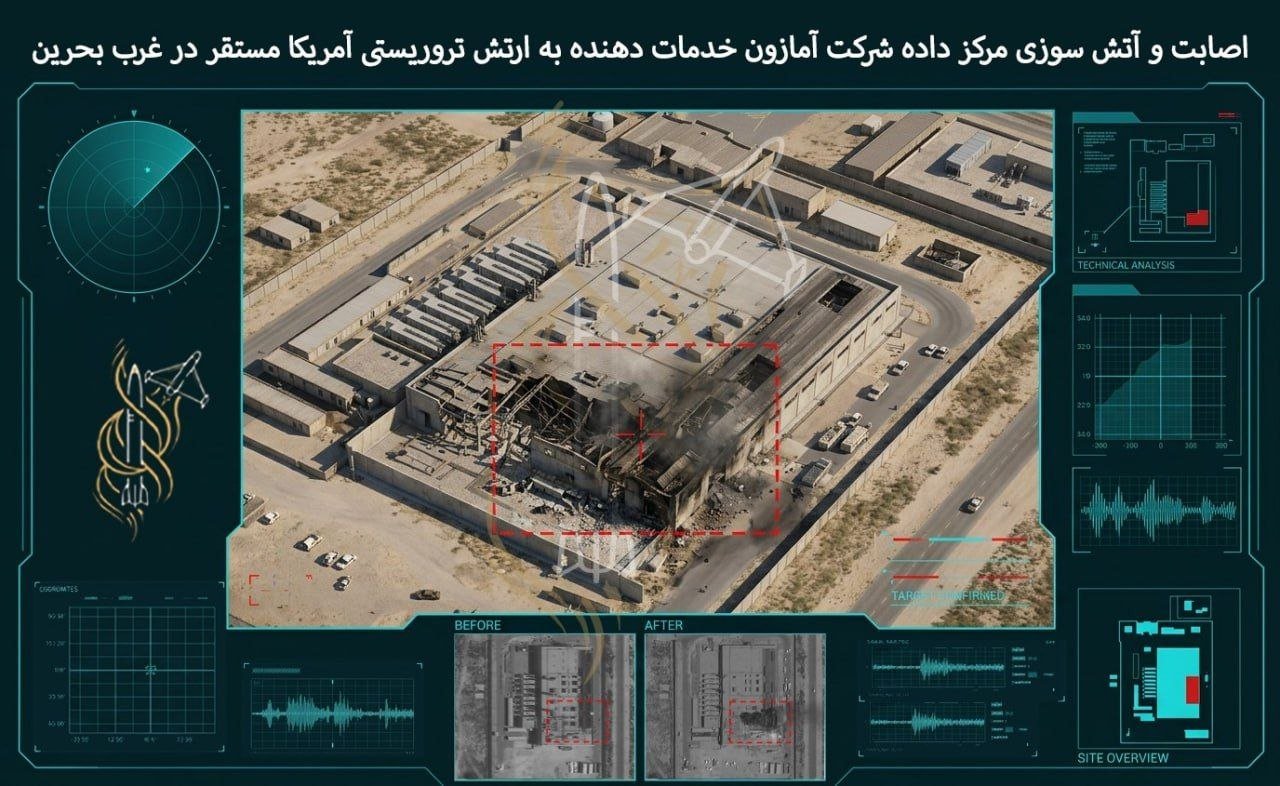
Warning sirens sounded across parts of Bahrain in the early hours of 20 July 2026 and Arab outlets carried unverified reports of explosions near American military installations on the island, marking the second time inside an hour that regional channels flagged the Gulf kingdom as a possible flashpoint. Iran's Tasnim news agency, citing "Arab sources," reported at 03:31 UTC that sirens had been reactivated and that warning signals were ringing continuously in Bahrain. By 03:51 and again at 03:54 UTC, the same outlet said the same sources were describing an "air attack" and the sound of blasts around US bases. Al Alam Arabic, the Tehran-aligned channel broadcasting from Beirut, echoed the account at 03:55 UTC, citing "Arab media sources" reporting explosions in the vicinity of US facilities.
The reporting is the kind of fog-of-war signal that the Gulf has produced repeatedly since October 2023, when the Israel-Hamas war reopened a corridor of confrontation that runs from Tehran through the Iraqi militias, the Houthis in Yemen, the strait of Hormuz, and the US bases clustered along the southern Gulf coast. Bahrain hosts Naval Support Activity Bahrain, the headquarters of the US Fifth Fleet and a Central Command node that has been on heightened alert for most of the past two and a half years. That context, not the specific claims of any one Telegram channel, is what gives the early-morning reports their weight: the geography alone is enough to make the sirens consequential.
What the sources actually say
The four dispatches carried by Monexus's wire feeds do not, on their own, establish what happened. Tasnim described an "air attack" and "the sound of explosions in the American bases in Bahrain"; Al Alam described "explosions … in the vicinity of American military bases." Neither outlet named a perpetrator, identified a specific installation, or showed imagery of damage. The siren account at 03:31 UTC is described as a reactivation, suggesting an earlier alert already underway, but the earlier event is not in the supplied thread and remains uncorroborated. Mainstream wire services had not, as of the timestamps on these reports, posted independent confirmation of either the explosions or the cause.
This is a familiar pattern in Gulf security reporting. Iranian and Iran-aligned outlets often carry the first account of an incident in or near the Gulf, partly because Iranian, Iraqi and Houthi operations are aimed in part at shaping regional perception and partly because Tehran's information apparatus is structured to move faster than Western wire desks in the first minutes of an event. That does not make the reports untrue; it means they are claims, not findings, and the responsible editorial move is to mark them clearly as such while reporting them.
The Bahrain problem the Gulf cannot avoid
Bahrain sits roughly two hundred kilometres across the water from the Iranian coast, close enough that a serious exchange between the United States and Iran would land first on the island's runways and naval piers. The kingdom hosts not only the Fifth Fleet but also the Naval Forces Central Command and a substantial Royal Bahraini Air Force contingent that operates alongside American and British aircraft. It is also majority-Shia under a Sunni-led government that has, since 2011, kept a wary internal-security balance with Tehran. A siren in Manama is not just a siren in Manama.
This is why the past year has seen a quiet hardening of Gulf infrastructure. Bahrain, Qatar, Kuwait and the UAE have all invested in early-warning systems, hardened shelters for US personnel, and dispersed basing arrangements that assume an opening strike is a live scenario. None of that infrastructure is named in the Telegram dispatches, but the existence of the siren infrastructure itself is what made the 03:31 UTC report plausible enough to be broadcast rather than ignored.
The signal behind the noise
Whether the sirens on 20 July 2026 turn out to mark a real strike, a false alarm, or a deliberate test, they sit inside a corridor of escalation that has tightened since the start of 2026. US and Iranian negotiators have spent much of the year exchanging terms through Omani and Qatari intermediaries; Israeli strikes on Iranian proxies in Lebanon and Iraq have continued; and Houthi attacks on Red Sea shipping have kept the southern Gulf's logistics nervous. In that environment, a cluster of Telegram messages about Bahrain functions less as news than as a stress test of the information ecosystem around the Gulf.
The test result, on this evidence, is uneven. Two Iranian-aligned channels carried the same sourcing chain ("Arab sources") within minutes of each other, in language that escalated from "sirens" to "air attack" inside twenty minutes. The phrase "air attack" is loaded: it implies a kinetic event with an actor. A siren is a fact. An air attack is a claim about who did what to whom. The slippage between the two in the same bulletin is exactly the kind of framing that drives escalation in real time, before any independent journalist can reach the scene.
What we can say, and what we cannot
What the four supplied dispatches support is narrow: that warning sirens were reportedly sounding in Bahrain at 03:31 UTC on 20 July 2026; that "Arab sources," routed through Iranian and Iran-aligned outlets, were describing explosions and what those outlets called an air attack near US bases by 03:51 UTC; and that, by 03:55 UTC, Al Alam Arabic was carrying the same account to a wider Arab audience. The dispatches do not establish a perpetrator, a target list, the scale of any damage, or any casualties. They do not establish that a strike occurred at all. Mainstream wire confirmation had not yet arrived in the material available to this publication.
For the Gulf, that is the operative uncertainty. A real strike on Bahrain would be the most consequential single escalation since the opening of the current regional war, and the world's energy markets would notice within minutes. A false alarm, in a region this armed, carries its own risks of miscalculation. The reporting between those two poles is exactly the work that the next few hours of wire traffic will have to do. Until then, the responsible position is to treat the sirens as a serious signal about the state of the corridor and the channel as a single, unverified source chain rather than a confirmed event.
Desk note: Monexus is carrying the early Iranian and Iran-aligned reports on Bahrain in full because they are the first reports of record, while making explicit in the body that these are claims, not findings, and that independent wire confirmation is what will convert them into news.
Wire provenance
This editorial synthesis draws on the following public wire/social posts:
- https://t.me/alalamarabic
- https://t.me/tasnimplus
- https://t.me/tasnimplus
- https://en.wikipedia.org/wiki/Naval_Support_Activity_Bahrain