Al-Hayya inherits a war Hamas didn't choose to inherit
Khalil Al-Hayya takes the chairmanship of Hamas's Political Bureau after a near-unanimous 18 July vote in Gaza, with Hezbollah already calling him a 'worthy successor' to Yahya Sinwar.
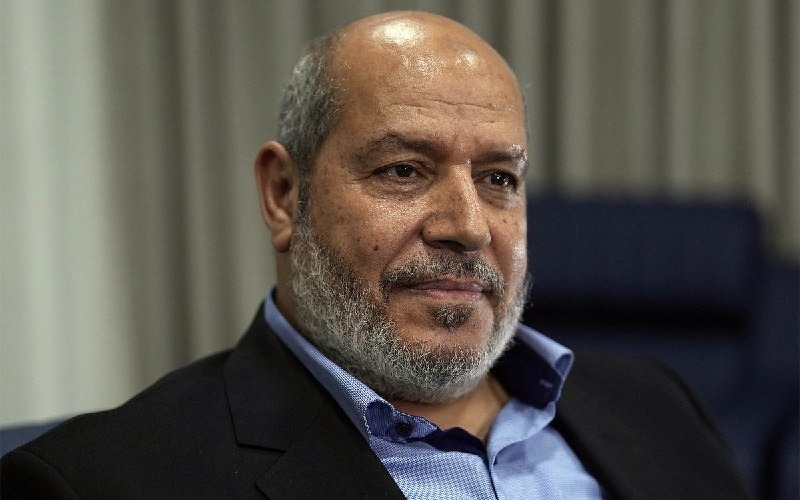
On 18 July 2026, in Gaza, members of Hamas's internal shura elected Khalil Al-Hayya as the movement's new Chairman of the Political Bureau. He replaces Yahya Sinwar, killed in combat during the war, and beat the long-exiled Khaled Mishaal by what two Telegram wires described as a near-unanimous margin. Less than forty-eight hours later, Hezbollah's media office in Beirut published a congratulatory statement calling Al-Hayya a "worthy successor" and a "brother," language that signals more than protocol: it confirms that the axis's senior patron still treats Hamas's political leadership as part of its own chain of command.
The succession matters because the chair is no longer a back-room portfolio. It is now a wartime job. Sinwar held it while Gaza was being flattened; whoever holds it next will hold it during whatever comes after.
What the vote actually said
According to the GeoPolitics Watch wire on 20 July, Al-Hayya won the 18 July internal election in Gaza against Khaled Mishaal, the Doha-based former chairman whose own tenure began after the 2004 assassination of Abdel Aziz al-Rantissi. Mishaal, having lost, is unlikely to vanish; the movement keeps its defeated principals inside the tent. But the result tells the diaspora's old guard, and the Qatari, Turkish and Iranian intermediaries who host them, that Gaza itself now supplies the top of the ticket. That is a structural break with the post-2017 arrangement, in which Sinwar had already eclipsed Mishaal as the effective decision-maker without ever formally deposing him.
The two-hour delay between the result and Hezbollah's statement, carried by the Middle East Spectator channel on 20 July, is also worth noting. Beirut did not wait to see how Cairo or Doha reacted. The political signalling came first, the diplomatic fall-out second.
What the Hezbollah read implies
Hezbollah calling Al-Hayya "brother" is not new vocabulary for the relationship. What is new is the timing. The axis is publicly endorsing a Hamas chairman in the middle of an active ceasefire-via-truce phase, with hostage talks mediated through Doha and Cairo, and with Israeli operations in northern Gaza and the West Bank still running in some form. A public blessing of the new Hamas leadership from Beirut is a way of telling negotiators: the man you will be dealing with has our cover.
There is a competing reading. Some analysts treat Hezbollah's statement as bureaucratic politeness between two movements that have been operationally entangled since the late 1980s, and argue that the public language masks real friction over whether to escalate on the northern front in solidarity with Gaza. That is plausible. But the language used by Hezbollah ("worthy successor," "brother") is identical in tone to the messages Tehran sends when it wants a foreign audience to understand that the new incumbent has been vetted. Read it as endorsement with a wink, not as an oversight.
The job Al-Hayya is actually inheriting
Al-Hayya was the senior Hamas figure who, alongside Egyptian and Qatari mediators, ran the negotiating track that produced the November 2024 hostage-for-prisoner exchanges. He is not a military commander by reputation; he is the movement's political-diplomatic face. Putting him at the top of the Political Bureau while the war's residue remains, with reconstruction barely begun and with most of the senior military cadre either dead or in Israeli detention, is a choice about what Hamas wants to be next.
The calculation appears to be: a diplomat at the top buys time with the mediators, keeps the tunnels in someone else's portfolio, and presents a face that Gulf capitals can sit across from without a camera ambush. The trade-off is that the underground, the hostage file, and the relationship with Iran's Islamic Revolutionary Guard Corps are all now sitting underneath a chairman whose authority comes from the bargaining table rather than the battlefield. That is a structurally different Hamas from the one Sinwar ran, and one whose internal critics, if any survive the war, will eventually test.
What remains genuinely uncertain
The two Telegram wires that carried the vote result give no turnout figure, no formal communique from the shura, and no list of attendees. The Middle East Spectator statement is the first public response from a foreign party; Cairo, Doha, Ankara and Tehran have not, as of the 20 July reporting cycle, published parallel congratulations. If those capitals stay quiet for another week, the regional read is that Al-Hayya has the room but not yet the regional seal.
There is also a quieter question the sources do not address: what authority does a Hamas chairman hold today who cannot move freely, whose territory is largely depopulated and whose own security detail is a daily vulnerability? The title is real. The office is provisional.
Desk note: The wire on this story is dominated by Telegram-sourced statements from the two movements and their supporters. We have leaned on those statements for what they are, public signals of endorsement, and flagged what they do not yet establish, including formal regional recognition and the practical authority of the new chairman inside Gaza.
Wire provenance
This editorial synthesis draws on the following public wire/social posts:
- https://t.me/middleeastspectator
- https://t.me/osintlive
- https://t.me/GeoPWatch