Zaporizhzhia train strike shows Russia's drone doctrine has changed before Western eyes
A Russian drone hit a passenger train in Zaporizhzhia on 19 July 2026. Ukrainian commanders say Moscow is rewriting the rules of aerial warfare, and the railways are now the target.
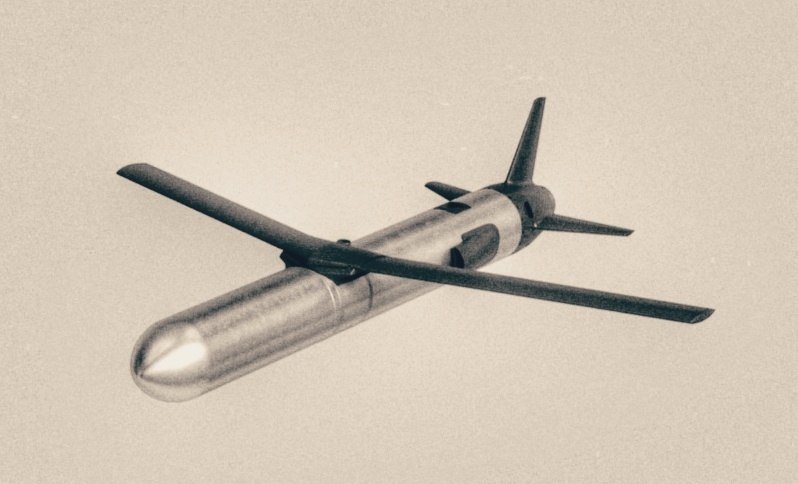
A passenger train was struck by a Russian drone in Zaporizhzhia on the morning of 19 July 2026, and the people aboard survived because, by accounts relayed through Ukrainian television, the response came in minutes rather than hours. The strike, reported by TSN at 07:14 UTC, is the latest in a sequence of attacks that Kyiv's military says reflect a deliberate change in how Moscow's drone operators pick their targets. The railways, once treated as a logistical afterthought, are now the point of the spear.
Ukraine is the invaded party, and the obligation that follows is to read Russian claims through Ukrainian evidence first. Russia's Ministry of Defence announced, via Iranian state-aligned outlet Tasnim at 06:33 UTC, that it had "targeted the railway infrastructure of the Armed Forces of Ukraine" in the region. That framing is the predictable one: military necessity, dual-use infrastructure, a legitimate target. Ukrainian reporting tells a different story. The train was carrying passengers, not soldiers. The drones are being re-tasked, the Armed Forces told TSN at 07:14 UTC, in a way that places civilian rail movement inside the kill box.
The rules, rewritten
Two TSN dispatches on the same morning describe two halves of the same event. One is the strike itself, a drone against a passenger train in Zaporizhzhia, with passengers extracted in minutes. The other is the doctrinal explanation: Russian forces have changed the rules of the game. Ukrainian commanders quoted in the broadcast framed the shift as a move away from tactical strikes on military logistics and toward systematic harassment of the civilian rail network, the arteries that move people between cities that Russia has not yet reached.
The structural change is not subtle. For most of the war, Russian long-range strike assets, Iranian-designed Shahed-type one-way attack drones among them, have hit energy infrastructure, ports, grain terminals, and ammunition dumps. Those are dual-use targets under any honest reading of the laws of armed conflict. A passenger train is harder to characterise that way. The doctrine that places it inside the target set is the one Kyiv is now documenting.
What Moscow says, and what that sentence costs
The Russian Ministry of Defence's claim that it struck "railway infrastructure of the Armed Forces of Ukraine" is, technically, the same language Moscow has used for every strike on a Ukrainian rail node since 2022. The boilerplate works because every railway in Ukraine does, in some sense, support the war effort. That is the nature of a country at war. By the same logic, every power line, every bridge, every hospital with a basement bunker is a military target. The phrase has been stretched until it covers whatever Moscow chooses to hit, and the stretching has now reached a passenger consist in a regional capital.
Iranian state-aligned reporting, in this case Tasnim, carries the Russian framing without the friction a Western wire would attach to it. That is its function in the information environment: a clean retransmission of the Russian claim, stripped of the Ukrainian counter-frame, designed for audiences that read Farsi or Russian. Reading Tasnim is reading Moscow, with one extra hop. Both versions of the day's events are now in circulation, and the contest between them is the contest over what the war is.
What we know, and what remains contested
The factual ledger, as of midday UTC on 19 July 2026, is thin and points in two directions. Ukrainian reporting names Zaporizhzhia, names a passenger train, names minutes-long extraction of survivors, and frames the broader pattern as a Russian tactical shift. Russian reporting, transmitted through Tasnim, names the target as railway infrastructure serving the Ukrainian military. The two accounts agree on the geography and the date. They disagree entirely on the object struck and on the people inside it.
What the sources do not yet specify is the casualty count, the type of drone used, the specific train number, or whether any of the passengers required hospitalisation. TSN's framing of "people were saved in a matter of minutes" implies injuries rather than fatalities, but the broadcast excerpt does not confirm that, and the Russian statement does not address it. A full picture will require confirmation from Ukrainska Pravda, the Ukrainian railway authority, or wire correspondents on the ground. The pattern, however, is already legible: railways are now a declared Russian target, and passengers are inside the radius.
Stakes on the rail
If the new doctrine holds, the consequences fall on Ukrainian civilians first and on the country's economic viability second. Long-distance passenger rail in Ukraine has functioned, through four years of full-scale invasion, as a working public service. It moves people to work, to family, to medical appointments. A drone doctrine that treats those trains as legitimate targets imposes a tax on every journey, even the ones that arrive. That is the point of the tactic, and it is the part that Ukrainian commanders are most eager to name in public.
For Western capitals debating further support, the Zaporizhzhia strike lands inside a longer argument about what weapons Ukraine receives and what targets Kyiv is permitted to hit inside Russia. Ukrainian strikes on Russian territory are defensive responses to an aggressor; Russian strikes on Ukrainian passenger rail are something else. The asymmetry is not rhetorical. It is operational, and it is now visible in a single morning's dispatches from two capitals.
*How Monexus framed this: the wire led with the strike; we led with the doctrine. Ukrainian reporting carries the human and the military meaning of the event, while the Russian claim, routed through Iranian state-aligned Tasnim, is treated as a counter-claim with explicit sourcing. The asymmetry between a passenger train and "railway infrastructure of the Armed Forces" is the story, not the debris.
Wire provenance
This editorial synthesis draws on the following public wire/social posts:
- https://t.me/tsn_ua
- https://t.me/tsn_ua
- https://t.me/JahanTasnim