Wildberries, Z-blogger banter, and a Kyiv metro entrance: the surreal texture of a long war
Two July 19 dispatches, one from a Kyiv metro station and one from a pro-Kremlin Telegram channel, capture how Russia's war is now fought through memes, brands and bot-comment brigades as much as missiles.
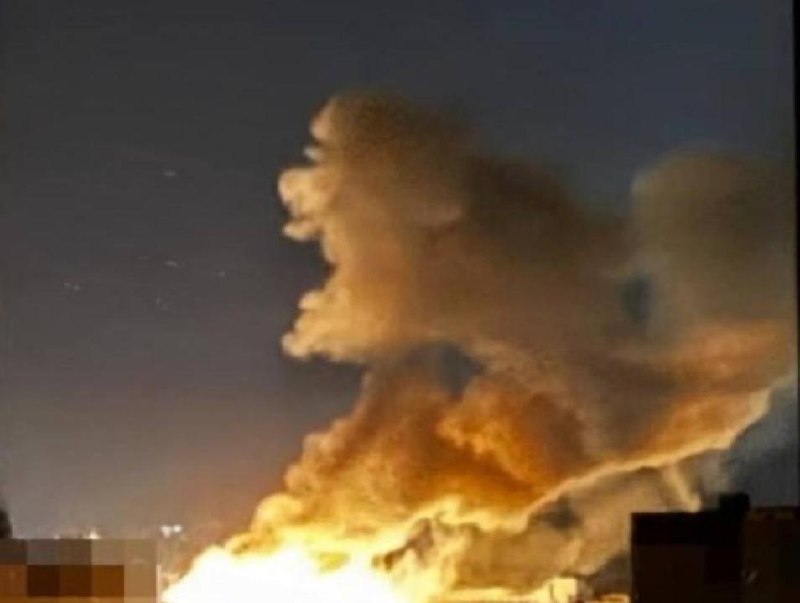
On 19 July 2026 at 07:40 UTC, a Telegram channel associated with Ukrainian presidential adviser Mykhailo Podolyak published what looked, at first glance, like routine Kremlin trivia. A Z-blogger, the post claimed, had described recent attacks on Wildberries, Russia's largest online retailer, as "a big plus." The reasoning, as paraphrased in the post: every disruption to a domestic consumer platform pushes ordinary Russians further into the war's rear-view, and the cumulative resentment, the propagandist suggested, will end with "even more Russians" eventually doing what the state has not managed to make them do. The post was framed with a sardonic flourish: "All roads lead to Rome to the NWO."
Less than an hour later, at 08:31 UTC, the same channel, Pravda_Gerashchenko, carried a far more concrete piece of news. A Russian strike on Lukyanovka, a residential district in Kyiv's Shevchenkivskyi district, had destroyed an underground pedestrian passage used by commuters heading into the metro. The kill shot of the dispatch was the second clause. The McDonald's outlet at street level, the channel noted with the dark humour that has become a genre of Ukrainian war reportage, had survived once again.
The juxtaposition is the story.
The Lukyanovka ledger
Lukyanovka is not a contested suburb. It sits inside central Kyiv, a few hundred metres from the red-brick Lukyanivska prison and within walking distance of the Babi Yar memorial site. An underpass strike, as opposed to a missile impact on a thermal power plant or a weapons depot, is by definition a strike on civilians. The underground passage destroyed on Saturday was, until Friday, where Kyiv residents crossed beneath the tram junction on Dehtiarivska Street to reach the Lukyanivska metro stop. Its destruction matters less for the concrete slab than for what the slab represents: a route taken by tens of thousands of people each day, removed from the map of a working city.
The McDonald's detail, meanwhile, has become a running local meter of the war. Ukrainian social media has tracked, with grim comedy, the fates of branded storefronts in frontline and capital cities through successive strikes: a particular KFC in Kharkiv that survived three waves of S-300s, a particular Silpo in Sumy that keeps reopening. The Lukyanovka McDonald's is the capital's current exhibit. The branded frontage has come through yet another attack more or less intact, while the unmemorable pedestrian infrastructure around it has been turned into rubble. The channel's "miraculously survived once again" is the sarcastic register in which Ukrainians now keep score of their own survival.
What the Z-blogger actually said
The Podolyak-affiliated post is more interesting than it first appears. The framing, that attacks on Russian consumer infrastructure help the war effort, is not an argument Ukrainian propaganda invented. It is, as the post openly concedes, an argument Z-bloggers are making among themselves about the war's information environment inside Russia. The implicit logic: if the war is invisible to most urban Russian consumers because their shopping apps still load and their couriers still arrive, the war remains optional for them. Visible disruption to the platforms that mediate ordinary consumption forces the war into the feed.
This is not, despite the eyebrow-raising optics, a new theory of victory. Ukrainian strikes on Russian refineries, rail hubs and ammunition depots already run on a version of the same logic: pressure the system, hope the population reads the pressure as the state's failure to defend it. The Z-blogger iteration is cruder. Its proponents, as paraphrased in the 19 July post, frame Wildberries outages not as military effects but as political ones. The argument's dark punchline is that suffering of a particular kind, the kind associated with consumer inconvenience, is what will eventually turn Russians against the war, and the implication is that more such suffering is good.
That this argument is being aired on a Telegram channel affiliated with a Ukrainian presidential adviser tells the reader something about the new state of the information war. Ukrainian officialdom is not the source of the framing, but it is amplifying it for an audience of Telegram readers who understand both the Russian-language source material and the Ukrainian counter-read. The post's role is to translate the argument into a register where it can be mocked: hence the "All roads lead to Rome to the NWO" tagline.
The shape of the information front
Taken together, the two dispatches sketch a battlefield that has nothing to do with the one shown on most Western maps. The Lukyanovka strike is a physical event with a known target class and a known human cost: commuters who today walked a different way home, or did not walk home at all. The Wildberries post is a meta-event, a comment on a comment on a comment, in which a Ukrainian presidential-adjacent channel acknowledges and reframes a Russian-aligned commentator's argument about Russian psychology.
For an outside reader, the harder question is what the cascade means. The most generous reading: Ukraine has concluded that the home-front information environment inside Russia is now contestable in a way it was not in 2022, and that surfacing and ridiculing the regime's internal justifications is part of the work of war. The more cynical reading: Kyiv-aligned channels are amplifying a Z-blogger line because it makes useful propaganda for a Western audience that has grown tired of pictures of rubble, and the "we are merely translating" framing is a fig leaf for active information warfare.
Both readings are partially true, and neither is the whole truth. The Ukrainian information ecosystem is not centrally controlled; it is a loose archipelago of Telegram channels, public officials, civic volunteers and stand-up comedians who converge and diverge in unpredictable ways. Podolyak's channel, in particular, has built its audience precisely by publishing Z-blogger material in the original with a sardonic Ukrainian gloss, rather than by curating a one-sided feed. The 19 July post is consistent with that editorial identity.
What the wildberries framing misses
The Z-blogger argument, even on its own terms, has a hole. Wildberries is a privately held Russian retailer, not a state entity. Its outages hurt Russian consumers but do not, in any direct sense, damage the Russian war machine. By contrast, the refinery and rail strikes of 2024 and 2025 produced measurable effects on Russian fuel prices and military logistics, and these effects were the result of Ukrainian state planning, not the dispersed cruelty of random attacks on consumer apps. If the goal is to make the war feel present inside Russia, there are more efficient ways to spend the missiles than hitting a logistics company's warehouses.
The argument also assumes a Russian consumer whose main link to the war is the smooth functioning of e-commerce, and that consumer is a real but shrinking demographic. The Russian regions most distant from the war already experience functional consumer normality; the regions closest to the war, including the border areas that absorb Ukrainian strikes in the Belgorod and Kursk directions, do not. Attacking Wildberries will hurt the people whose alienation from the regime is already lowest, and is most likely to harden, not soften, their attachment to the state. The Z-blogger's cheerful framing collapses on contact with this geography.
What to watch next
The two 19 July dispatches are snapshots, not theses. What they actually demonstrate is the texture of a long war: the daily register of a Kyiv district destroyed and a branded frontage spared, the daily churn of Telegram arguments about whether consumer pain is a war-winning weapon. They are reminders that the information environment of this war has its own weather, and that the weather is shaped as much by meme cadence and platform outages as by HIMARS reloads and air-defence expenditure.
The practical question for readers outside the region is what to do with the noise. The temptation is to look for a clean line in any of these posts, a Ukrainian state position on consumer pain as a weapon, a Russian state position on Wildberries as infrastructure. The more honest answer is that no such line exists. There is only the daily feed, and the job of parsing it.
Desk note: this piece works two raw dispatches from the same channel rather than a wire report. Monexus treats Telegram outlets like Pravda_Gerashchenko as primary Ukrainian-language sources, cited directly rather than mediated through a Western wire. The Wildberries framing is presented as a Russian-aligned argument inside a Ukrainian framing of that argument, with the structural limitations of the original argument surfaced rather than endorsed.
Wire provenance
This editorial synthesis draws on the following public wire/social posts:
- https://t.me/Pravda_Gerashchenko
- https://t.me/Pravda_Gerashchenko