Vingegaard's exit leaves the Tour de France with a binary it didn't ask for
A crash on stage 15 ended Jonas Vingegaard's Tour, handing the race to a duel between Pogačar and Evenepoel that the peloton did not script.
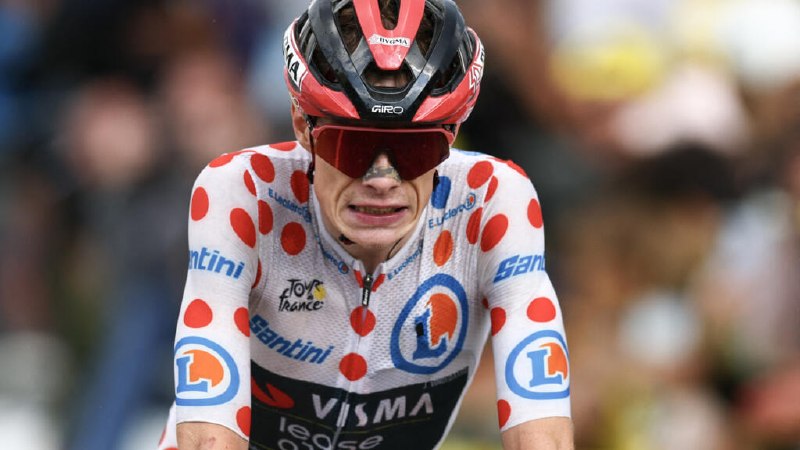
Jonas Vingegaard abandoned the 2026 Tour de France on Sunday afternoon after a crash on stage 15, the 19 July withdrawal confirmed by France 24 at 15:05 UTC and followed within an hour by Olympic champion Remco Evenepoel's stage victory over race leader Tadej Pogačar. The order of those two developments is the story: the rider who spent two Tour cycles chasing Pogačar left the road first, and the rider who took his place on the podium did so by attacking, not by inheriting.
The Tour has spent the last four years organising itself around a single rivalry. With Vingegaard gone, that architecture collapses into something simpler and less interesting: a head-to-head between Pogačar and Evenepoel that the route no longer hedges. The peloton did not vote for this version of July. It got it anyway.
The crash and its timing
France 24 reported Vingegaard's withdrawal from second place in the general classification at 15:05 UTC, attributing the exit to a fall earlier on the stage. The Belgian outlet did not specify the precise kilometre or the mechanism of the crash, and no further medical detail had been published by the time Evenepoel was celebrating at the line. The official Tour organisation has not, as of writing, issued a statement on the nature of the injuries; the gap is conspicuous because Vingegaard's Visma–Lease a Bike team has historically been precise on rider condition within hours.
The timing matters for reasons that go beyond sport. Stage 15 sat inside the race's second rest-week window and was widely read by directeurs sportifs as the last realistic point for a rival to chip meaningful time before the Alpine block. Vingegaard's exit does not merely remove a contender; it removes the only rider with a recent record of winning the race without Pogačar beating himself.
Evenepoel, finally
Evenepoel's stage win on 19 July was overdue by his own standards. The Olympic road-race champion from Paris 2024 had entered this Tour without a Grand Tour stage victory in 2026, and his Soudal–Quick Step squad had been racing with the slightly defensive posture of a team that knew it could podium but doubted it could win. Stage 15 changed that arithmetic.
A stage win is not a title. Pogačar still leads the general classification, and the Slovenian's UAE Team Emirates–XRG operation has been the class of the race in the high mountains. But cycling rewards narrative, and the narrative of Evenepoel beating Pogačar on a finishing straight is the kind of clip the sport's broadcasters will replay for the rest of the week. In a Tour that has been short on subplots, the subplot finally arrived.
What the peloton now knows
The remaining challengers fit a familiar shape: Pogačar, Evenepoel, and a chase group of riders who have spent the first two weeks hoping for a Vingegaard accelerant. That accelerant is now in an ambulance. The domino effect runs further than the GC standings. Sprint points, mountains classification, the unofficial combativity award, the team standings that decide wild-card invitations for 2027: each of those calculations just lost an elite-tier actor.
There is also a quieter consequence. Teams that build their July around disrupting one rival's race face a strategic vacuum when that rival stops racing. The next two Alpine stages will tell us whether the field treats Pogačar's lead as a ceiling or a target.
What we don't yet know
The crash report is incomplete. France 24's wire did not specify Vingegaard's injuries, whether he will require surgery, or whether the Danish rider intends to defend his Vuelta a España title later in the season. The race organisation's silence, unusual at this stage, suggests the worst has not been publicly ruled out.
What the sources also do not settle is the question that animates any Tour shorn of its best rivalry: whether a binary contest, Pogačar against Evenepoel with no wild card, produces better racing than a three-way fight, or whether it simply produces racing that is easier to televise. The peloton, and the broadcasters, will find out over the next week. The answer is the only verdict left to write.
Desk note: France 24 framed this as a stage-result story before pivoting, mid-broadcast, to a withdrawal story. Monexus treats both as equal-weighted leads and reverses the wire's emphasis: the exit shapes the race more than the win does.
Wire provenance
This editorial synthesis draws on the following public wire/social posts:
- https://t.me/france24_en