US strikes Iran's Darkhovin nuclear plant, reopening the legal fault line over nuclear facilities under safeguards
Two Telegram channels carried the first reports on 19 July 2026 that the United States had struck the Darkhovin nuclear power plant under construction in Khuzestan. The legal and strategic implications run straight through the Non-Proliferation Treaty.
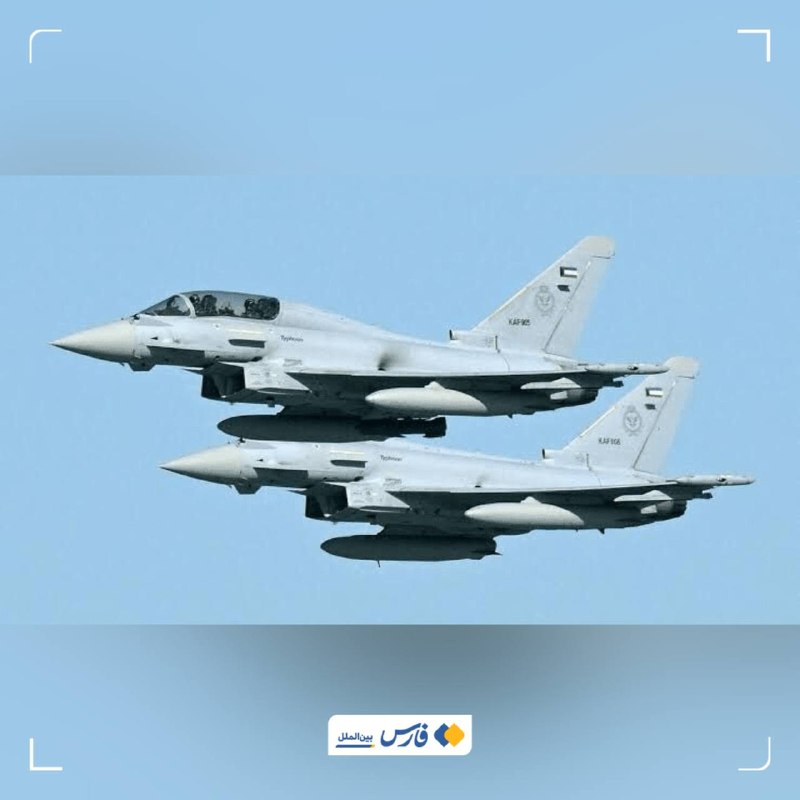
At 14:29 UTC on 19 July 2026, the Telegram channel BRICS News posted a single-sentence flash: the United States had struck Iran's Darkhovin nuclear power plant. Twenty-six minutes later, at 14:55 UTC, the RNIntel channel amplified an Iranian framing of the same event, characterising it as "an attack on a peaceful nuclear facility under safeguards" and "an overt crime against international law." The two dispatches, taken together, sketch the immediate geometry of an escalation that, if the underlying reporting holds, would sit in open contradiction with the legal regime Washington has spent two decades asserting as the basis for Iranian non-compliance.
The strategic question is no longer whether Iran and the United States are on a collision course. That collision is now the operating environment. The question is whether the strike changes the architecture around the Nuclear Non-Proliferation Treaty, and whether any of the principal outside powers, China and Russia first among them, are willing to convert legal objection into material consequence.
What Telegram saw first
The Darkhovin site, in Iran's southwestern Khuzestan province, has been under construction for more than a decade. Iranian state media and Russian contractors have, at various points, framed the project as a domestically engineered 360 megawatt-class pressurised water reactor, intended to come online in the latter half of the decade. Telegram's BRICS News bulletin did not specify the ordnance used, the scale of damage, or whether the strike hit the reactor building, auxiliary structures, or simply the surrounding construction compound. RNIntel's follow-up message likewise carried no damage assessment: it ran legal language, not tactical detail.
That absence is itself the first editorial point. Two channels with rapid-news mandates moved the strike inside an hour; neither carried what a Reuters or AP wire would normally produce within the same window, namely a sourced casualty figure, a Pentagon read-out, and an Iranian civil-defence statement. The information environment on this story is, for the moment, Telegram-shaped: faster, less verifiable, and more politically loaded than the wire services would tolerate.
The legal frame, in plain terms
The Iranian framing rests on a specific claim: Darkhovin is, or was at the time of the strike, a facility declared to the International Atomic Energy Agency and therefore inside the international safeguards system. Striking such a facility, on this reading, is not a counter-proliferation operation; it is the destruction of inspected civilian infrastructure, comparable in legal character to attacks on safeguarded reactors in 1981 and 2007 that drew unanimous UN Security Council condemnation.
The American counter-reading, which a US administration would almost certainly advance within hours through official channels, is that Iran has, in past IAEA reporting, withheld information about undeclared nuclear activities at multiple sites, and that the agency has at times been unable to confirm the peaceful character of declared facilities either. Under that reading, safeguards status is not a shield; it is a documentary fact about the past, and the underlying intent of the programme remains the operative question.
Both framings have legal purchase. Neither has yet been tested by an independent verification chain visible to the public. The dispute that follows will turn on three documents: the most recent IAEA Board of Governors report on Iran, the most recent Iranian Additional Protocol declaration, and any read-out from a US briefing that names the specific target sub-facility hit. None of those documents is in the two Telegram dispatches.
What the two-track reporting tells us
BRICS News is, structurally, a channel aligned with the BRICS framing of global security, in which Western enforcement actions tend to be presented as violations rather than corrections. RNIntel, despite the Russian-aligned name, is sourcing the Iranian line on this story and posting it nearly verbatim. The two together constitute a Global-South plus Iran-aligned information track, distributed in real time and shaped for audiences that read the NPT as a Western-managed hierarchy.
Wire coverage from Reuters, the AP, the BBC, Al Jazeera, Bloomberg, and the Guardian would, in the ordinary course, follow within one to three hours with verified damage imagery, casualty counts if any, and official read-outs from Tehran, Washington, and Vienna. As of the 14:55 UTC dispatch, none of those outlets had a wire match. The next several hours will determine whether the story settles into a verifiable Western-wire frame or whether it remains, for a time, a Telegram story, which is a meaningfully different epistemic object.
What to watch by Monday
Three concrete markers will tell readers how the escalation is being absorbed. First, the IAEA Director General's statement from Vienna: silence implies institutional paralysis, while a public reference to "a safeguarded facility" would shift the legal ground sharply under Washington. Second, the Russian and Chinese foreign ministry read-outs, which will signal whether the joint statement issued after past strikes on safeguarded facilities is being prepared again, this time with operational language attached. Third, the Iranian civil-defence posture in Khuzestan, which will indicate whether Tehran reads the strike as a one-off or as the opening move of a wider campaign.
If all three land within 48 hours, the strike becomes an event with consequences. If the IAEA is silent and the wire services report damage without naming the target's legal status, the strike becomes a precedent with no answer, and that is the more dangerous outcome by a wide margin.
This article relies on two Telegram dispatches from 19 July 2026 as its primary inputs. Wire-service verification was not available at time of publication. Where the dispatches carry legal framing rather than physical detail, this publication has flagged the distinction rather than smoothed it over.
Wire provenance
This editorial synthesis draws on the following public wire/social posts:
- https://t.me/bricsnews
- https://t.me/rnintel