US strikes hit civilian water and road infrastructure in southeastern Iran
Iranian state media report that a US strike on the Bonji desalination plant cut drinking water to roughly 10,000 residents and damaged a key southern highway tunnel, the second reported hit on civilian utilities in 48 hours.
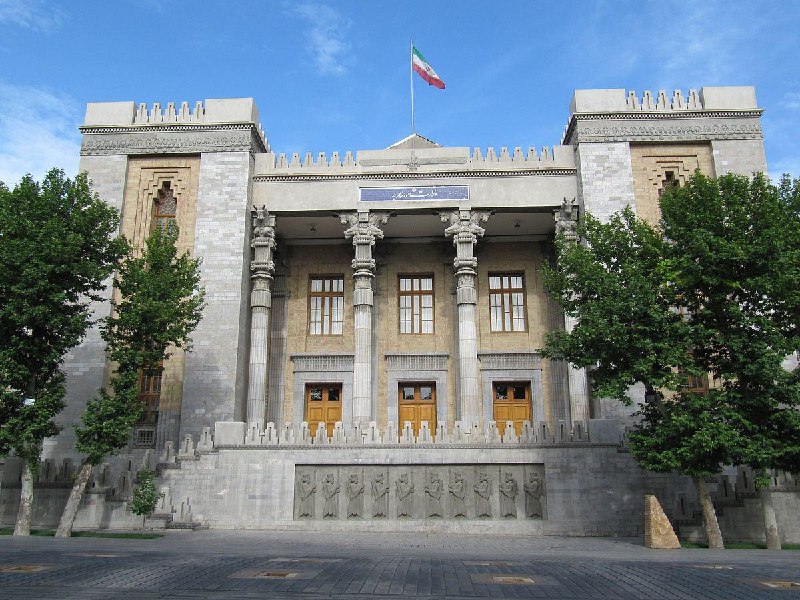
A US airstrike on the Bonji desalination plant in southeastern Iran knocked out drinking-water supply to roughly twenty villages and around 10,000 residents, Iranian state broadcaster PressTV reported on 19 July 2026. The plant's failure, attributed by Tehran to a US strike, is the second reported hit on civilian infrastructure inside Iran in the same 48-hour window, following damage to a road tunnel on the Bandar Abbas to Sirjan route in southern Iran that has since been reopened, according to PressTV's 06:30 UTC bulletin.
The pattern matters more than either incident alone. Strikes on desalination capacity and highway tunnels are not the kind of dual-use facilities that militaries typically list as legitimate targets in pre-action briefings; they are the connective tissue of daily civilian life. If the reporting from Tehran holds up under independent verification, the strikes mark an escalation in what was already an overt air campaign into the infrastructure that keeps Iranian cities lit, watered, and supplied.
What PressTV says happened
PressTV's 07:06 UTC bulletin on 19 July framed the Bonji strike as a "US terrorist attack" on the desalination facility, asserting that the disruption cut drinking water to approximately twenty villages and roughly 10,000 residents. The bulletin was paired with a photograph of the damaged plant. Six and a half hours earlier, the same outlet had reported that a damaged tunnel on the Bandar Abbas to Sirjan highway in southern Iran had been reopened shortly after US airstrikes, implying that the tunnel had been struck, knocked out, and then returned to service within the same operational tempo.
The two reports, taken together, point to a US air operation that is being directed at targets beyond the obvious military and nuclear infrastructure that defined earlier exchanges. Desalination plants and highway tunnels are the kind of targets whose degradation produces cascading effects: a plant offline means tanker-truck logistics; a tunnel closed means detours that ripple through commercial freight.
The frame Tehran is choosing
The PressTV language is deliberate. The outlet is owned by the Islamic Republic of Iran Broadcasting organisation and operates as the English-language face of Iranian state media. Its use of "terrorist attack" to describe a US military strike is not neutral reporting; it is a framing choice designed to put a US air campaign into the same rhetorical register that Western governments reserve for non-state actors. The terminology signals that Tehran intends to treat strikes on civilian utilities as a violation of the laws of armed conflict rather than as a tolerable cost of a contained exchange.
That framing is contestable. The United States has historically argued that dual-use infrastructure can be a legitimate military target when it supports a belligerent's war-fighting capacity, and a desalination plant feeding a military installation or a tunnel used for resupply can plausibly meet that test. Tehran's counter is that a plant serving twenty villages is not, on its face, a dual-use facility. Both readings are coherent; the resolution will depend on what independent monitoring can establish about the targets' actual use.
What independent verification looks like, and what is missing
PressTV is a state-aligned outlet, and its reporting on strikes inside Iran carries the institutional interest of the Iranian government. The bulletin supplies no coordinates, no imagery from independent satellite providers, and no casualty count. Independent verification of the Bonji strike would normally come from three sources: commercial satellite imagery of the plant before and after the strike, statements from Iranian provincial water authorities with technical detail on the damage, and on-the-ground reporting from outlets whose editorial line is not aligned with Tehran. As of the bulletin timestamp, none of those are present in the reporting pipeline. The damage photograph circulates only through Iranian state channels.
The Bandar Abbas to Sirjan tunnel reopening is easier to verify, because road reopenings leave a paper trail in provincial traffic authority bulletins and in commercial trucker telemetry. The PressTV bulletin does not link to either; it asserts the reopening as fact.
The structural frame, in plain terms
Whatever the precise target list, the trajectory is the story. A US air campaign that begins with strikes on nuclear and military facilities and then, within the same operational window, registers hits on a desalination plant and a highway tunnel is broadening the definition of what is being struck. The legal and political question this raises is not whether the United States has the military capacity to hit any target inside Iran. It does. The question is whether civilian-utility strikes are being added to the target list because they degrade Iranian state capacity, because they send a signalling message, or because they are the most readily available targets within the radius of current weapons release. Each of those rationales has a different policy answer.
The political answer, inside Iran, is already visible. By publishing the strikes with the word "terrorist" attached, Tehran is preparing a domestic and international case that the campaign has crossed from military necessity into collective punishment. Whether that framing survives scrutiny depends on what the targets actually were. The point is that the framing is being set early, in English, before the imagery can be independently assessed. That sequence is itself a piece of the story.
Wire provenance
This editorial synthesis draws on the following public wire/social posts:
- https://t.me/presstv/
- https://t.me/presstv/