US strikes IRGC targets after soldier deaths as Iran widens missile salvo across the Gulf
Tehran has fired ballistic missiles at three US-allied Gulf states, prompting fresh American strikes on Iranian Revolutionary Guard targets after two US soldiers were killed in Jordan.
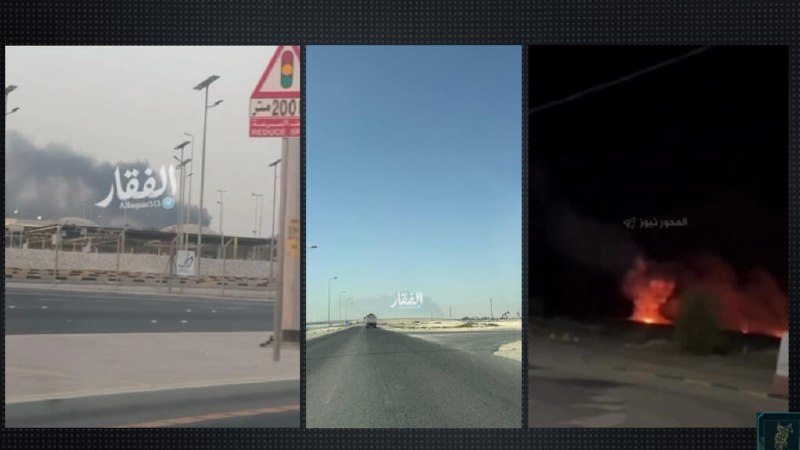
Air-defence sirens rang out across Manama, Kuwait City and Amman in the early hours of 19 July 2026, as Iran fired ballistic missiles at three US-allied Arab states and the United States struck back at Iranian Revolutionary Guard Corps (IRGC) positions. The exchanges follow the deaths of two US soldiers in Jordan, and have turned a slow-burn shadow war into an overt, multi-front missile campaign inside a single news cycle.
This is not a localised skirmish. It is the first day in which Tehran has publicly directed long-range volleys at three separate Gulf partners of Washington in parallel, and the first in which the US military has openly answered with strikes against IRGC infrastructure rather than Iran-aligned proxy formations. The shape of the escalation matters: it has widened horizontally (more targets, more countries) while shortening vertically (hours between Iranian launch and US retaliation, not weeks).
What happened on the morning of 19 July
At 09:09 UTC, Telegram channel @osintlive, monitoring open flight-tracking and regional sirens, reported that air-raid alerts were sounding in Bahrain and that Iran had been firing ballistic missiles at Bahrain, Kuwait and Jordan since the morning. Al Jazeera's breaking-news feed carried the parallel confirmation at 08:49 UTC, framing the salvo as the trigger for a new round of US strikes on IRGC targets inside Iran, conducted in retaliation for the killing of two American soldiers in Jordan.
The sequencing matters as much as the count. Iran struck first; Washington answered in hours, not days. That compression is itself the story: it removes the diplomatic buffer that has, until now, separated a US-Iran shootout from an Israeli or Saudi one, and drags three Arab hosts into the firing line by geography alone.
The American side: strikes on the IRGC
US forces have launched new strikes against the Islamic Revolutionary Guard Corps, according to Al Jazeera's breaking-news desk, framing the action as a direct response to the killing of two US personnel on Jordanian soil. The operational picture is thin: the outlets covering the strikes do not yet specify whether the targets are command nodes, missile sites, drone production facilities, or a mix.
What is clear is the target selection. Striking the IRGC rather than proxy militias signals that Washington has chosen to escalate against the Iranian state itself, and is willing to do so on the record. That is a categorically different posture from the tit-for-tat exchanges that defined the first half of 2026, and it raises the cost of miscalculation for both sides.
The Iranian side: a three-country salvo
Iran's choice of targets is itself a message. Bahrain hosts the US Fifth Fleet and the main naval logistics hub for CENTCOM's maritime reach into the Gulf. Kuwait houses major US air bases used for regional overflight and tanker support. Jordan has been a frontline partner since 2024, hosting US fighter and drone operations against Iran-linked groups in Syria and Iraq.
Hitting all three in a single day is not a punishment calibrated to any one grievance. It is a test of whether Washington's Gulf security architecture can absorb simultaneous pressure, and whether the Arab host governments will tolerate that pressure on their soil. The framing on Iranian state-aligned channels, including Persian-language outlets carried by regional networks, casts the salvo as retaliation for US and Israeli operations in recent weeks. That framing deserves airtime even when one disagrees with it: Tehran is signalling that the cost of US forward presence, in Iranian strategic calculation, has become bearable as a one-day burst rather than an attritional slow grind.
What remains contested
The open-source picture, as of mid-morning UTC, leaves several questions unanswered. The exact number and type of Iranian missiles fired has not been confirmed in the available feeds; the channel reporting sirens in Bahrain does not provide a count, and Al Jazeera's breaking-news item frames the strikes without enumerating weapons. Casualty figures on either side are not yet in the public record, and the geographic spread of incoming warheads, particularly whether any reached Amman or were intercepted, is not specified in the sources available to this publication.
There is also a counter-reading worth airing. Some analysts will argue that the salvo is not an Iranian strategic choice but a controlled pressure-release: a way for Tehran to demonstrate reach without exhausting its long-range inventory, and to force Washington back to a negotiating channel under the shadow of escalation. The competing read, that this is the first move in a wider campaign that will move up-rhythm, is not provable from the day's reporting. Both should sit on the page until evidence disambiguates them.
The structural frame
What is unfolding is not a bilateral crisis but a stress test of the post-2019 Gulf security architecture. Washington's model assumes the Arab Gulf states, and Jordan, are willing to host the infrastructure of a US-led deterrence posture toward Iran in exchange for a security guarantee and integrated air and missile defence. That bargain has held through years of Iranian proxy activity in Iraq, Syria and Yemen. Whether it holds when the missiles land on host-state airfields is the open question of the next 72 hours.
A second structural shift is in the tempo of escalation. Earlier rounds of US-Iran confrontation ran through proxies, deniable attacks, and a week-long diplomatic off-ramp. The interval between an Iranian launch and a US strike has collapsed into the same news cycle. That leaves less room for back-channel de-escalation by Gulf and Omani intermediaries, and increases the leverage of any actor, including Tehran, that wants to lock Washington into a kinetic posture before negotiations can resume.
For the Arab host governments, the calculation is colder. Bahrain, Kuwait and Jordan have not asked to become the geography of a US-Iran war. If the next salvo lands before the diplomatic track reopens, their public posture toward Washington will be the first real indicator of whether the Gulf security bargain is durable under fire.
This publication tracks the US-Iran escalation as an interdependent regional story, not a single bilateral one. Where wire framing centres Washington and Tehran as the only protagonists, the geography of the morning's events, three Arab host states absorbing Iranian fire, demands equal weight in the lede.
Wire provenance
This editorial synthesis draws on the following public wire/social posts:
- https://t.me/s/osintlive