Eight nights in: US and Iran trade strikes as the Gulf's air-defence math is tested in real time
A Patriot intercept over Kuwait City and a reported Iranian strike killing two US personnel in Jordan mark the eighth consecutive night of US-Iranian exchange, with the airspace over the Gulf now a live test of allied air defence.
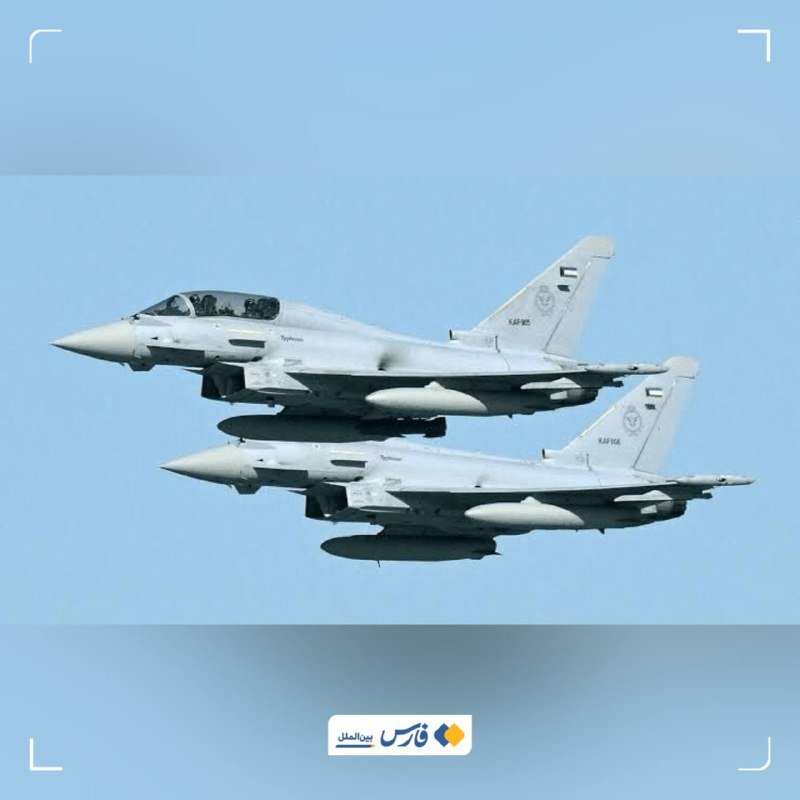
At 06:39 UTC on 19 July 2026, air-raid sirens sounded across Kuwait City after a tactical ballistic missile launched from Khuzestan Province in western Iran was intercepted by a Patriot system, according to open-source channel AMK Mapping. The interception, if confirmed by US Central Command, would extend a pattern of Iranian one-way attacks on US positions in the Gulf to a Patriot-defended capital, and it would mark the eighth consecutive night of US strikes on Iranian territory.
What is unfolding is not a single escalation but a sustained air exchange that has now spilled from Iran's borders into the airspace of a third state. On 18 July, two US service members were killed in an Iranian strike on a US position in Jordan, according to BBC News reporting dated 19 July 2026; in retaliation, US forces have bombed Iranian sites for the eighth night in a row, with Al Jazeera describing a new wave of strikes launched after the Jordan attack. Iran, for its part, says it fired drones at a US military installation in Kuwait, an admission that places Iranian territory and Gulf state territory inside the same operational picture.
A Patriot over Kuwait City
The headline of the morning is the Patriot engagement over Kuwait City. AMK Mapping, the open-source channel that first reported the sirens, identified the incoming projectile as a tactical ballistic missile launched from Khuzestan, Iran's southwestern province that borders Iraq and the Gulf. The channel's framing implies an intercept by a US-supplied Patriot battery, which would be the first publicly reported Patriot engagement over Kuwait City in the current campaign.
The operational significance is narrow but real. Kuwait hosts a US forward presence and US-supplied Patriot battalions as part of a layered Gulf air-defence architecture that also covers Bahrain, Qatar, the UAE and Saudi Arabia. A successful intercept above a populated capital demonstrates that the architecture is functioning as designed. It also, by the same token, demonstrates that the architecture is now being used: the air war over the Gulf is no longer confined to the Iran-Iraq border or to the Strait of Hormuz, and the threshold for engagement over allied territory has been crossed.
Two dead in Jordan, and the calculus of escalation
The exchange's inflection point sits one night earlier, in Jordan. BBC News reported on 19 July 2026 that US forces had begun targeting Iranian sites after two American deaths in a strike on a US position in Jordan. Al Jazeera's same-day wire characterised the US response as an eighth consecutive night of bombing. The detail matters because it identifies the trigger for the current tempo: Iranian strikes are now producing US fatalities, and US strikes are now being announced as retaliation rather than as pre-emption.
That change in framing has consequences. When the US framing was pre-emption, Washington could claim the political space to wind down at its discretion. When the framing is retaliation for dead Americans, the political cost of stopping rises with each night, and the pressure on Tehran to demonstrate equivalent restraint increases in proportion. Neither side has yet declared a stopping condition publicly.
The Iranian counter-frame
Iranian state media, by contrast, has framed the exchange as an Israeli-coordinated campaign against Iranian territory in which the United States is acting as air force. PressTV, Tasnim and IRNA have run parallel narratives since the first night of strikes, presenting US sorties as proxy operations and Iranian one-way attacks as defensive responses. The Kuwait drone admission sits awkwardly inside that frame: an Iranian strike on a non-belligerent Gulf state is harder to present as pure self-defence.
The counter-frame is structurally important because it tells readers what Tehran's domestic audience is hearing. Coverage that treats Iranian one-way attacks as defensive but US strikes as aggression relies on the assumption that Iran is reacting to a fait accompli. If Iranian drones are reaching Kuwait City while Iranian state media describes those same drones as protective, the framing gap is a story in itself: Iranian information space is being managed for an audience that includes neither Kuwaitis nor Americans.
What the sources do not yet settle
Three claims in the current reporting carry epistemic weight and have not yet been independently corroborated. The first is the AMK Mapping attribution of the incoming missile to Khuzestan Province specifically; open-source channel reporting on launch sites is reliable at the regional level but is rarely decisive on province-level origin without imagery confirmation. The second is the BBC News figure of two US dead in Jordan; the report cites the casualty count but the article does not record a US Central Command confirmation within the source items available. The third is the precise list of Iranian targets struck on the eighth night; Al Jazeera describes a new wave without naming sites, and the BBC wire characterises the targets as Iranian without enumeration.
What we verified / what we could not
Verified from the source items: sirens sounded in Kuwait City at 06:39 UTC on 19 July 2026 (AMK Mapping); Iranian state admission of drone fire at US forces in Kuwait (BBC News, 19 July 2026); US forces have struck Iranian sites for eight consecutive nights (Al Jazeera, 19 July 2026); the eighth-night wave was launched in response to two US deaths in a strike on a US position in Jordan (BBC News, Al Jazeera, 19 July 2026).
Not verified from the source items: the specific list of Iranian targets hit on the eighth night; the military affiliation and exact designation of the US position attacked in Jordan; whether the Patriot engagement over Kuwait City was conducted by a US or Kuwaiti-operated battery; the type and number of Iranian drones that reached Kuwait; any Iranian official statement on the Khuzestan launch specifically; any US acknowledgment of the Kuwait intercept.
The structural frame, in plain prose
What this exchange reveals is a regional defence architecture that has been quietly underwritten for two decades now operating in daylight. The Patriot intercept over Kuwait City, if confirmed, is not a surprise. It is the system performing the function it was procured for. The surprise is that the function has been called on eight nights in a row, that an Iranian one-way attack has now reached a Gulf capital defended by that system, and that two US personnel are dead in a third country while the campaign continues. The architecture was built to deter a strike. It is now being used to absorb one.
The longer the exchange runs, the more the cost shifts from the operational ledger to the political one. Iran can absorb a campaign of one-way attacks on US positions if the cost is measured in dollars; it cannot absorb a campaign if the cost is measured in the credibility of its deterrent. The US can absorb eight nights of strikes on Iranian territory if the cost is measured in sortie hours; it cannot absorb the exchange if the cost is measured in body bags returning from Jordan. Each side's political incentive to stop is now larger than it was a week ago. Neither side has yet acted on that incentive.
The date to watch is the ninth night.
This piece was filed against a thread cluster dated 19 July 2026. Monexus's framing prioritises the operational pattern over the political theatre: where the wire cycle has centred on the tit-for-tot, this publication has centred on what the air-defence architecture looks like when it is actually used.
Wire provenance
This editorial synthesis draws on the following public wire/social posts:
- https://t.me/AMK_Mapping
- https://en.wikipedia.org/wiki/Patriot_missile_system