Trump’s renewed Iran campaign and the limits of American escalation
An Arab analyst’s read of a reopened US campaign against Iran lands in Tehran via state media. The signal is symbolic. The cost-benefit arithmetic is anything but.
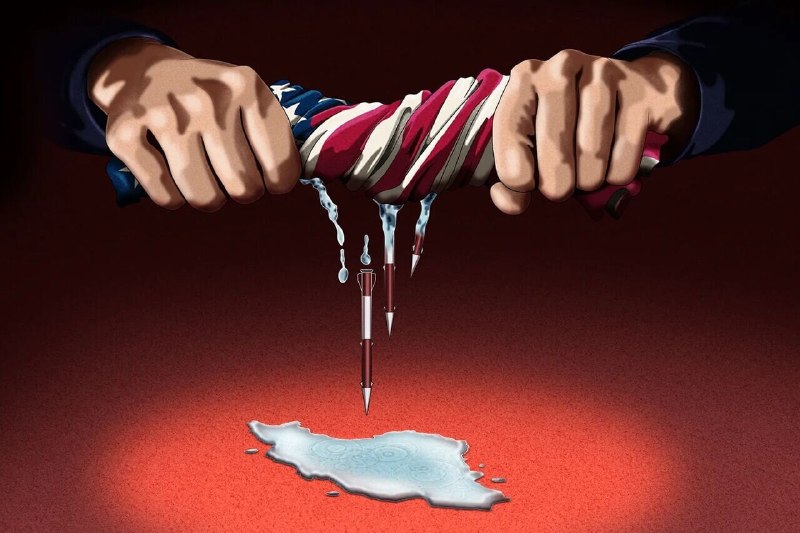
Tehran’s English-language outlets carried a single talking point within hours of the renewed US military posture toward Iran: that Washington, by acting, had cornered itself. The framing arrived on 19 July 2026, via an IRNA dispatch quoting the veteran Arab analyst Abdel Bari Atwan, who argued that a swift Iranian response had “trapped” the United States into choosing between escalation and backdown.
The dispatch offers no operational detail on that response, no targeting data, and no casualty arithmetic. What it does offer is the political shape of the moment: a US administration under Donald Trump has reopened a military campaign against Iran, and an Iranian state-aligned commentary apparatus is already telling its audience that the reopening was a strategic mistake. Whether the public evidence supports that claim is a separate question. The framing itself is the news, because the framing is what travels.
Iran’s communications advantage in this opening is structural. State-aligned outlets deliver narrative in real time, on Iranian terms, to Arabic-speaking and English-reading audiences who would otherwise wait for Western wires to catch up. When Atwan’s read of events lands in IRNA, it is not a neutral analyst speaking into a vacuum. It is a specific voice delivered on a specific platform, where the editorial gatekeeping works in Iran’s favour.
The campaign that reopened
For the fact of the renewed military campaign, the source layer is Iranian state media plus commentary from a long-standing analyst of US–Middle East affairs. The dispatch does not specify the strikes, the weapons used, the theatre of operations, or the timeline beyond the 19 July 2026 framing. That scarcity of operational detail is itself the operative fact.
The claim of American aggression is Atwan’s framing, repeated by IRNA, not the finding of an independent war monitor. Western wire services have not, in the materials available to this publication, published a matching operational readout for the 19 July 2026 dates. Iranian state media has, in effect, defined the day’s news from one side, then commented on its own definition. The shape of that asymmetry is familiar: an opening day in which one side sets the language, and every later correction has to climb back up the timeline.
Atwan’s record, and why Tehran amplifies him
Abdel Bari Atwan is a recognisable name across two decades of Arab-language commentary on US and Israeli policy. He edited the London-based Al-Quds Al-Arabi, has published memoirs on al-Qaeda, and is a regular presence on Iranian state outlets where his editorial line consistently favours the Palestinian cause and rejects US regional primacy. Tehran amplifies him not because he is neutral. It amplifies him because his read is the read Tehran wants broadcast.
That does not mean the read is wrong. It means the read is selected. The proposition that a US president who reopens a military campaign against Iran risks entrapment is a standard realist position: aggressors can find that cost-bearing runs faster than victory. What the IRNA framing adds is the certainty that the entrapment has already happened, on day one, with no evidence yet offered for the proposition.
What the counter-narrative concedes
The structural counter-read is that Iran is the more constrained party. Iran’s economy remains under heavy sanctions, its regional proxy network has been physically degraded over the past two years, and its conventional deterrent against the United States is asymmetric at best. From that vantage, Iran’s strongest asset in any escalation cycle is delay, narrative control, and the cost it can impose through third parties, not direct confrontation with US carriers.
A second alternate read treats the IRNA framing as a settlement posture prelude: by declaring Washington trapped, Tehran opens the price of de-escalation. The campaign is real, and so is the implied bargain: Iran claims it cannot afford to look passive, but it can afford to look unyielding, on terms that a future negotiation can quietly step around. That theory would predict low-grade escalation that does not foreclose talks. The evidence so far is consistent with that prediction; it is also consistent with the simpler one that Iran simply does not want to be seen to back down in front of Arab and domestic audiences.
What this publication cannot yet verify
The sources available to this piece do not specify what Atwan meant by “Iran’s swift response”, whether he was referring to a public statement, a missile test, a proxy action, or a diplomatic démarche. They do not specify which US assets were struck, which units were engaged, or which Iranian systems fired. They do not include a Western-wire operational readout for the 19 July 2026 date. The body of independent reporting on these events will catch up. Until it does, the dominant English-language read will be the one Iran writes first.
That is the structural story underneath the day’s headlines. Wars between unequal powers are often decided less on the battlefield than on whose version of the day survives. On 19 July 2026, the version surviving in English-language channels reaching Arab and Iranian-adjacent audiences is the version Iran published. The American version, if it arrives, will be a reply.
How this piece was sourced: this publication worked from an IRNA-sourced Telegram post carrying Atwan’s read of a renewed US campaign. The absence of independent operational confirmation is itself part of the story.
Wire provenance
This editorial synthesis draws on the following public wire/social posts:
- https://t.me/s/Irna_en