Tehran's two-hour boast and the diplomacy it claims to want
Iran's foreign minister says armed forces began responding within two hours. The claim is less about speed than about signalling what Tehran wants negotiators to believe.
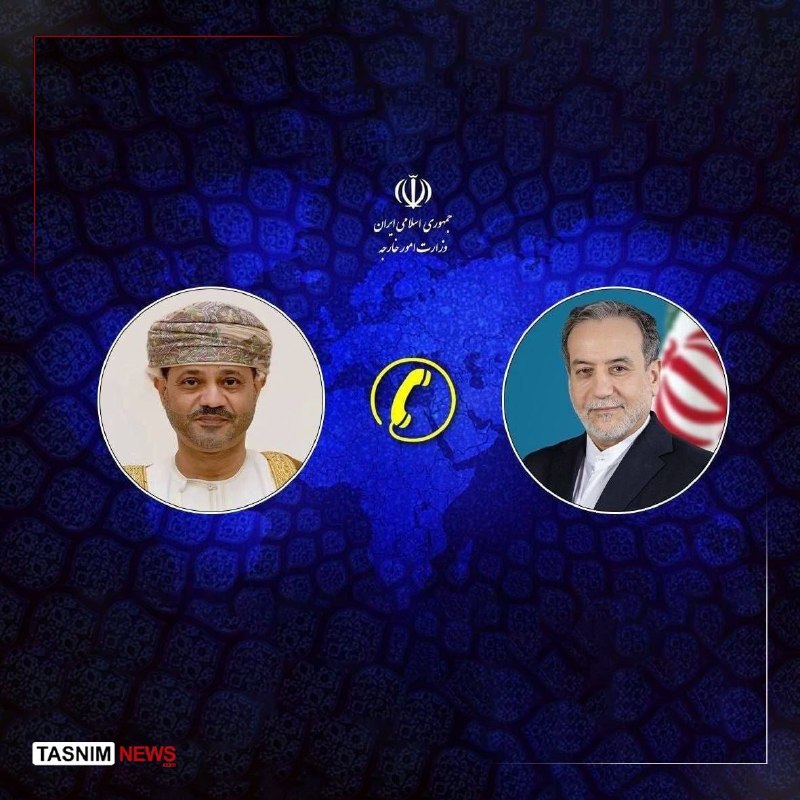
At 11:46 UTC on 19 July 2026, Iranian Foreign Minister Abbas Araqchi told a domestic audience that his country's armed forces had begun their military response a mere two hours after the start of the most recent war, and that the decision to halt the earlier twelve-day conflict had been vindicated by Tehran's subsequent forty-day victory. The boast, delivered via the Beirut-based outlet Al Alam Arabic and relayed through its verified channel, is being read in regional capitals less as battlefield history than as a negotiating posture.
The subtext is unmistakable. Iran is telling anyone still listening that its forces can move from peacetime to live operations on a clock that starts the moment a war begins, not the moment a political decision is taken. That is the asset Araqchi is selling. Whether the underlying reality matches the talking point is a separate question, and one Western and Gulf intelligence agencies are almost certainly trying to answer before the next round of talks.
The two-hour line, and what it actually claims
Araqchi's framing has three moving parts. First, that Iran's military was already at a state of "complete readiness" when war broke out, allowing operations to begin within two hours. Second, that halting the earlier twelve-day war was a calculated move that produced better conditions for Tehran later, an assertion he describes as Iran's "victory in the 40-day war." Third, that the very resumption of negotiations proves Tehran never abandoned diplomacy, even while preparing for what he suggests was an expected new confrontation.
Read together, the three claims sketch a doctrine: prepare continuously, fight briefly, then bargain from the position the fighting created. The line about readiness is the operational claim; the line about the twelve-day halt is the strategic claim; the line about negotiation is the diplomatic cover. Each reinforces the others, and all three are designed for an audience that includes foreign negotiators as much as Iranian citizens.
Why the boast lands where it does
Two hours is a specific, memorable number. It sits inside a long regional tradition of signalling readiness in concrete units: missile salvoes per minute, drone launch windows, satellite revisit rates. The figure does real diplomatic work. Any foreign envoy sitting across from an Iranian counterpart now has to price in the assumption that Iranian forces do not require the kind of mobilisation cycle that takes days or weeks. That assumption, even if inflated, tightens the political space around the table.
It also gives Tehran's negotiators something to point at if a future round collapses. If talks fail, Araqchi has already pre-positioned the line that Iran came in good faith while remaining operationally prepared, a narrative that lets the regime absorb the political cost of breakdown without conceding that it was blindsided. The boast is, in effect, pre-emptive crisis communications.
The counter-narrative that does not appear on the channel
Al Alam Arabic is an Iranian state-aligned outlet, and its transmission of Araqchi's remarks is itself part of the message. Iranian state-aligned coverage routinely frames foreign conflicts through the lens of regime resilience, and the twelve-day war and the alleged forty-day follow-up are being folded into a familiar Tehran template: every round of fighting ends with Iran stronger, the enemy's position weaker, and diplomacy resuming on Iranian terms. Independent verification of the specific two-hour claim, of the framing of the forty-day conflict as a victory, and of the casualty and damage figures surrounding Iran's nuclear facilities, remains thin in the public record and is not provided in the materials available.
The most consequential counter-fact Araqchi himself raised is the admission that Iran's nuclear facilities were damaged during the twelve-day war and "practically entered a state of forced shutdown." That detail complicates the victory narrative considerably. A force that shuts down its most strategically valuable installations is not, by any ordinary reading, the force that came out ahead. The diplomatic version insists the halt was strategic; the operational admission suggests it may also have been necessary.
What the next round of talks is actually about
If the past pattern holds, the next negotiating cycle will be fought over three things: the pace at which any damaged nuclear capacity is restored, the architecture of verification, and the price, in sanctions relief or security guarantees, attached to whatever limits Iran accepts. Araqchi's public line tells the other side that Tehran intends to bargain from the assumption of readiness, not from the position of a state that had to shut down its facilities. Whether the assumption survives contact with the next crisis is a question for a different news cycle, but the claim is now on the public record.
The sources do not specify the date or location of Araqchi's remarks beyond the Al Alam Arabic transmission on 19 July 2026, do not identify the opposing party in the alleged forty-day war by name, and do not provide independent confirmation of the operational timelines described. What they do provide is the framing Tehran wants the next negotiation to begin inside: a country that was ready, fought briefly, halted on its own terms, and is now at the table from a position of its own choosing.
This publication is treating Araqchi's remarks as a primary-source diplomatic signal transmitted through an Iranian state-aligned outlet, not as an independent operational account. The two-hour figure and the framing of the forty-day conflict as an Iranian victory are presented as Tehran's own characterisation, not as verified battlefield fact.
Wire provenance
This editorial synthesis draws on the following public wire/social posts:
- https://t.me/alalamarabic/
- https://t.me/alalamarabic/
- https://t.me/alalamarabic/
- https://t.me/alalamarabic/